
Written from a family caregiver perspective. The operator cares for an older mother with rheumatic, spinal and knee problems and is not a medical professional. This article offers general information, not individual clinical clearance.

Hip pain self-triage guide
Hip Pain Only When Getting Out of a Car:
What That One Awkward Move May Be Telling You
There is a very particular kind of hip pain that does not behave like a full-time villain. It waits. It stays quiet while you sit, maybe even while you walk through the grocery store, then sparks during one small ceremony: door opens, knee turns, foot plants, body rises. Suddenly, the hip speaks in a sharp little telegram.
That does not automatically mean something terrible is happening. But it does mean the movement is giving you a clue. Getting out of a car combines hip bending, rotation, weight shift, and push-off from a low or twisted position. For some people, that combination exposes stiffness, irritated tendons, a cranky joint, back-related nerve pain, or a movement habit that keeps re-lighting the same match.
This guide will help you read the clue without turning your browser into a doom accordion. You will learn where the pain location points, which red flags deserve prompt care, how to change the car-exit motion, and how to track symptoms so a clinician can help faster if the pain keeps returning.
Find the pain source clues
Groin, outer hip, buttock, and front-thigh pain often suggest different suspects.
Fix the exit mechanics
A 20-second method can reduce twisting and make the move safer.
Know when to get care
Clear red flags help separate “watch it” from “check this now.”
One tiny motion can be a diagnostic breadcrumb, not a life sentence. 🦴
Snapshot
This article is for adults who notice brief, repeatable hip pain mainly when getting out of a car, especially from a low seat. You will learn how to map the pain, avoid common movement mistakes, try a safer exit method, track symptoms for seven days, and decide when professional medical evaluation is the wiser next step.
READER WORKSHEET
Car-exit discomfort observation note
Describe the movement and everyday context without recreating pain.
Confirm and prepare
Add your working notes
Keep names, account numbers, member IDs, and other identifying details out of this worksheet.
Complete your worksheet to organize the next step. Blank amounts remain unknown.
How to use the result: This record cannot identify the cause of hip pain. Do not repeat an aggravating movement for the worksheet.
This worksheet does not save entries between visits or send them to a provider. Download before leaving; the downloaded file may contain your notes. It is a planning aid, not a diagnosis, safety assessment, coverage decision, or final bill.
Before You Act: What This Guide Can and Cannot Tell You
Hip pain only when getting out of a car can be a movement problem, a joint clue, a tendon complaint, a spine-related warning, or a mix of all three. This article can help you observe the pattern more clearly, reduce obvious triggers, and prepare better questions for a healthcare professional.
It cannot diagnose arthritis, a labral tear, bursitis, fracture, infection, nerve compression, or any other condition. Pain is not a neat little filing cabinet. It can travel, disguise itself, and borrow the accent of nearby tissues.
Use the guidance here as a practical sorting tool. If your pain is severe, follows a fall or crash, prevents weight-bearing, comes with fever or swelling, causes numbness or weakness, or is paired with bowel or bladder changes, seek medical care promptly.
Key takeaway
A repeatable car-exit pain pattern is useful information, but it is not a diagnosis. Reduce the trigger, watch the pattern, and get medical help when red flags appear or the pain keeps changing your routine.
Car-Exit Hip Pain Is a Motion Clue, Not a Diagnosis
Getting out of a car looks simple from the outside. Inside the body, it is a small choreography with too many dancers in a narrow hallway.
Your hip bends while you sit, rotates as your knees turn toward the door, accepts weight as your feet hit the ground, then helps lift your body from a low position. If one part of that sequence is stiff, irritated, weak, or rushed, pain can show up only during that one awkward move.
Why the Car Move Is Different from Normal Walking
Walking usually asks the hip to move in a repeated forward pattern. Getting out of a car asks for rotation, side movement, trunk control, and a push from a low seat, often while one foot is planted and the other leg is still trapped inside.
That is why someone may say, “I can walk fine, but getting out of my sedan hurts.” The hip is not being asked the same question in both moments.
The Hidden Sequence: Twist, Plant, Push, Stand
The common painful pattern looks like this: you swing one leg out, twist your pelvis, plant one foot, push through the sore side, and stand while the hip is still partly rotated. The move is quick, but the load is real.
If the pain happens at the twist, the joint or deep hip may be involved. If it happens during the push-up, tendons, muscles, or irritated outer hip structures may complain. If it happens after standing, the back, sacroiliac area, or nerve sensitivity may be part of the story.
Why Pain Can Appear Only in This One Tiny Moment
Some tissues tolerate ordinary motion but dislike combined motion. A hip that is comfortable with bending may object to bending plus rotation. A tendon that tolerates walking may object to pushing up from a low, twisted position. A nerve-sensitive back may dislike sitting followed by a sudden pivot.
That is why “only when I get out of the car” still matters. Repeatable pain is the body leaving a sticky note on the dashboard.
Infographic: The car-exit pain sequence
1
Sit low
Hip is flexed and may already feel compressed.
2
Rotate
Knees and pelvis turn toward the door.
3
Plant
Feet meet the ground, often unevenly.
4
Push
Hip, thigh, hands, and trunk share the lift.
5
Stand
Pain location gives the next clue.
The Pain Map: Groin, Outer Hip, Buttock, or Front Thigh?
Before you hunt for stretches, braces, cushions, or “best hip pain treatment near me,” pause and map the pain. Location is not perfect, but it is one of the most useful first clues.
Use one finger if you can. Point to the exact spot. “My hip hurts” is a foggy sentence. “Sharp pinch in the right groin as I turn my knee out of the car” is a lantern.
Groin Pain: When the Hip Joint May Be the Louder Suspect
Pain in the groin or inner hip often makes clinicians think more carefully about the hip joint itself. That does not mean you have arthritis or a labral injury, but it does make joint motion, rotation tolerance, and stiffness more relevant.
A typical clue is a pinching or catching feeling when you rotate the leg outward or stand from a low seat. Some people also notice trouble putting on socks, getting into a bathtub, or sitting cross-legged.
Outer Hip Pain: When Tendons, Bursae, or Side-Lying Irritation Enter the Room
Outer hip pain, especially over the bony bump on the side of the hip, often points toward soft-tissue irritation. This may include gluteal tendons, nearby bursae, or sensitivity from compression during sitting and side-lying.
People with this pattern may feel pain pushing up from the car seat, climbing stairs, standing on one leg, or lying on the sore side. The pain can feel like a hot coin pressed against the outer hip.
Buttock Pain: When the Back or Sacroiliac Joint May Be Borrowing the Microphone
Buttock pain can come from the hip, but it often raises questions about the lower back, sacroiliac joint, deep glute muscles, or nerve sensitivity. If pain travels down the leg, tingles, burns, or changes with sitting time, the spine deserves attention.
The car is a common troublemaker because it combines sitting, vibration, posture, and rotation. A long drive followed by a quick twist can wake up a back-related problem that pretends to be “hip pain.”
Front-Thigh Pain: When Hip Flexors, Nerves, or Joint Stiffness May Be Involved
Front-thigh pain during car exit may involve hip flexors, quadriceps, joint stiffness, or referred pain. If the pain feels like pulling at the front of the hip as you rise, the hip flexor area may be irritated. If it feels electric, numb, or spreads, nerve involvement becomes more important to discuss with a clinician.
Key takeaway
Do not just track pain intensity. Track pain location. Groin, outer hip, buttock, and front-thigh pain often send the evaluation in different directions.
| Pain location | Common clue during car exit | What to watch next |
|---|---|---|
| Groin or inner hip | Pinch during twisting or standing | Catching, locking, stiffness, trouble with socks |
| Outer hip | Pain when pushing up or shifting weight | Pain on stairs, side-lying pain, one-leg stance pain |
| Buttock | Pain after sitting, pivoting, or first steps | Tingling, pain traveling down leg, back stiffness |
| Front thigh | Pulling or ache as the hip opens from sitting | Weakness, numbness, recurring sharp pain |
The Low Seat Trap Most People Miss
A low car seat can expose hip pain even when your home chair does not. This is why sedans, sports cars, compact cars, and deep bucket seats often become the scene of the crime.
It is not always the car’s fault. The car may simply reveal a limit you do not notice elsewhere.
Why Sedans, Sports Cars, and Deep Bucket Seats Can Expose Hip Stiffness
Lower seats require more hip bend. Deep seats may tilt your pelvis backward. Bucket seats can hold your thighs in a narrow position. Add a steering wheel, door frame, and one impatient person behind you in the parking lot, and your body rushes a complicated move.
If your hip already has limited rotation, a low seat can turn a mild issue into a sharp, repeatable pinch.
Why SUVs May Feel Easier Even When the Hip Problem Is Still There
An SUV or crossover often lets you step down or sideways rather than climb up from a low bend. That can reduce hip flexion and twisting. The pain may seem to disappear because the demand changed, not because the underlying irritation vanished.
This matters when comparing vehicle comfort, seat cushions, or mobility aids. If a higher seat helps, note that carefully. It is a useful data point.
Seat Height Can Change Symptoms Without Changing the Underlying Cause
An approved seat adjustment or different vehicle may ease access, but do not add a cushion or swivel aid without checking vehicle-manufacturer compatibility and your transfer plan. Seatbelt fit, airbags, occupant sensors, stability, and pedal reach matter. Relief from a seat change does not identify the cause of pain.
Still, symptom relief from a higher seat does not tell you exactly what tissue is involved. It tells you that reducing the bend-and-twist demand helps. That is valuable, but it is not the whole movie.
| Vehicle or seat factor | Why it may hurt | Simple adjustment to test |
|---|---|---|
| Low sedan seat | More hip bend before standing | Slide seat back, rotate both knees together |
| Deep bucket seat | Pelvis may feel trapped during rotation | Use hands to scoot forward before turning |
| High SUV seat | May require reaching down or twisting if too high | Use running board or stable hand support if available |
| Long commute seat | Stiffness builds before exit | Pause, breathe, move ankles, then exit slowly |
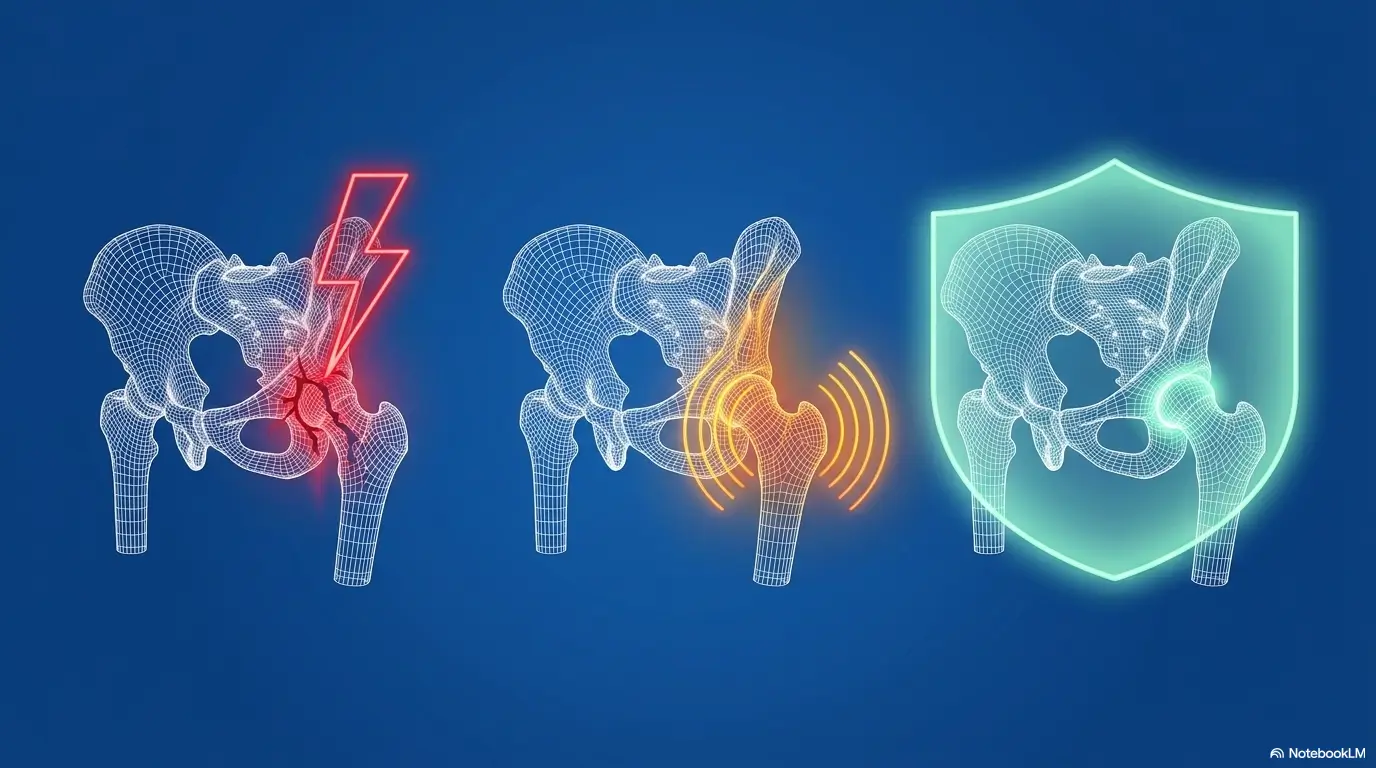
Five Likely Culprits Behind Hip Pain When Exiting a Car
The car-exit movement can irritate different structures. The goal is not to self-label your hip with a fancy diagnosis. The goal is to recognize patterns so you can make safer choices and explain the issue clearly.
Hip Osteoarthritis: Stiffness That Announces Itself During Rotation
Hip osteoarthritis often shows up as stiffness, reduced range of motion, and groin or front-hip discomfort. Getting out of a car can be uncomfortable because the hip is asked to rotate after sitting in a flexed position.
People may also notice morning stiffness, trouble walking longer distances, difficulty with socks or shoes, or pain after activity. Some have normal-looking days and cranky transitions. Bodies enjoy nuance. Very inconvenient, but true.
Hip Impingement or Labral Irritation: A Pinch During Twist-and-Stand
Hip impingement and labral irritation are often discussed when pain feels deep, sharp, pinchy, or catching, especially in the groin. The combined move of bending, rotating, and standing may reproduce that pinch.
Not every pinch is a labral problem, and imaging findings do not always match pain perfectly. Still, recurring groin pain with catching, locking, or a sense that the hip “gets stuck” is worth discussing with a qualified clinician.
Greater Trochanteric Pain Syndrome: Outer Hip Pain After the Push-Up Phase
Greater trochanteric pain syndrome is a common umbrella term for pain around the outer hip, often involving gluteal tendons and nearby irritated tissues. It may feel worse with stairs, standing on one leg, side-lying, or pushing up from a low seat.
If your pain is on the outside of the hip rather than deep in the groin, aggressive “hip opener” stretches may not be the hero you hoped for. Sometimes the better first move is reducing compression and improving load tolerance gradually.
Hip Flexor, Adductor Strain, or Referred Back Pain
A hip flexor or adductor strain can make car exits painful because the leg moves from bent and tucked to rotated and weight-bearing. This may feel like a pull in the front or inner thigh.
Sciatica or referred spine pain can also show up around the hip or buttock. If pain travels below the knee, tingles, burns, or worsens after sitting, the lower back and nerves deserve a careful look.
Show me the nerdy details
Car exit pain is mechanically interesting because it combines hip flexion, abduction or adduction depending on the exit path, internal or external rotation, trunk rotation, and vertical force production. A painful hip may tolerate each ingredient separately but object when the recipe is baked together.
That is why clinicians often care about the exact moment of pain. Pain during rotation can suggest a different problem than pain during push-off. Pain after standing may point more toward load transfer, spine irritation, or balance strategy. The small sequence matters.
- Hip vs Spine Pain: How to Tell Where the Pain May Be Coming From
- How to Get In and Out of a Low Car With Sciatica
- Lumbar Support Cushion for Driving: When It Helps and When It Does Not
- Side Sleeper Hip Pain Relief: Practical Ways to Reduce Night Pain
- Orthopedic Visit Checklist: What to Bring, Ask, and Track Before Your Appointment
Do Not Stretch Hard Yet: The Mistake That Can Backfire
When hip pain appears, many people immediately search for stretches. That instinct is understandable. A tight feeling seems to invite a stretching campaign, complete with grim determination and a yoga mat that has seen things.
But sharp, pinching, catching, or worsening pain is not an invitation to force range. If the hip is irritated by rotation, aggressive stretching can turn a small complaint into a louder one.
Why Aggressive Hip Openers May Worsen Pinching Pain
Deep hip stretches can place the joint in positions similar to the painful car-exit motion. If the pain is a deep groin pinch, pushing into more rotation may irritate the area rather than free it.
A useful rule: stretching should not reproduce sharp pain, catching, numbness, or symptoms that flare later in the day or the next morning.
Why “Push Through It” Is a Poor Test for Joint Pain
Pain during one specific movement is information. Repeating the painful move harder is not bravery. It is a very small committee making a very poor decision.
Instead, reduce the trigger first. Change the exit technique, shorten sitting time when possible, and track whether pain calms down. If pain persists despite better mechanics, that is a sign to consider evaluation rather than escalating home experiments.
The Safer Rule: Reduce the Trigger Before Increasing Range
Start with movement quality, not maximum flexibility. Make the car exit smoother, slower, and less twisted. Then consider gentle mobility only if it feels comfortable and does not create delayed pain.
Key takeaway
For sharp or pinching car-exit hip pain, the first home strategy is not “stretch harder.” It is “stop twisting into the pain, then see what changes.”
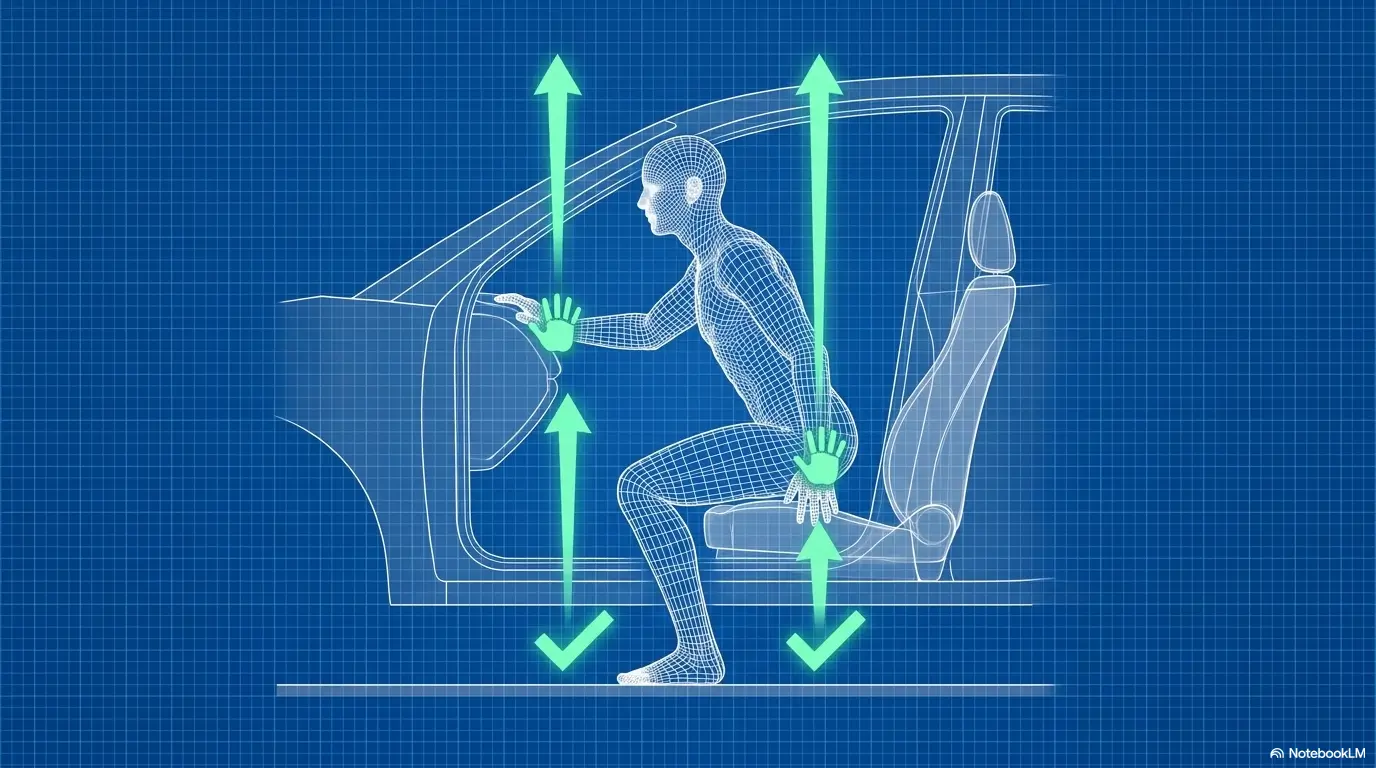
The Safer Car-Exit Method: A 20-Second Reset
These general cues are for an ordinary necessary transfer when you can already get out safely. They are not a pain-provocation test. After hip surgery, a new injury, or with weight-bearing or arm restrictions, use the therapist-taught transfer plan and required assistance instead. Stop if pain catches sharply, the leg gives way, or safe footing is unavailable.
Step 1: Slide the Seat Back Before Opening the Door
Before you move your legs, create space. Slide the seat back if possible. Move slowly enough that your hip is not surprised by a sudden rotation.
If you are a passenger, ask the driver to park where the door can open fully. A narrow parking spot can force awkward hip angles before you even begin.
Step 2: Turn Both Knees Together Toward the Door
Instead of swinging one leg out while the pelvis stays trapped, turn both knees together. Think of your knees and chest moving as a team. The goal is to reduce twisting through the hip.
Some people find it helpful to scoot to the seat edge first. Keep the movement small and controlled.
Step 3: Plant Both Feet Before Standing
Place both feet on the ground before you rise. Avoid standing on one planted foot while the other leg is still inside the car. That one-leg twist is a tiny circus act, and your hip did not buy a ticket.
Step 4: Push with Hands, Not Just the Sore Hip
Use only a stable hand support compatible with the vehicle and your transfer plan, without loading a restricted shoulder, wrist, or arm. Do not pull on a walker to stand or rely on a swinging door. Keep your prescribed aid reachable and use the assistance you were taught.
If you use a cane or walker, place it securely before standing, and follow any instructions your clinician or therapist has already given you.
- Do not rush the first step after standing.
- Do not twist on a planted sore leg.
- Do not use the door if it swings or feels unstable.
- Do not test the method after drinking alcohol, when dizzy, or on icy ground.
20-second car-exit checklist
- Pause before opening the door.
- Slide the seat back if possible.
- Scoot slightly forward.
- Turn both knees toward the door together.
- Plant both feet flat.
- Push with hands and both legs.
- Stand fully before pivoting.
- Rate pain from 0 to 10 and note the location.
When to Seek Help Before It Becomes a Bigger Problem
Most brief, position-specific hip pain is not an emergency. But hip pain can sometimes reflect problems that need prompt care, especially after trauma or when the person cannot bear weight.
Use this section as a practical filter. When in doubt, especially with severe or unusual symptoms, choose caution over cleverness.
Get Urgent Care Now for Trauma, Deformity, Intense Pain, or Inability to Bear Weight
Seek prompt medical care if hip pain follows a fall, crash, or sudden injury, or if you cannot stand, walk, or bear weight. A misshapen joint, sudden swelling, severe pain, fever, chills, or skin color changes also deserve urgent attention.
Older adults, people with osteoporosis risk, and people taking medications that affect bone strength or bleeding risk should be especially cautious after a fall.
Call a Clinician If Pain Keeps Returning or Changes Your Normal Routine
If you are choosing parking spots based on hip pain, avoiding errands, changing how you sleep, or dreading the driver’s seat, the pain is no longer just a quirky car problem.
Schedule an appointment if symptoms keep returning for more than a short period, are worsening, or are changing your walking, stairs, work, caregiving duties, or exercise.
Ask About Evaluation If Groin Pain, Locking, Catching, or Night Pain Appears
Deep groin pain, locking, catching, or pain that wakes you at night deserves a more careful conversation. These symptoms do not prove a serious diagnosis, but they are not ideal candidates for endless internet stretching experiments.
Do Not Ignore Back-Related Red Flags
Seek emergency care for back or leg symptoms with new trouble passing urine, bladder or bowel control changes, numbness around the genitals or anus, or severe or worsening weakness in both legs. Do not wait for a seven-day log. Other new weakness or numbness also warrants prompt assessment.
| Symptom pattern | Reason to act | Practical next step |
|---|---|---|
| Pain after fall or crash | Injury or fracture needs to be ruled out | Seek prompt medical care |
| Cannot bear weight | Hip may not be safe to load | Urgent evaluation |
| Fever, chills, sudden swelling | Possible infection or inflammatory concern | Urgent medical advice |
| Groin pain with catching or locking | Joint mechanics may need assessment | Schedule clinician visit |
| Pain travels with numbness or weakness | Nerve involvement may be present | Ask about spine and nerve screening |
The Home Tracking Method That Makes Appointments More Useful
A seven-day symptom note can be more useful than a dramatic but vague appointment sentence. “My hip hurts” starts the conversation. “My right groin pinches at 6 out of 10 when exiting my low sedan, but drops to 2 out of 10 when I turn both knees together” moves the conversation forward.
Track Pain Location, Not Just Pain Score
Pain score matters, but location is the richer clue. Write down whether the pain is in the groin, outer hip, buttock, front thigh, inner thigh, or lower back.
Use plain words. You do not need medical vocabulary. “Sharp pinch deep in front pocket area” is better than trying to sound like a textbook.
Record the Exact Car Type, Seat Height, and Side Affected
Note whether symptoms happen in a sedan, SUV, truck, rideshare, passenger seat, or driver’s seat. Include whether the seat is low, deep, firm, soft, or tilted.
For commuters, delivery drivers, caregivers, and parents doing repeated school drop-offs, this detail can reveal whether frequency, seat setup, or long sitting time is feeding the pattern.
Note the Motion: Twist, Stand, Pivot, or First Step
Write down when the pain appears. Is it when you rotate your knees? When you plant the foot? When you push to stand? When you take the first step away from the car?
That timing can help distinguish a joint pinch, soft-tissue load problem, balance strategy, or back-related irritation.
A Seven-Day Symptom Note Beats a Vague Appointment
Track only what you can maintain. A simple note on your phone is enough. No spreadsheet cathedral required.
Seven-day car-exit pain tracker
Copy this format into your notes app:
- Date and time: Monday, 8:10 a.m.
- Vehicle: low sedan, driver’s seat
- Pain location: right groin
- Moment of pain: turning knee toward door
- Pain score: 6 out of 10
- Modified exit score: 2 out of 10 with both knees together
- Other symptoms: no numbness, no weakness, mild stiffness after sitting
Illustrative planning example
Illustrative example, not a reported patient case: a household has an unanswered question about the event already experienced. The useful next step is to record the uncertainty, identify who can answer it and agree on a follow-up action, rather than assume that a familiar routine is suitable.
What a Clinician May Check During an Evaluation
If your symptoms persist, a clinician may examine your hip, back, gait, strength, and nerve function. The exact exam depends on your history, age, injury risk, symptoms, and daily activity.
The more specific your story, the better the exam can be targeted. Bring your symptom notes. Bring your questions. Bring the shoes you usually wear if walking or stairs are part of the pain pattern.
Hip Range of Motion and Rotation Tolerance
A clinician may check how far the hip moves, whether rotation reproduces symptoms, and whether one side differs from the other. Groin pain during certain hip positions can guide the next steps.
Gait, Strength, and Single-Leg Control
Outer hip pain often raises questions about glute strength, tendon load, pelvic control, and walking pattern. The exam may include standing on one leg, stepping, squatting, or checking tenderness around the outer hip.
Spine and Nerve Screening If Pain Travels or Tingles
If symptoms include buttock pain, tingling, burning, numbness, or pain traveling down the leg, the evaluation may include lower-back movement, reflexes, strength, sensation, and nerve tension tests.
Imaging Only When History and Exam Suggest It Is Needed
X-rays, MRI, or other imaging may be appropriate in some cases, especially after trauma, when symptoms are severe, or when exam findings suggest a structural problem. But imaging is not always the first step for mild, repeatable, position-specific pain.
Ask what the imaging would change. A good question is: “If this test shows something, how would it change the plan?” That one sentence can save money, time, and confusion.
Options, Costs, and Tools: What Is Worth Trying Before You Pay More?
Hip pain can send people shopping quickly: cushions, braces, massage devices, mobility aids, imaging packages, physical therapy visits, orthopedic appointments, and every gadget that promises to turn the body into a quiet machine. Some options can help. Some are expensive fog.
The best way to choose is to match the option to the problem you can actually observe. For car-exit pain, start with low-risk movement changes and symptom tracking. Then consider paid help when pain persists, worsens, limits daily life, or raises red flags.
Free DIY Options That Are Often Worth Trying First
For mild, repeatable pain without red flags, free changes may be enough to learn whether mechanics are the main trigger. Try the both-knees-together exit, slide the seat back, stand before pivoting, and take a short walking break after long drives.
Free does not mean careless. If the pain is sharp, worsening, or making you limp, stop experimenting and ask for care.
Low-Cost Tools: Cushions, Supports, and Safer Setup
A firm seat cushion, lumbar support, or small swivel-style seat aid may reduce awkward twisting for some drivers. These tools are not cures, and they are not right for every vehicle or body size.
Before buying, check return policies, height change, stability, whether the tool slides, and whether it interferes with pedals, seatbelts, airbags, or safe driving posture.
When Paid Professional Help May Be Worth Considering
Physical therapy, primary care evaluation, sports medicine, orthopedics, or spine care may be appropriate depending on your symptoms. Professional help becomes more valuable when pain is recurring, unclear, limiting, or linked to weakness, numbness, trauma, or worsening function.
Before paying for visits, ask what will be assessed, how progress will be measured, and what you should do between appointments. Good care should leave you with a plan, not just a receipt with medical confetti.
| Option | Best for | What to compare before spending | Watch out for |
|---|---|---|---|
| Free movement reset | Mild, repeatable pain during car exit only | Pain before vs after technique change | Ignoring red flags or worsening pain |
| Seat cushion or support | Low seat discomfort or long-drive stiffness | Height, firmness, stability, return policy | Unstable cushion or unsafe driving position |
| Physical therapy | Recurring pain, weakness, mobility limits | Assessment quality, home plan, progress measures | Passive treatment only with no functional goals |
| Medical evaluation | Groin pain, night pain, trauma, limp, red flags | Exam focus, imaging rationale, follow-up plan | Tests without a clear decision purpose |
Questions to Ask Before Paying for Tests, Therapy, or Specialist Care
- What are the most likely sources of pain based on the location and movement?
- Do my symptoms suggest hip, spine, tendon, or nerve involvement?
- Are there any red flags that need urgent attention?
- What should I stop doing for now?
- What can I safely continue?
- How will we measure improvement?
- Would imaging change the plan right now?
- What should make me come back sooner?
Key takeaway
The most cost-effective first step is often not a product. It is a cleaner pain story: exact location, exact movement, exact trigger, and whether a safer exit changes the pain.
FAQ
Why Does My Hip Hurt Only When I Get Out of the Car but Not When I Walk?
Walking and car exits use different mechanics. Getting out of a car combines sitting, hip rotation, weight shift, and standing from a low position. A hip, tendon, or back issue may tolerate walking but complain during that combined movement.
Can a Low Car Seat Cause Hip Pain?
A low seat can trigger or expose hip pain because it increases hip bend and makes standing harder. It may not be the root cause, but it can make stiffness, joint irritation, tendon pain, or back-related symptoms easier to notice.
Is Groin Pain When Getting Out of a Car a Hip Joint Problem?
Groin pain often makes clinicians consider the hip joint, especially if there is pinching, catching, stiffness, or reduced rotation. It is not a guaranteed diagnosis. Persistent or worsening groin pain should be evaluated.
Why Does My Outer Hip Hurt After Driving?
Outer hip pain after driving may involve gluteal tendons, irritated bursae, compression from sitting, or load during the push-up phase. It may also be influenced by back or pelvic mechanics. Track whether it worsens with stairs or lying on that side.
Could This Be Sciatica Instead of Hip Pain?
Yes, sometimes. Buttock pain, burning, tingling, numbness, or pain traveling down the leg can suggest nerve involvement from the lower back. New weakness, saddle numbness, or bowel or bladder changes need urgent medical attention.
Should I Stretch My Hip If Car Exits Hurt?
Do not force painful stretches, especially if the pain is sharp, pinching, catching, or worse later. First reduce the trigger by changing the car-exit movement. Ask a clinician or physical therapist for guidance if symptoms persist.
When Is Hip Pain After Driving Serious?
Hip pain is more concerning if it follows trauma, prevents weight-bearing, is severe, comes with deformity, fever, chills, sudden swelling, skin color change, numbness, weakness, or bowel or bladder symptoms. These signs deserve prompt medical care.
What Type of Doctor Should I See for Hip Pain When Exiting a Car?
Many people start with a primary care clinician, physical therapist, sports medicine clinician, orthopedist, or spine specialist depending on symptoms and insurance rules. If pain followed trauma or you cannot bear weight, urgent care or emergency evaluation may be appropriate.
Write a Car-Exit Symptom Note Today
Spend 15 minutes writing down symptoms from transfers you have already needed to make. Do not repeat a painful usual exit or add a second transfer to compare techniques. Ask a clinician or therapist about a safer transfer if pain or balance is uncertain.
Record the pain location, intensity, and moment it appeared during an ordinary previous transfer. A remembered description is enough; do not reproduce the painful movement.
For the next necessary transfer, use only a method that fits your clinical restrictions and safe footing, with required assistance. The goal is safe transport, not comparing pain scores.
If a permitted transfer is more comfortable, note that for your clinician. Symptom improvement does not establish a diagnosis or clear postoperative precautions. Seek care promptly for worsening pain, spreading symptoms, weakness, or warning signs rather than continuing a week of experiments.
Your 15-minute next step
Today, note the location and timing of pain from necessary transfers you have already made and prepare one question about safe car access. Do not perform a usual-versus-modified exit test or intentionally trigger symptoms.
Last updated: October 14, 2026
Report car-exit pain without testing it
Use these prompts for a private note or your next care-team conversation. Record what is known and mark unanswered questions; completing this table does not establish safety, independence or treatment eligibility.
| Record or clarify | Question and next action |
|---|---|
| The event already experienced | Which side, seat and part of the necessary exit was painful? Do not repeat it to isolate the cause. |
| Symptoms and change | What was reported, when did it begin, and were injury or other new symptoms involved? |
| Next journey | Who will assess symptoms and the transfer, and what transport alternative is available if needed? |
Keep the person’s own report separate from a helper’s observation. Share only with consent and only with people who need the information. Do not put identifying health details in public comments. The visit preparation tool can organize questions; it cannot assess symptoms or approve a task.
Background resource: NHS: falls and getting help. This resource supports general care planning; it does not validate every instruction elsewhere in this article.
Targeted caregiver edit: October 21, 2026. Added the topic-specific handover questions and clarified narrative examples and planning limits. Earlier clinical sections retain their previous review scope; this update is not a full medical review.