
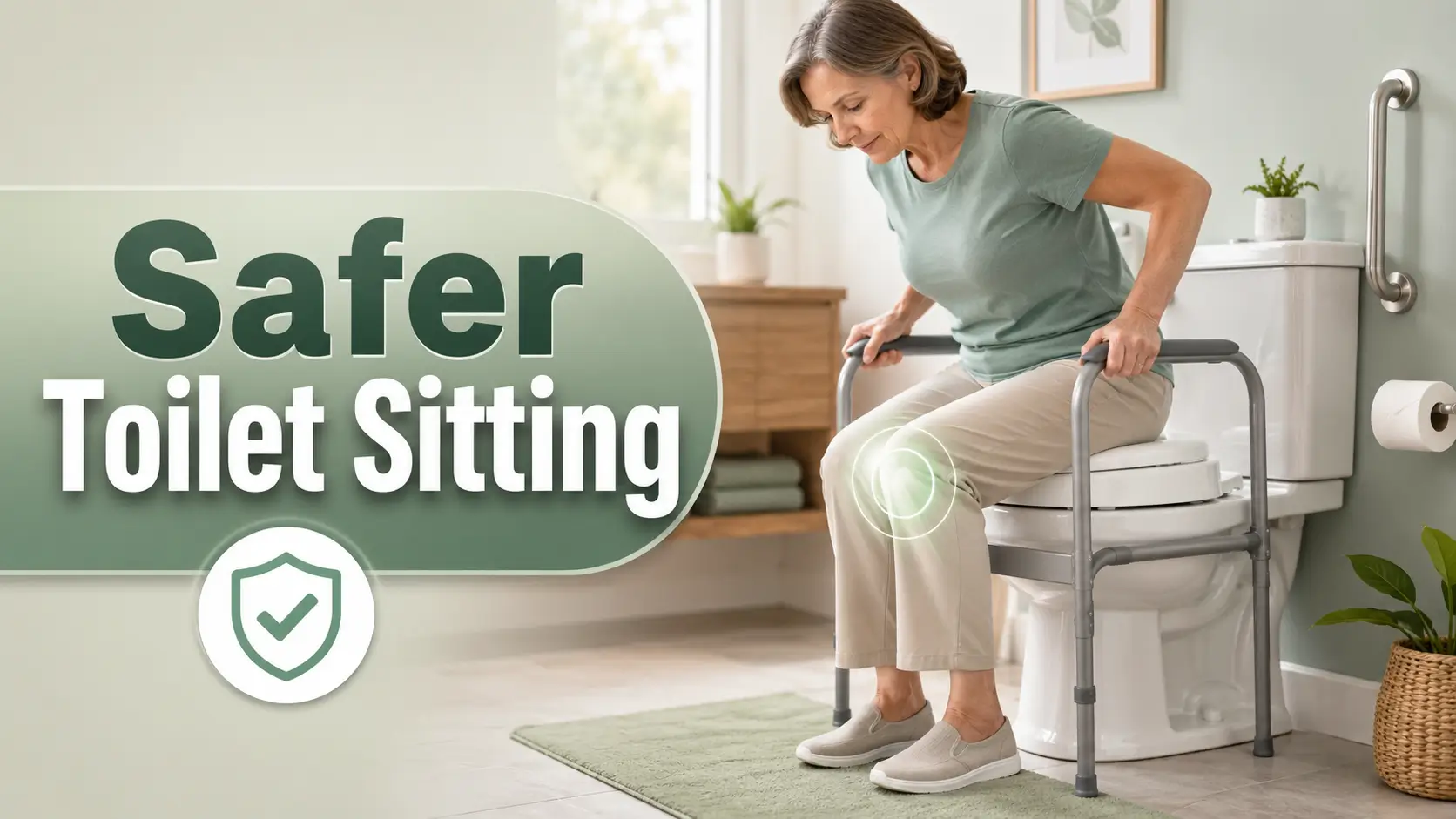
Toilet transfers with knee stiffness need the actual bathroom, prescribed movement limits and assistance to be considered together. This guide provides no universal three-step lowering method or two-to-four-inch riser recommendation.
Written from a family caregiver perspective. The operator cares for an older mother with rheumatic, spinal and knee problems and is not a medical professional. This is planning information, not individual clinical assessment or clearance.
Describe the setup without trying a difficult transfer
A helper can measure the empty toilet area and identify the toilet model, any existing riser or frame, door clearance and support points. Ask the occupational therapist or physiotherapist what information they need. Measurements describe the room; they do not establish that a product or technique is suitable.
Assess the whole task
Discuss approach, clothing, sitting, personal care, standing and departure, not only seat height. Explain the walking aid and required help. A loose accessory, an unassessed towel rail or a family member’s arm should not become an improvised support.
Use equipment only within its instructions and assessed fit
Ask about the exact model’s compatibility, installation, stability and load limit. A higher seat is not automatically better, and two products with the same advertised height may differ in fit. Do not stack cushions or add a stool to solve a mismatch.
Keep a backup and follow-up plan
Ask for the individually taught method and assistance level in writing. If the arrangement cannot be used as taught, arrange the team-approved alternative and help instead of repeating attempts. Record what was difficult during a necessary task, and contact the team about a new change.
Source and correction scope
NHS: moving and handling support supports the distinction between general information and individual care planning.
Editorial rewrite: October 21, 2026. Replaced the previous self-test or universal task instructions and narrative examples with individual assessment questions, practical arrangements and a backup plan. No independent medical review is claimed.
Resolve the whole bathroom transfer
Use these prompts for a private note or your next care-team conversation. Record what is known and mark unanswered questions; completing this table does not establish safety, independence or treatment eligibility.
| Record or clarify | Question and next action |
|---|---|
| Actual toilet and any riser or frame | Can the therapist assess compatibility, stability, dimensions and the complete transfer? |
| Prescribed movement and help | What method was taught, and who is trained to provide the required assistance? |
| An unusable setup | Which assessed alternative and help plan should be used while this is resolved? A height number alone is not permission to try. |
Keep the person’s own report separate from a helper’s observation. Share only with consent and only with people who need the information. Do not put identifying health details in public comments. The visit preparation tool can organize questions; it cannot assess symptoms or approve a task.
Background resource: NHS: moving and handling support. This resource supports general care planning; it does not validate every instruction elsewhere in this article.