
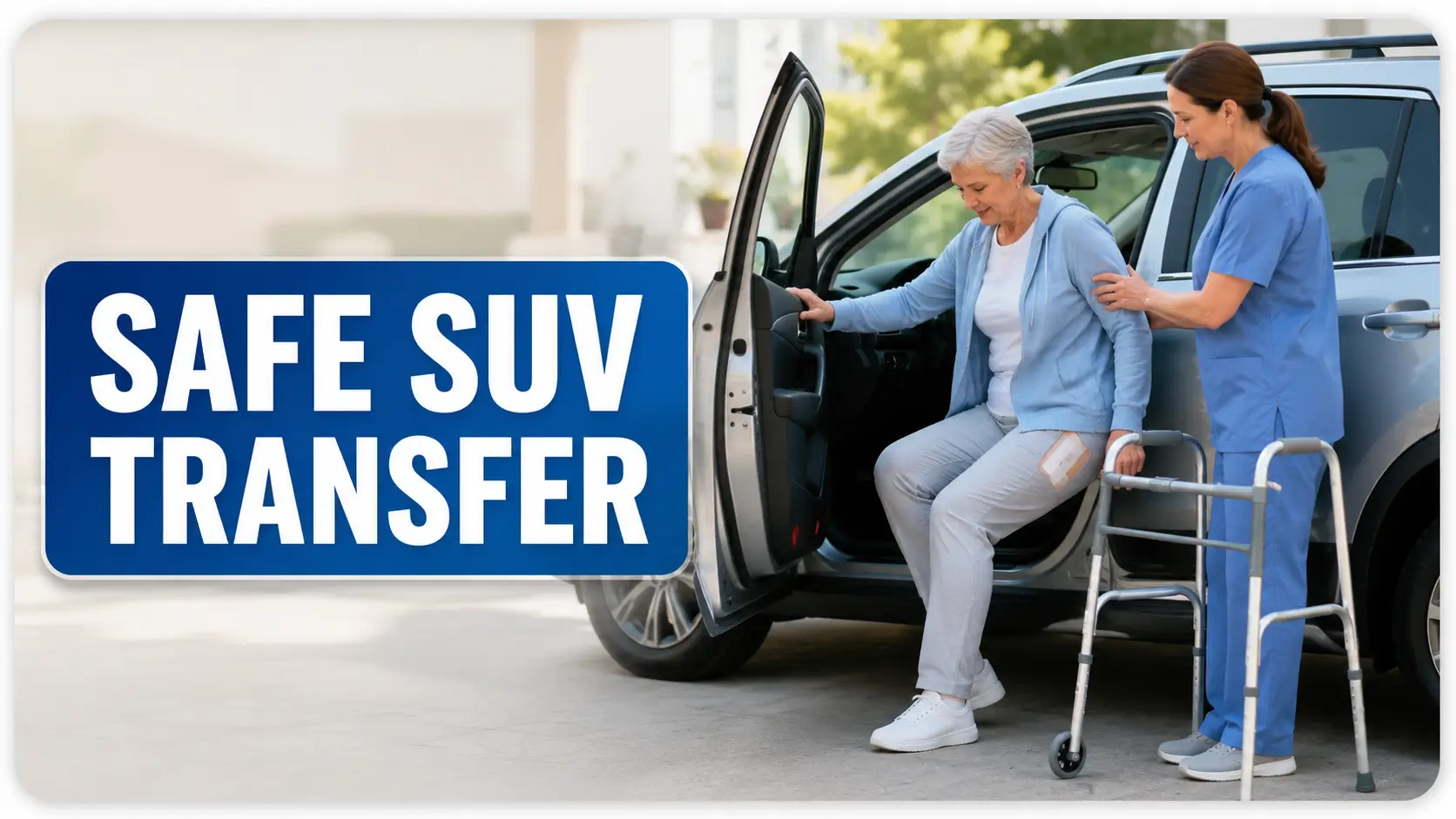
An SUV is not automatically easier to enter after hip surgery. The actual seat, doorway, prescribed weight-bearing limits, and help available all matter. Arrange an assessment of your intended vehicle with your physiotherapist or occupational therapist before discharge or the next necessary trip. This article prepares that conversation; it does not teach a transfer or clear a vehicle for use.
Get emergency help for new chest pain, serious breathing difficulty, collapse, or a suspected hip dislocation after a transfer, such as sudden severe pain with a changed leg position or new inability to bear weight. Do not force the leg back into position, repeat the movement, or test walking. Use your local emergency number (911 in the US). New calf pain or swelling, increasing wound redness or drainage, fever, or new transfer pain needs prompt clinical advice.
Living by Kioptrix is written from a family caregiver perspective, not by a treating clinician. This is general planning information, not an individual rehabilitation plan. No independent medical review is claimed.
Start with the instructions for your operation
“Hip surgery” covers different procedures and restrictions. Do not borrow someone else’s recovery timetable or infer permitted weight-bearing from how little pain you feel. Ask the team to explain your written movement limits, walking aid, assistance level, and what to do if the transfer cannot be completed as taught. If instructions conflict or are missing, resolve them before attempting the trip.
Guy’s and St Thomas’ describes an individual care plan and therapy teaching for getting in and out of a car. Its precaution advice applies when those precautions have been prescribed; it is not permission to give everyone the same angles or leg sequence.
Describe the empty vehicle before trying a transfer
A helper can collect the following information without asking the recovering person to climb in for a test. Share photographs only with consent and through the care team’s agreed channel; exclude faces, number plates, and unrelated identifying details where possible.
| Record | Question to resolve with the therapist |
|---|---|
| Make/model, intended passenger seat, ground-to-seat height on level ground | Can this person reach and leave this seat within their restrictions? |
| Door opening, sill, running board, seat depth, available legroom | Does the whole entry and exit work, including the walking aid? |
| Seat adjustments, headroom, seatbelt and manufacturer instructions | Which configuration can be used during travel as well as during entry? |
| Pickup/drop-off access, uneven surfaces, weather and parking space | Where can the taught transfer be performed without an improvised climb? |
| Helpers available at both ends and aid storage | Who needs training, and who retrieves the aid before exit? |
These details describe a setting; they do not create a seat-height formula or a pass/fail test. A different passenger seat, another vehicle, or an arranged transport service may need assessment. Discuss alternatives with discharge or transport staff if the intended option does not work.
Ask for teaching specific to this vehicle and helper
Request demonstration and supervised practice only as the therapy team directs. Ask where hands, feet, walking aid and helper should go, how any permitted leg assistance is provided, and how to stop or get help. Entry and exit both need a plan. A helper’s presence alone does not establish that they can lift, catch, or support the person.
This guide intentionally provides no universal “back up, sit, pivot” sequence. Do not improvise with a step stool, loose cushion, plastic bag, leg strap or detachable handle. Ask the therapist about any proposed accessory and check the vehicle/equipment manufacturer’s instructions. A product marketed for transfers does not establish suitability for your precautions or safe seatbelt positioning.
Plan the journey separately from entry
Ask whether the journey is appropriate, how to handle delays, and whether and where movement breaks are needed for your circumstances. Avoid turning general advice about longer journeys into a fixed sitting limit or an obligation to get out at an unsuitable stop. Follow your prescribed medicines and clot-prevention plan; do not add or reschedule doses for travel without advice.
Passenger travel and driving require separate decisions. MedlinePlus advises waiting for the hip surgeon’s permission before driving. Tell the team which vehicle you drive and about medicines affecting alertness. Being able to enter it does not establish driving readiness.
A private handover note for the actual trip
- Vehicle/seat and configuration reviewed; date and team contact.
- Written restrictions and transfer instructions to follow.
- Trained helper at departure and arrival; walking aid and storage plan.
- Travel advice, backup transport, and contact if the planned transfer fails.
Keep this note privately with the person’s consent. The visit preparation tool can help organize questions, but cannot assess a transfer. Do not enter identifying medical information into a public comment.
Sources and correction note
- Guy’s and St Thomas’: precautions and individual therapy teaching.
- MedlinePlus: caring for a new hip joint, including vehicle travel and driving.
- MedlinePlus: hip replacement discharge guidance and problems to report.
Editorial update: October 21, 2026. Replaced the universal transfer sequence, unverified personal anecdotes, accessory suggestions, ride calculator and generic completion worksheet with assessment and support planning. Sources are general patient information; your treating team’s instructions govern your care.