

A calmer way to make an informed treatment decision
What to Ask Before Agreeing
to a Cortisone Shot
A cortisone shot can be a useful tool, but the phrase itself is surprisingly vague. The needle might be headed into a joint, a bursa, a tendon sheath, the tissue around a painful structure, or an area near the spine. Those are not interchangeable procedures, and neither are their benefits, risks, or aftercare instructions.
The most important question is not simply, “Will this hurt?” It is whether the injection has a clear target, a realistic goal, and a sensible place in your longer treatment plan. Temporary relief can be valuable, especially when it helps you sleep, move, or participate in rehabilitation. It is less valuable when nobody has defined what happens if the relief lasts three days, three months, or not at all.
This guide gives you plain-English questions to bring into the room before consent. You will learn how to test the diagnosis, compare alternatives, disclose the medical details that change risk, understand possible charges, and leave with a written plan rather than a small bandage and a large cloud of uncertainty.
The goal is not to fear the injection. It is to make sure the needle is attached to a thoughtful plan. 🩺
Snapshot
This article is for adults considering a joint, bursa, or soft-tissue corticosteroid injection, especially a first injection or a repeat shot in the same area. It will help you prepare questions, compare reasonable alternatives, identify risk factors to disclose, understand possible cost differences, and leave the appointment with a measurable follow-up plan.
Table of Contents
Before You Act: Know What This Guide Cannot Decide for You
This guide can help you organize a better consent conversation. It cannot tell you whether a cortisone shot is appropriate for your body, diagnosis, medications, or treatment timeline.
“Cortisone shot” is a casual label for several procedures involving corticosteroid medication. A knee-joint injection, a shoulder-bursa injection, a trigger-point injection, and an epidural steroid injection may involve different anatomy, techniques, benefits, and complications.
Before You Act
Confirm the exact procedure with the clinician who examined you. Spinal injections deserve a separate, procedure-specific conversation about bleeding, infection, nerve injury, contrast agents, sedation, transportation, and emergency instructions. Do not stop a prescribed blood thinner, diabetes medication, or other medicine unless the responsible clinician gives you clear instructions.
Who needs a longer conversation before consenting?
Anyone can benefit from asking questions, but some situations call for a deliberate pause rather than a quick yes at the end of a busy appointment.
- You have diabetes or have previously experienced high blood sugar after steroids.
- You take an anticoagulant, antiplatelet medication, or supplement that may affect bleeding.
- You have a fever, active infection, open wound, rash, or irritated skin near the proposed injection site.
- You are pregnant, immunosuppressed, preparing for surgery, or receiving another form of steroid treatment.
- You have already received injections in the same area.
- The diagnosis remains uncertain or the pain pattern has changed.
- The proposed procedure involves the spine, a nerve, contrast medication, or sedation.
A first shot and a repeat shot are different decisions
For a first injection, the central questions are usually diagnostic confidence, expected benefit, alternatives, and immediate risk. For a repeat injection, add a second layer: What happened last time, how long did the effect last, and is another shot moving treatment forward or merely resetting the clock?
If you are still organizing your symptoms and appointment notes, this orthopedic visit checklist can help you arrive with medication details, prior treatment dates, imaging information, and functional concerns in one place.
Close the Diagnosis Gap Before Treating the Pain
Pain tells you that something needs attention. It does not always identify which structure is responsible. Shoulder pain can come from a bursa, tendon, joint, neck, or nerve. Hip-region pain may originate in the hip joint, surrounding tendons, a bursa, or the lower back.
That is why “Where does it hurt?” should be followed by “What evidence makes this particular structure the likely source?” A precise answer does not guarantee success, but a vague answer should invite more questions.
Ask for the working diagnosis in plain English
A useful explanation connects three pieces: your symptom pattern, the physical examination, and any relevant imaging or testing. It should also acknowledge uncertainty when uncertainty exists.
- What diagnosis are we treating?
- What part of my history or examination supports that diagnosis?
- Is inflammation thought to be the main pain driver?
- Could a nerve, tendon tear, referred pain, infection, fracture, or another problem explain the symptoms?
- Would additional testing meaningfully change the treatment plan?
Is the injection diagnostic, therapeutic, or both?
Some injections are intended mainly to reduce symptoms. Others also provide information. For example, temporary improvement after medication reaches a suspected pain source may strengthen the case that the target matters.
That response is a clue, not a courtroom verdict. Local anesthetic can spread beyond the intended structure, pain can fluctuate naturally, and expectations may affect how symptoms are perceived. Ask how the clinician will interpret immediate relief, delayed relief, partial relief, and no relief.
| Question | A useful answer should clarify | Reason to pause |
|---|---|---|
| What are we treating? | A named condition and target structure | “Just the painful area” with no working diagnosis |
| Why this target? | History, examination, imaging, or prior response | The target was selected only because an image showed age-related change |
| What will the response tell us? | How immediate and delayed changes will guide the next step | No plan to record or interpret the result |
| Could testing change the plan? | Why testing is or is not needed now | New weakness, trauma, fever, or major symptom change is being brushed aside |
Key takeaway
Do not ask only, “Can this shot reduce pain?” Ask, “What diagnosis and target make this particular injection a reasonable test or treatment?”
Short Story: The question that changed the target
Maria had been offered a shoulder cortisone shot after months of pain when reaching into a cupboard. She expected the appointment to be simple: sleeve up, injection, sleeve down.
Before agreeing, she asked, “Are you treating the joint, the bursa, or a tendon problem?” The clinician repeated the examination and asked where the pain appeared during several movements. Her symptoms did not fit neatly with the first target under discussion.
The visit did not end with a dramatic discovery. It ended with something quieter and more useful: a revised working diagnosis, a different rehabilitation plan, and an agreement to reassess before injecting.
The lesson is not that delaying an injection is always better. It is that one anatomical question can expose whether the treatment plan has a clear address or is simply mailing medicine to the neighborhood.
Define Success Before the Needle Comes Out
“I hope it helps” is understandable, but it is not a measurement plan. Pain naturally rises and falls. Without a baseline, it can be difficult to tell whether the injection changed anything meaningful.
Choose two functional goals, not ten vague hopes
Select activities that matter and can be observed. Examples include sleeping for a longer stretch, walking from the parking area without stopping, fastening a seat belt, reaching a shelf, climbing a flight of stairs, or participating more comfortably in physical therapy.
- Current pain range during the activity
- Current distance, duration, or number of repetitions
- Whether you compensate or avoid the task
- What degree of improvement would feel meaningful
- When the result will be reviewed
A simple log is usually enough. You do not need a laboratory-grade spreadsheet. A few dated notes can separate genuine functional change from the emotional lift of having done something.
Ask when each ingredient is expected to act
If the injection contains a local anesthetic, relief may begin before the corticosteroid effect. The anesthetic may wear off while the steroid has not yet taken effect, creating a window when discomfort returns.
Ask what timeline is typical for your procedure, how long to wait before judging the result, and whether you should record the first few hours separately from the next several days.
Decide what an unsuccessful injection would mean
No meaningful improvement may suggest that the target was not the main pain generator, inflammation was not the main driver, the condition is less responsive to steroid medication, or the procedure did not produce a sufficient response. It does not automatically prove one explanation.
Ask the clinician to complete this sentence before the procedure: “If this does not improve your chosen functions by the follow-up date, our next step will be…”
The five-address injection plan
Ask What Is Going In and Where It Is Going
You do not need to memorize pharmacology. You do deserve to know the medication name, dose, target, additional ingredients, and guidance method before consenting.
Which corticosteroid and dose will be used?
Clinicians may choose among different corticosteroid preparations based on the target, condition, desired duration, procedural practice, and individual considerations. Ask that the medication and dose be included in your procedure record.
Also ask whether the injection contains lidocaine or another local anesthetic. Allergies or prior reactions may relate not only to the steroid but also to anesthetics, antiseptics, adhesives, latex, or contrast medication.
Where exactly will the medication be deposited?
“In the shoulder” is not yet an anatomical answer. The medication might be intended for a joint space, bursa, tendon sheath, or tissue near a painful structure.
For tendon-related pain, ask whether the injection is intended to go around a tendon, into a sheath, or somewhere else. Tissue risks differ by site, and pain reduction does not necessarily mean the tendon has regained strength.
Will image guidance meaningfully help?
Some injections are performed using anatomical landmarks. Others use ultrasound or fluoroscopy to visualize structures, guide needle placement, or confirm medication delivery. The right approach depends on the site, procedure, clinician’s judgment, equipment, and clinical question.
Do not assume that image guidance is always necessary or automatically superior for every injection. Ask what it adds in your case, whether it changes the cost, and whether contrast medication is involved.
Who will perform the procedure?
- What type of clinician will perform it?
- How often do they perform this specific injection?
- Will a trainee participate?
- Who should you contact if a problem develops after hours?
- Will you receive a procedure note listing the target and medications?
Show me the nerdy details
When an injection includes a local anesthetic, clinicians may compare the rapid response with the slower response expected from the corticosteroid. Immediate improvement can suggest that the medication reached a relevant pain-sensitive area.
The signal is imperfect. Anesthetic can spread, several structures may contribute to pain, and the examination itself may temporarily change symptoms. Delayed steroid benefit also varies by condition and individual response.
This is why a useful injection log separates the first few hours from later days and records function, not only a single pain score.
Your Medical History Changes the Risk Equation
A procedure that is routine for one person may require extra planning for another. The clinician needs an accurate picture of your health, current medicines, recent illnesses, previous steroid exposure, and near-term procedures.
Ask for a blood-sugar plan if you have diabetes
Corticosteroid injections can temporarily raise blood glucose. The size and duration of the change can vary, so ask your diabetes clinician or injection provider how often to check, what readings should trigger a call, and who should advise you about medication adjustments.
Do not improvise a new insulin or medication dose based only on general internet advice. Your usual diabetes treatment, glucose patterns, injection site, steroid dose, and other health factors matter.
Report illness, infection, antibiotics, and skin changes
Tell the clinic about fever, respiratory illness, urinary symptoms, antibiotics, dental infection, wounds, rashes, or irritated skin near the injection area. The decision to proceed, delay, or investigate further belongs to the treating team.
Do not hide an illness because rescheduling is inconvenient. A postponed appointment is frustrating. An avoidable complication is considerably more so.
Bring the full medication list, including supplements
Blood-thinning decisions depend on the medication, procedure, reason it was prescribed, and risks of stopping it. The injection clinician may need to coordinate with the prescriber.
Include prescription medicines, over-the-counter pain relievers, aspirin, herbal products, vitamins, and supplements. Do not assume that “natural” means irrelevant to bleeding or medication review.
Use this pre-injection health checklist
- Diabetes, prediabetes, or previous steroid-related glucose changes
- Blood thinners, aspirin, anti-inflammatory medicines, or supplements
- Recent fever, illness, antibiotics, infection, wound, or vaccination
- Medication, anesthetic, adhesive, antiseptic, latex, or contrast reactions
- Pregnancy or possible pregnancy
- Immune suppression, cancer treatment, or recurrent infections
- Glaucoma, significant blood pressure concerns, or previous systemic steroid reactions
- Upcoming surgery, dental procedure, travel, competition, or demanding work
- All previous injections, including dates, locations, medications if known, and results
Key takeaway
The clinic cannot personalize risk around information it does not have. Bring the bottles, a pharmacy list, or a current medication record rather than relying on memory under fluorescent lights.
Do Not Confuse Pain Relief With Tissue Repair
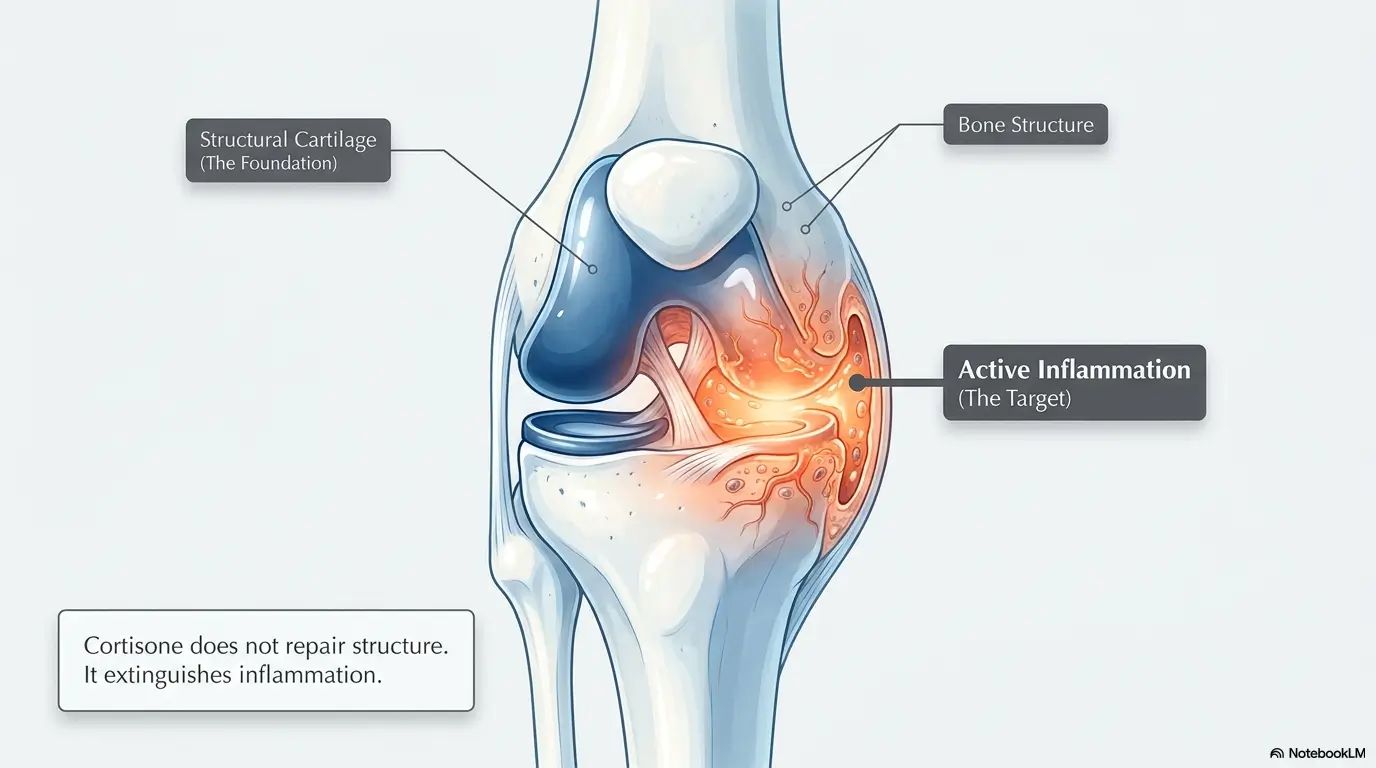
A quieter pain signal can create a powerful impression that the underlying problem has healed. Sometimes symptoms improve because inflammation has been reduced. That does not necessarily mean damaged cartilage, a torn tendon, instability, weakness, or movement habits have been corrected.
Ask what the injection can realistically accomplish
- Is the goal temporary symptom control?
- Could it improve sleep or daily movement?
- Is the purpose to create a window for rehabilitation?
- Will it change the underlying condition or mainly reduce inflammation?
- What problems will remain even if the pain falls sharply?
This distinction is especially important for active adults, workers with physical jobs, and anyone eager to “test” the area as soon as it feels better.
Do not spend the relief all at once
If pain drops, ask how quickly to resume lifting, running, racquet sports, overhead work, stairs, or repetitive tasks. A painless afternoon is not permission to compress a month of missed activity into one heroic Saturday.
Request specific limits and progression criteria. “Take it easy” means different things to an office worker, warehouse employee, caregiver, and recreational athlete.
Use a temporary relief window deliberately
When appropriate, reduced pain may help you participate in physical therapy, restore movement, improve muscle capacity, adjust work habits, or practice a home program. Ask when rehabilitation should restart and what signs mean the progression is too aggressive.
If earlier conservative care has not helped, review what was actually tried, for how long, and whether the program matched the diagnosis. The questions in this guide to pain management before a cortisone injection can help you separate “nothing worked” from “several reasonable options remain incomplete.”
Remember this
Feeling better is valuable. Feeling better and knowing how to use that improvement safely is far more useful.
Ask About the Long Game Before a Repeat Shot
There is no single injection limit that applies equally to every joint, tendon region, spinal procedure, diagnosis, dose, and patient. That is precisely why “How often can I get one?” deserves a personalized answer.
Audit the previous injection before repeating it
- Which structure was injected?
- Which medication and dose were used?
- Was image guidance used?
- How quickly did relief begin?
- How much did pain and function improve?
- How long did the useful improvement last?
- Were there glucose changes, flushing, insomnia, mood changes, skin changes, or a pain flare?
- What rehabilitation or activity changes happened during the relief period?
If nobody knows where the last injection went or what it accomplished, obtaining the prior procedure note may be more useful than relying on a hazy memory of “a shot somewhere around May.”
Ask how repeated exposure may affect nearby tissue
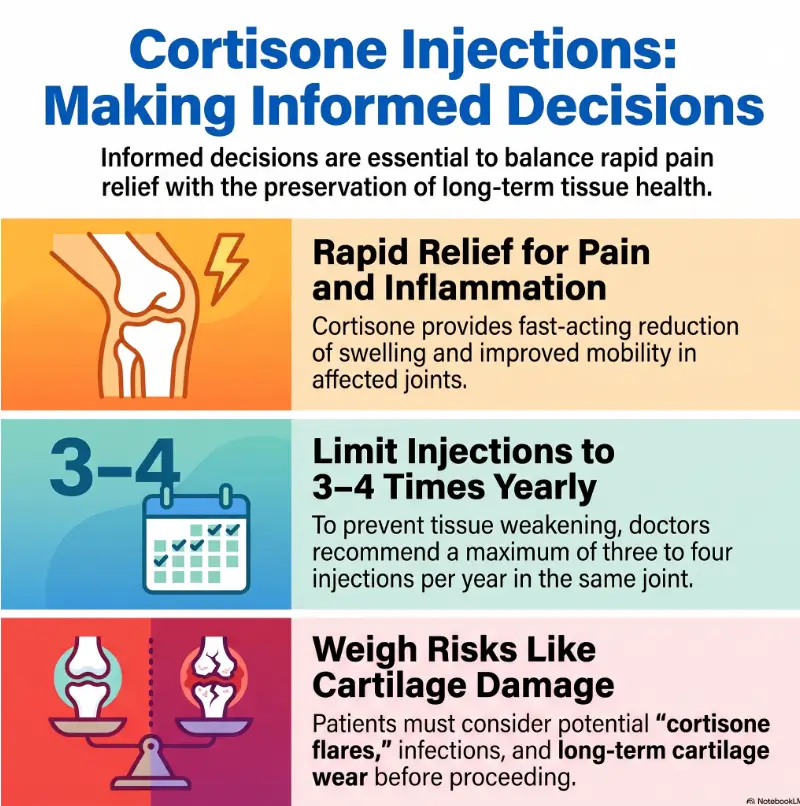
Potential concerns may include cartilage effects, tendon weakening, skin thinning, color changes, soft-tissue changes, bone effects, infection risk, and broader steroid-related effects. The relevance of each concern depends on the injection site, dose, frequency, technique, and individual health profile.
A useful answer should explain why another injection is reasonable now, what interval is being used, and what would make the clinician recommend against further injections.
What treatment decision is another shot postponing?
Repeated injections may be appropriate when they provide meaningful, durable function and the risks remain acceptable. They deserve reassessment when each result is shorter, weaker, or disconnected from a broader treatment plan.
Ask whether another injection is buying useful time, supporting rehabilitation, helping manage a condition that cannot yet receive definitive treatment, or simply delaying a decision nobody wants to discuss.
| Previous response | Questions before repeating | Possible planning focus |
|---|---|---|
| Strong relief with meaningful functional gain | How long did it last, and what made the benefit useful? | Confirm interval, tissue risk, and rehabilitation plan |
| Brief relief only | Was the target correct, and is the diagnosis still convincing? | Reassess before automatically repeating |
| No meaningful relief | What did the failed response teach us? | Consider a different diagnosis, target, or treatment |
| Relief but significant side effects | Would the same medication, dose, or procedure be used? | Compare alternatives and risk-reduction options |
| Unknown result | Can we reconstruct dates, function, and aftercare? | Build a measurable baseline before another procedure |
Key takeaway
“We can always do another one” is not a complete long-term strategy. A repeat injection should answer a current treatment question, not merely repeat an old habit.
Compare Alternatives, Costs, and Provider Choices
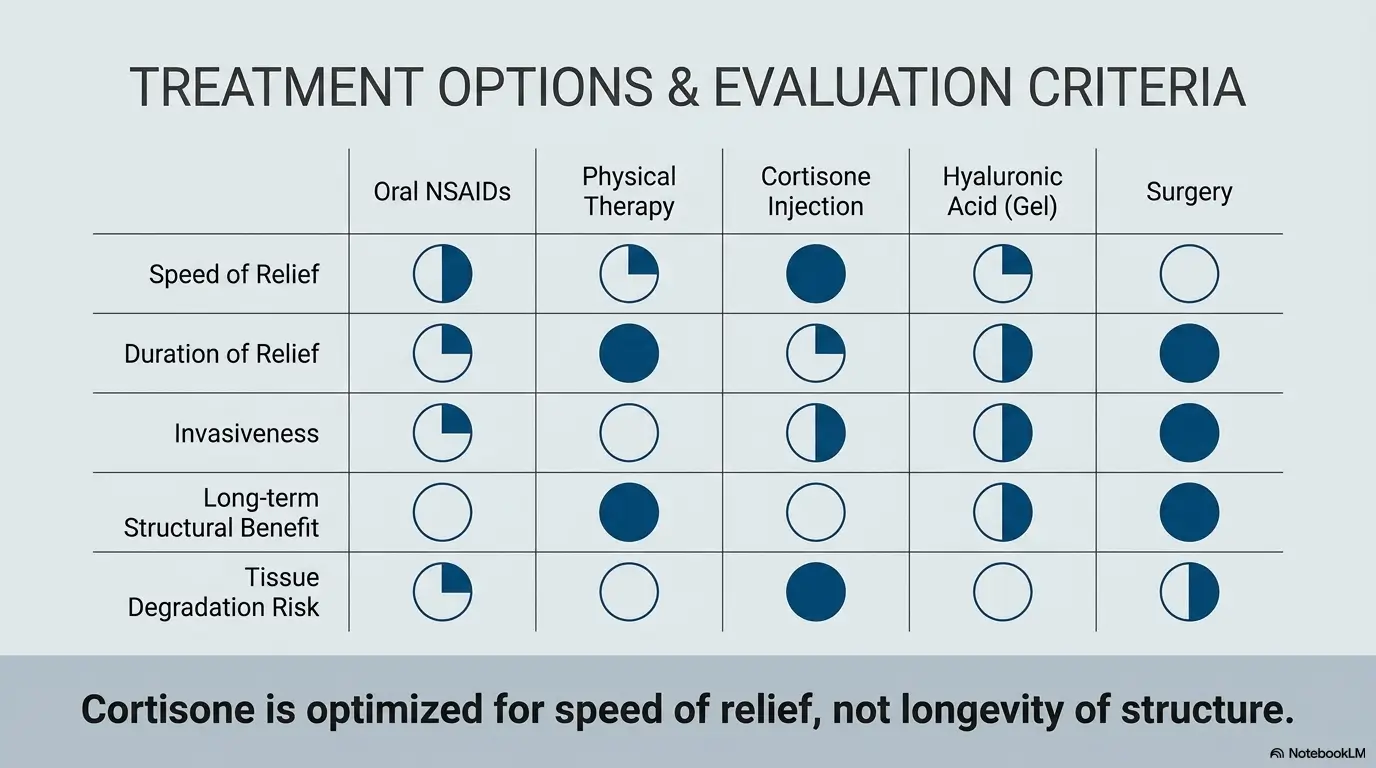
An injection should not feel inevitable simply because it is available during the appointment. Ask what happens if you wait, continue conservative care, revise rehabilitation, use medication differently, seek another opinion, or pursue additional testing.
Ask which alternatives fit the diagnosis
- Activity modification and a defined reassessment period
- Physical or occupational therapy matched to the working diagnosis
- Home exercise with professional instruction
- Bracing, splinting, footwear changes, or ergonomic modification
- Topical or oral medication when medically appropriate
- Aspiration or laboratory testing when fluid, crystals, bleeding, or infection is a concern
- Another type of injection when supported by the diagnosis
- Referral to a different specialist
- Surgical consultation when structural disease and functional loss justify discussion
The point is not to collect every option. It is to understand the most reasonable alternatives for your condition and what each choice costs in time, money, inconvenience, side effects, and delayed recovery.
When a free DIY step is enough, and when more help may be worth it
| Approach | May be enough when | Consider additional professional help when |
|---|---|---|
| Symptom and activity log | You need a clearer baseline before follow-up | Pain is rapidly changing, severe, or paired with weakness or systemic symptoms |
| Basic home modifications | Avoidable tasks or positions repeatedly trigger symptoms | You are falling, losing independence, or cannot perform essential activities safely |
| Clinician-provided home exercise | The diagnosis is reasonably clear and progress is steady | Exercises increase nerve symptoms, swelling, weakness, or lasting pain |
| Standard office injection discussion | The target is accessible and the plan is straightforward | The target is uncertain, anatomy is complex, or prior treatment failed |
| Second opinion | Optional when the plan and rationale are clear | The diagnosis is uncertain, repeat procedures are proposed, or major treatment choices conflict |
A second opinion does not have to be an act of rebellion. It can be a quality-control step when the diagnosis is unclear or the proposed injection is one of several materially different paths. These second-opinion questions can help you compare reasoning rather than merely collecting another yes or no.
Ask what you are paying for before the procedure
The final cost may involve more than the medication. Depending on the setting and procedure, charges may relate to the evaluation, injection, imaging guidance, contrast, facility, radiology, supplies, or follow-up.
- Is prior authorization required?
- Is the clinician in network?
- Will the procedure occur in an office, imaging center, or hospital facility?
- Is image guidance billed separately?
- Will another professional submit a separate bill?
- Is there a facility fee?
- What is the estimated patient responsibility?
- Does the estimate include the medication and follow-up?
- What happens financially if the procedure is canceled or rescheduled?
For more preparation questions, see this guide to joint injection consultation costs. An estimate is not a guarantee, but it can prevent a clinically ordinary appointment from becoming a billing scavenger hunt.
Compare the procedure setting, not only the needle
| Procedure context | Questions to ask | Possible cost drivers |
|---|---|---|
| Office-based landmark-guided injection | Why is landmark guidance suitable for this target? | Evaluation, medication, injection procedure |
| Office-based ultrasound-guided injection | What does ultrasound add for this anatomy or diagnosis? | Imaging guidance, procedure, medication |
| Fluoroscopy-guided procedure | Will contrast be used, and are transportation or medication restrictions required? | Imaging, contrast, facility, professional fees |
| Spinal injection or procedure with sedation | What are the procedure-specific risks, preparation steps, and emergency instructions? | Facility, imaging, sedation, monitoring, separate clinicians |
The least expensive setting is not automatically the correct setting. The most elaborate setting is not automatically better. The right comparison is clinical need, safety, expected information, convenience, and total out-of-pocket cost.
Build the Aftercare and Warning-Sign Plan
Aftercare instructions should be part of consent, not an improvised conversation while you are already reaching for your coat. Ask for written guidance that matches the procedure and your normal activities.
Clarify the first 24 to 48 hours
- How long should the injection site remain covered?
- When can you shower, bathe, swim, or use a hot tub?
- Should you use ice, and for how long?
- Which pain medicine is acceptable for you?
- When can you drive?
- When can you return to work, lifting, exercise, sports, or physical therapy?
- Should you monitor glucose, blood pressure, or another condition?
- When should soreness begin improving?
Temporary discomfort, bruising, warmth, swelling, or a short-lived increase in pain may occur after some injections. Ask what is expected for your procedure rather than assuming every symptom is either harmless or catastrophic.
Ask how to handle a possible post-injection flare
A temporary pain flare can occur after a corticosteroid injection. Before leaving, ask how long worsening discomfort might reasonably last, which self-care steps are appropriate, and when increasing pain should trigger a call.
Writing down the timing, swelling, skin appearance, temperature, and effect on movement can make a follow-up call more useful. This guide to a steroid flare after an injection offers additional questions for distinguishing expected soreness from symptoms that need attention.
Know which changes deserve prompt medical guidance
Contact the treating clinic promptly for intense or worsening pain, increasing swelling, spreading redness, warmth, drainage, fever, or skin changes that continue to progress. Follow the clinic’s diabetes plan for unusually high or difficult-to-control glucose readings.
Seek urgent medical help for breathing difficulty, facial or throat swelling, fainting, severe weakness, new significant numbness, loss of bladder or bowel control, or other symptoms identified in your procedure-specific emergency instructions.
Spinal procedures require their own warning-sign list. Review the exact instructions from the procedural team and do not substitute general joint-injection advice for a spine procedure.
Use a simple aftercare timeline
| Time | What to record | What to confirm in advance |
|---|---|---|
| Before the injection | Pain range, function, medications, glucose if relevant | Target, ingredients, restrictions, contact details |
| First several hours | Numbness, immediate relief, weakness, new symptoms | Expected anesthetic effects and driving rules |
| First 24 to 48 hours | Soreness, swelling, redness, sleep, glucose if relevant | Ice, medication, bathing, work, and activity guidance |
| Following days | Functional change and delayed benefit | When the steroid effect should be assessed |
| Follow-up date | Duration and quality of improvement | Next step for success, partial response, or failure |
Do not leave with only “call if it gets worse”
Ask what “worse” means, which number to call during business hours, what to do after hours, and which symptoms require urgent or emergency care.
Cortisone Shot FAQ
How painful is a cortisone shot?
Discomfort varies by injection site, needle path, tissue sensitivity, fluid pressure, technique, and whether local anesthetic is used. You may feel a pinch, pressure, burning, or brief deeper discomfort. Ask what pain control is planned and whether intense sharp pain during the procedure should be reported immediately.
How long does it take for a cortisone injection to work?
The local anesthetic, when included, may produce an earlier effect than the corticosteroid. Steroid-related improvement may take longer and varies by condition, medication, and person. Ask for the expected timeline for your specific procedure and when the result should be judged.
How long can pain relief last?
Relief may be absent, brief, or last considerably longer. Duration depends on the diagnosis, target, severity, activity demands, rehabilitation plan, and individual response. Ask for a realistic range rather than a promise.
Can a cortisone shot make the pain worse at first?
Yes, temporary soreness or a post-injection flare can occur. Increasing pain accompanied by fever, spreading redness, warmth, drainage, marked swelling, or progressive symptoms deserves prompt medical guidance.
Can I drive myself home after the injection?
That depends on the injection site, local numbness or weakness, sedation, clinic policy, and your ability to control a vehicle safely. Spinal injections and procedures involving sedation may require a driver. Confirm transportation requirements before the appointment.
How often can cortisone shots be given in the same area?
There is no universal schedule that fits every site and diagnosis. Clinicians consider previous benefit, interval, dose, tissue health, diabetes, infection risk, planned surgery, and other medical factors. Ask what limit or interval your clinician recommends and why.
Can a cortisone shot raise blood sugar without diabetes?
Corticosteroids can affect glucose regulation, although monitoring instructions are especially important for people with diabetes or known glucose concerns. Discuss previous reactions, symptoms, and whether monitoring is appropriate for you.
What should I avoid after receiving the injection?
Restrictions vary by procedure. You may be advised to limit strenuous activity for a period, protect the injection site, or delay certain work, exercise, bathing, or rehabilitation activities. Follow the written instructions from the clinician who performed the injection.
Build Your 15-Minute Question List
You do not need to arrive with a medical textbook under your arm. Fifteen focused minutes can turn a vague procedure into an informed decision.
Minutes 1 to 5: Write the facts that change risk
- Your main symptom and the activity it limits most
- Current medicines, supplements, and allergies
- Diabetes or previous steroid reactions
- Recent illness, antibiotics, infection, wounds, or skin problems
- Previous injection dates, locations, benefits, and side effects
- Upcoming surgery, travel, work demands, or sports commitments
Minutes 6 to 10: Copy these core questions
- What diagnosis are you treating?
- Where exactly will the medication be placed?
- What evidence makes that structure the likely pain source?
- Which steroid, dose, anesthetic, or contrast medication will be used?
- What improvement is realistic, and when should it begin?
- How will we measure whether the injection worked?
- What are the most relevant risks for my medical history?
- What should I avoid afterward?
- Which symptoms require a call or urgent help?
- What is the next step if the shot does not help?
Minutes 11 to 15: Compare the plan with the alternatives
- What happens if I wait?
- Which conservative treatments remain reasonable?
- Would image guidance materially change accuracy or cost?
- Would a second opinion add useful information?
- What charges may come from the clinician, facility, imaging, or medication?
- What would make you advise against doing this injection today?
Your final consent sentence
“I understand the diagnosis being treated, the exact injection target, the expected benefit, my relevant risks, the alternatives, the aftercare instructions, and what we will do if it does not work.”
Bring the list on paper or in your phone. Record the answers in plain language. If the plan still feels foggy, it is reasonable to ask for clarification before consenting.
The best next step is simple: choose two functional goals and write down the ten core questions today. That small page can keep the appointment focused when time is short, pain is loud, and the examination room suddenly makes every carefully prepared thought disappear.
Last reviewed: 2026-08