

Before you accept a walker, wheelchair, hospital bed, CPAP equipment, brace, glucose monitor, or other durable medical equipment, ask the supplier one precise question: “Do you accept Medicare assignment for this item?” If the supplier accepts assignment, it agrees to accept the Medicare-approved amount as payment in full for the covered item. With Original Medicare, that generally means your responsibility is limited to the applicable Part B deductible and coinsurance for the Medicare-approved amount.
Do not stop at “Yes, we take Medicare.” A supplier can be enrolled in Medicare without being a participating supplier, and a non-participating supplier may decide whether to accept assignment on a particular claim. Medicare specifically recommends checking both enrollment and assignment before you get DME.
The safest approach is to verify the supplier in Medicare’s medical equipment and supplier directory, confirm assignment directly with the supplier for your exact equipment, and get the expected patient charge in writing before delivery.
Table of Contents

First, Know What Medicare Assignment Actually Means
Assignment is an agreement to accept the Medicare-approved amount as the full approved charge for a Medicare-covered item or service. Medicare’s assignment guidance explains that when assignment is accepted, the provider or supplier bills Medicare directly and generally cannot charge you more than the applicable Medicare deductible and coinsurance for the approved amount.
For DME, three terms can sound almost interchangeable at the counter but have different consequences.
| Supplier status | What it means for you |
|---|---|
| Medicare-enrolled | The supplier is enrolled so Medicare can process eligible DME claims from that supplier. Enrollment alone does not necessarily mean every claim will be assigned. |
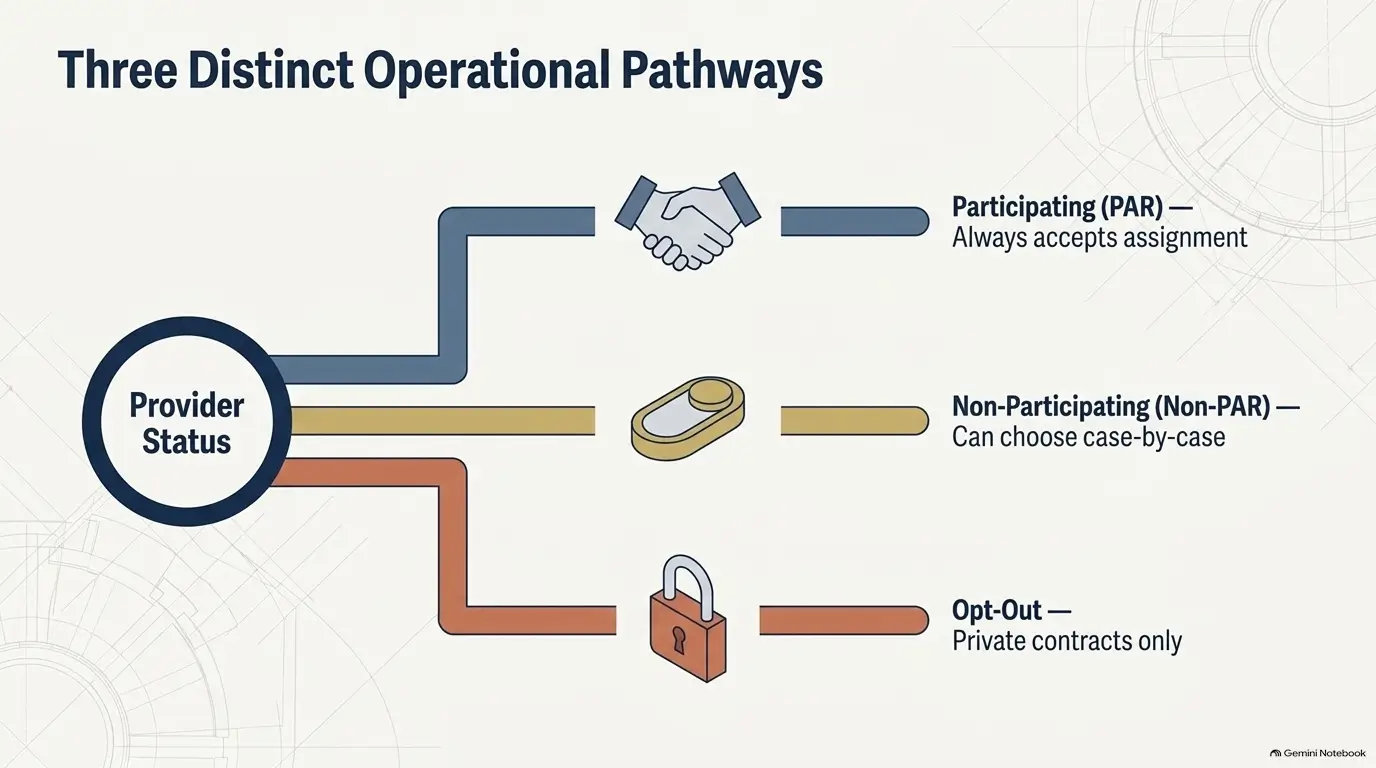
| Participating supplier | The supplier has agreed to participate in Medicare and must accept assignment on Medicare claims subject to that participation. |
| Non-participating supplier | The supplier may still be enrolled in Medicare but is not required to accept assignment in every situation. It may choose to accept assignment for your particular claim. |
| Not enrolled in Medicare | Medicare generally will not pay for covered DME obtained from a supplier that is not properly enrolled for Medicare DME billing. |
That distinction is why the sentence “We accept Medicare” is too fuzzy to use as a cost estimate. What you need to know is whether the supplier is enrolled, whether it participates, and whether it will accept assignment for the specific item being delivered to you.
Step 1: Confirm That You Are Using Original Medicare Rules
The assignment question is particularly important for people receiving DME through Original Medicare. Medicare Part B covers many medically necessary types of DME when the coverage requirements are met, including walkers, wheelchairs, hospital beds, certain glucose-monitoring equipment, oxygen equipment, CPAP equipment, and other items listed in Medicare’s DME coverage guidance.
If you have a Medicare Advantage plan instead, do not use Original Medicare assignment as your only supplier test. Medicare Advantage plans may use provider and supplier networks, service areas, authorization requirements, and plan-specific cost sharing. In that situation, call the plan and ask whether the exact supplier and location are approved for your DME benefit.
If equipment is part of orthopedic care, the site’s guide to Medicare Advantage orthopedic care explains why walkers, braces, canes, and other equipment may need to come from a plan-approved supplier rather than simply a business that says it accepts Medicare.
Step 2: Identify the Actual Supplier Before You Search
Write down the supplier’s legal or billing name, physical location, phone number, and, if available, its National Provider Identifier or other identifying information. This matters because the company whose name appears on the storefront may not be the entity that submits the Medicare claim.
This can happen when equipment is handed to you inside a doctor’s office, orthopedic clinic, hospital, rehabilitation facility, or discharge department. The clinician may prescribe the equipment while a separate DME company supplies and bills it.
For braces in particular, see the site’s guide on checking orthopedic brace insurance coverage before buying. It explains why identifying the billing supplier and the actual HCPCS code can be more useful than relying on the clinic name or product label.
Step 3: Search Medicare’s Medical Equipment Supplier Directory
Go to the official Medicare medical equipment and supplier search and enter the ZIP code where you need the equipment. Search for the type of equipment you need and locate the supplier you intend to use.
- Confirm that the supplier appears in Medicare’s system.
- Make sure you are looking at the correct location.
- Check whether the supplier provides the category of equipment you need.
- Review available information about whether the supplier accepts Medicare assignment.
- Do not assume another branch of the same company has identical Medicare status.
CMS also maintains DMEPOS resources, including information about participating suppliers and DMEPOS payment rules. The online directory is a strong starting point, but your verification should not end there.
Step 4: Call the Supplier and Use the Exact Word “Assignment”
Call before delivery or purchase. Do not ask only, “Do you take Medicare?” That question can produce a technically true but financially incomplete answer.
Instead, ask:
- “Are you currently enrolled as a Medicare DMEPOS supplier?”
- “Are you a participating Medicare supplier?”
- “Will you accept Medicare assignment for HCPCS code [code]?”
- “Will you accept the Medicare-approved amount as payment in full for the covered portion of this item?”
- “What amount do you expect me to pay before or at delivery?”
- “Are there any upgrades, accessories, supplies, fitting charges, or other items that Medicare is not expected to cover?”
If you do not yet know the HCPCS billing code, ask the supplier for it. A statement that assignment is accepted for “wheelchairs” in general is less useful than confirmation tied to the wheelchair, accessory, or supply code that will actually be submitted.
Step 5: If the Supplier Is Non-Participating, Ask About Your Individual Claim
A non-participating supplier is not automatically unusable. Medicare explains that a non-participating supplier may choose to accept assignment for a particular claim.
Ask directly:
“I understand that you are not a participating supplier. Will you accept assignment for this specific Medicare-covered item for me?”
If the answer is no, ask for the supplier’s total non-assignment charge in writing before accepting the equipment. You may have to pay more upfront, and Medicare may send its payment for the covered portion to you after the claim is processed rather than paying the supplier in the normal assigned-claim manner.
There is another reason not to shrug at an unassigned DME claim: do not assume that the familiar Medicare 15% limiting-charge rule for certain non-participating professional services protects every piece of medical equipment. Medicare notes that the limiting charge does not apply to some supplies and DME. Ask for the exact charge rather than trying to calculate a universal maximum yourself.
Step 6: Be Extra Careful With Rental Equipment
Rental equipment deserves a second assignment question because the financial relationship can continue for months.
Medicare advises beneficiaries using rented DME to make sure the supplier will accept assignment for all rental months. Do not assume that accepting assignment for the first delivery automatically answers what will happen on every future rental claim.
- Ask how many rental months Medicare rules anticipate for the equipment.
- Confirm whether assignment will be accepted for every billed rental month.
- Ask what happens if your supplier’s Medicare participation status changes.
- Ask who handles repairs, replacements, maintenance, and supplies.
- Keep every delivery ticket and Medicare claim notice.
This is particularly important with equipment that may remain in the home for an extended period, such as wheelchairs, hospital beds, oxygen equipment, respiratory devices, and other recurring rental items.
Step 7: Confirm That the Item Itself Meets Medicare Requirements
An assignment-friendly supplier does not make an otherwise noncovered item payable. Supplier status is only one gate.
For Original Medicare to cover DME, the item generally must meet Medicare’s DME requirements, be medically necessary under the applicable coverage rules, and be ordered by an eligible treating practitioner for use in the home. Certain items have additional documentation, face-to-face encounter, written-order, or prior-authorization requirements.
Before delivery, ask the supplier whether it has everything required to submit the claim:
- The clinician’s order or prescription
- The correct equipment description and HCPCS code
- Required medical-record documentation
- Any necessary face-to-face encounter documentation
- Prior authorization when applicable
- The correct delivery and billing information
For someone arranging equipment around an operation, the site’s surgery recovery checklist is a useful companion because it separates equipment that may come from the hospital or clinic from items that may need to be obtained through an insurance or DME supplier.
What Assignment Can Do to Your Out-of-Pocket Cost
Suppose Medicare approves $500 for a covered DME item and you have already satisfied the applicable Part B deductible. If the supplier accepts assignment and the normal 20% Part B coinsurance applies, your share would generally be $100 and Medicare’s share would generally be based on the remaining approved amount.
That does not mean every $500 product creates a $100 bill. Medicare coverage, deductible status, secondary insurance, equipment category, rental rules, noncovered upgrades, and other circumstances can change the result. The example simply shows why the Medicare-approved amount, rather than the supplier’s sticker price, matters when assignment is accepted.
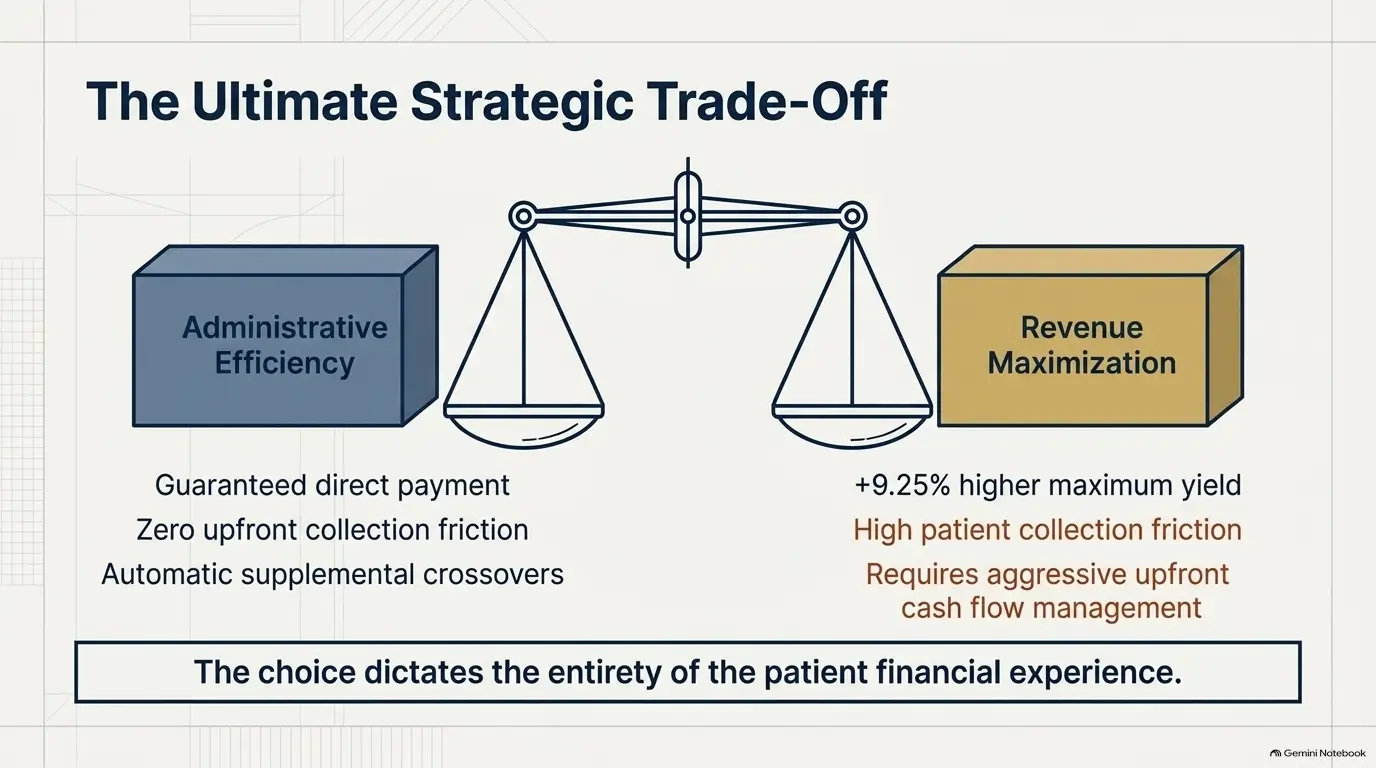
If assignment is not accepted, your cash-flow problem may be very different. The supplier may require substantially more money upfront, and the supplier’s charge may exceed the Medicare-approved amount. That makes the assignment check worth doing before the box crosses the threshold.
Get the Answer in Writing Before Delivery
A phone conversation is useful. A written estimate is better.
Ask the supplier for a document, secure message, email, or itemized estimate showing:
- Supplier legal name and location
- Equipment description
- Expected HCPCS code or codes
- Purchase or rental status
- Whether Medicare assignment will be accepted
- Estimated Medicare-approved amount, if available
- Estimated deductible and coinsurance responsibility
- Noncovered upgrades or accessories
- Amount requested from you before delivery
A written estimate is not a guarantee that Medicare will ultimately pay the claim. It does, however, give you a much better record of the information used when you agreed to receive the equipment.
Watch for the “Standard Item Plus Upgrade” Problem
A supplier may accept assignment for a Medicare-covered standard item while also offering a more expensive feature, accessory, or upgrade. That does not automatically make the offer improper, but you should know which portion Medicare is expected to cover and which portion could become your responsibility.
Ask: “Is every component of what you are delivering included in the Medicare-covered code, or am I agreeing to pay separately for an upgrade or noncovered feature?”
Do not sign a financial notice you do not understand simply because delivery is already underway. Ask the supplier to identify the item, code, expected Medicare treatment, and amount for which it says you may be personally responsible.
If the Supplier Says, “We Bill Medicare, but We Don’t Accept Assignment”
That answer can be legitimate, but it changes your next questions.
- Will you accept assignment for my claim as an exception?
- What is your full charge if you do not?
- How much must I pay today?
- Who receives Medicare’s payment?
- Will you submit the Medicare claim?
- Can you give me all of this in writing?
- Can I cancel the order before delivery without a charge?
Then compare the answer with another Medicare-enrolled supplier that accepts assignment. A few minutes of comparison can matter much more than comparing retail prices alone.
What to Do If the Claim Is Later Denied
Assignment does not guarantee coverage. A claim can still be denied because the item did not satisfy Medicare coverage criteria, documentation was incomplete, an order was missing, prior authorization was required, the wrong code was submitted, or another administrative requirement was not met.
If a brace or related DME claim has already been rejected, the site’s denied brace insurance appeal guide provides a useful framework for separating supplier problems, coding mistakes, missing records, medical-necessity disputes, and authorization failures instead of treating every denial as the same problem.
For Original Medicare, review the Medicare Summary Notice when the claim appears. Compare the equipment description, supplier, Medicare-approved amount, amount Medicare paid, and the amount the notice says you may owe. If the numbers do not match what the supplier told you, contact the supplier and Medicare before assuming the bill is correct.
The Five-Minute DME Assignment Check
- Identify your coverage. Confirm whether you have Original Medicare or Medicare Advantage.
- Identify the supplier. Get the billing company’s legal name and exact location.
- Search Medicare. Look up the supplier in the official medical equipment supplier directory.
- Call and ask about assignment. Use the exact item or HCPCS code and confirm assignment for the claim.
- Get the price in writing. Record your expected payment, any noncovered charges, and, for rentals, whether assignment applies to every rental month.
If any answer remains vague, do not let the phrase “we take Medicare” carry more weight than it deserves. Call another supplier or contact Medicare at 1-800-MEDICARE for help checking your options.
The Bottom Line
To check whether a DME supplier accepts Medicare assignment, use Medicare’s supplier directory and then confirm the answer directly with the supplier for the exact item you will receive. A Medicare-enrolled supplier is not necessarily the same thing as a participating supplier, and a non-participating supplier may accept assignment only on individual claims.
For rented equipment, confirm assignment for every rental month. For Medicare Advantage, shift the question toward the plan’s network, authorization, and supplier rules. And before any equipment is delivered, get the item, supplier, assignment status, and expected patient charge onto the same piece of paper.
Medical equipment should solve a practical problem, not introduce a billing riddle with wheels attached. Five careful minutes before delivery can make the difference between a predictable Medicare claim and a surprisingly expensive one.