
This site is written from a family-caregiver perspective. The operator is not a medical professional. This article provides general education and preparation prompts rather than an individual assessment.
Buy from the care plan rather than a generic list
Use these prompts to prepare questions and arrangements. They do not diagnose a condition, determine coverage or clear an activity.
- What to record
- Discharge instructions, items already available, equipment prescribed and who will teach its use.
- What to ask
- Which supplies are actually needed, which can be provided or hired and who checks fit?
- Next action and owner
- Confirm needs before purchasing; a completed shopping list does not establish readiness for home recovery. Write down who will act and when to follow up.
Keep personal records private. You can use the visit preparation organizer to arrange questions; do not post identifying health information in comments.
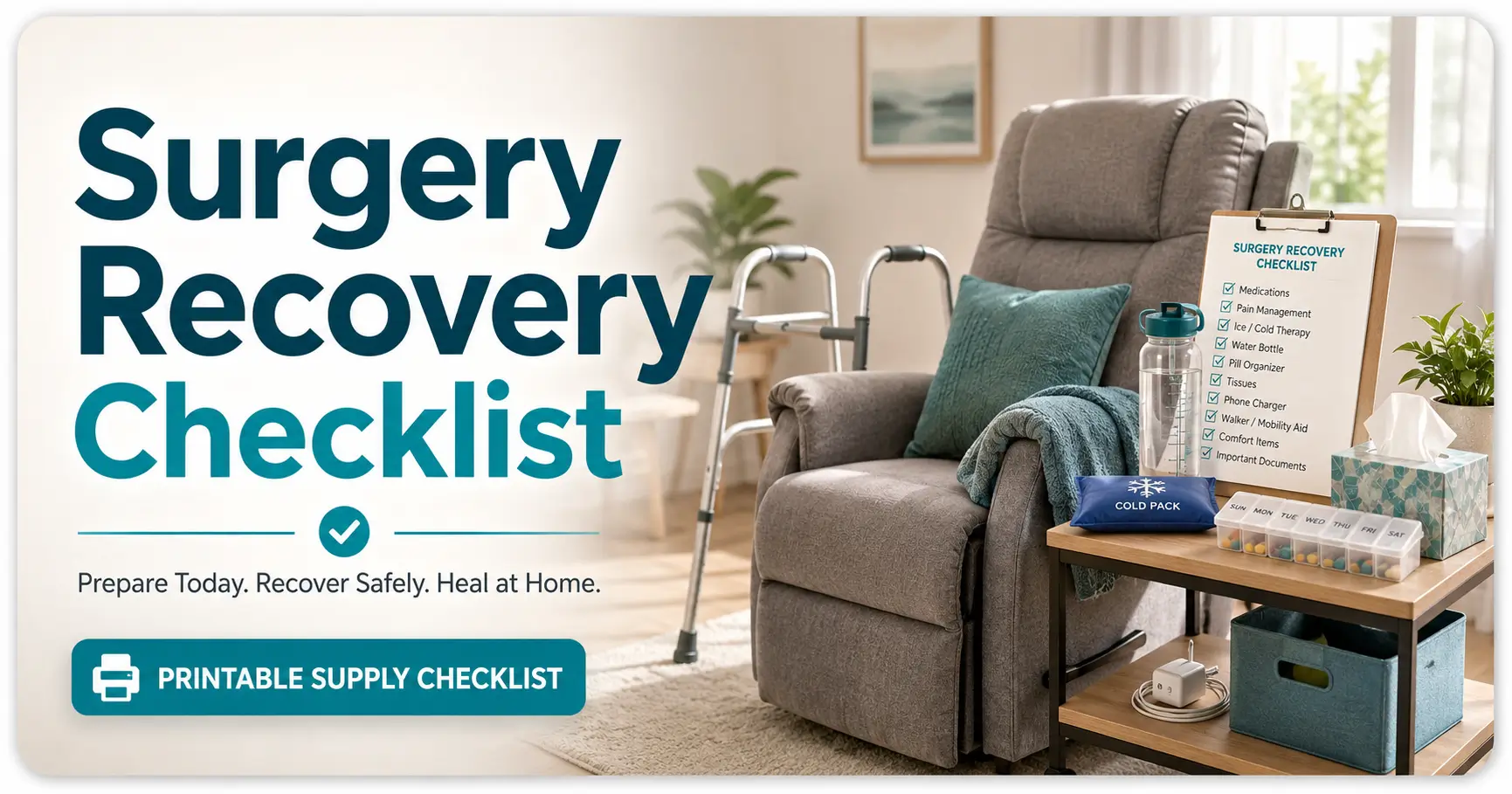
Orthopedic surgery preparation guide
Surgery Recovery Supply Checklist Printable:
Build a Safer Joint-Pain Recovery Zone
The days before orthopedic surgery can feel strangely domestic. One moment you are discussing anesthesia and blood-clot prevention; the next, you are standing in a bathroom wondering whether the towel rack could support your weight. It probably cannot.
A useful surgery recovery supply checklist is not an enormous shopping list. It is a map of the first difficult week: how you will stand, carry water, manage pain medicine, reach the toilet, protect the incision, sleep, and call for help without crossing a dark room on an unsteady leg.
This joint-pain edition separates essential supplies from optional comfort products and items that require medical approval. Use it for hip, knee, shoulder, ankle, fracture, or other orthopedic procedures, then have the surgical team cross out anything that does not fit your exact discharge plan.
The best recovery kit is not the fullest cart. It is the setup that matches the patient, the procedure, and the written instructions. 🦴
Snapshot
Who it helps: Adults preparing for orthopedic surgery and family caregivers setting up the home. What it solves: Confusing supply lists, duplicate purchases, fall hazards, and poorly organized pain care. What comes next: Print the checklist, mark every item needing approval, and bring it to the pre-op appointment.
Table of Contents
Before You Act
This article offers general preparation guidance, not a personal treatment plan. The surgeon’s discharge instructions take priority. Confirm medication combinations, weight-bearing limits, wound products, compression devices, braces, cold or heat therapy, supplements, and bathroom equipment with the surgical team, pharmacist, physical therapist, or occupational therapist. Patients with drains, casts, wound-vac systems, complex braces, serious medical conditions, or no safe help at home need an individualized plan.
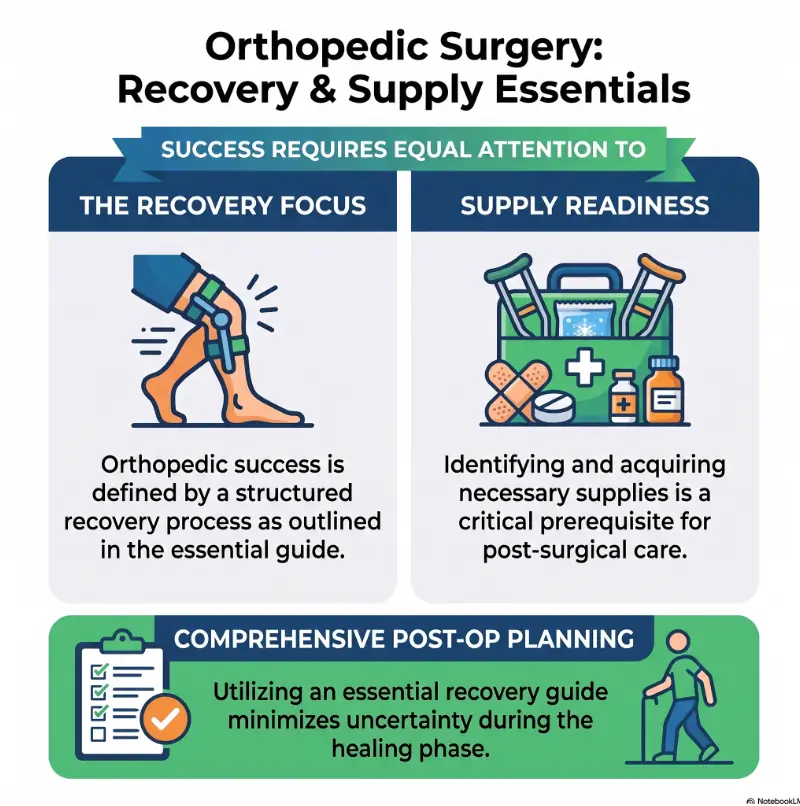
Discharge Orders Before Shopping: Four Answers Control the List
Shopping too early is one of the easiest ways to turn recovery preparation into an expensive pile of plastic. A walker, toilet riser, brace, cold-therapy machine, or positioning wedge may look universally useful. None of them is universal.
Hip precautions differ from knee precautions. Shoulder surgery can make opening containers harder than walking. An ankle patient may be non-weight-bearing, while another patient may be encouraged to place weight through the leg using a prescribed device.
Get these four answers in writing
- Weight-bearing status: May the patient place full, partial, toe-touch, or no weight on the operated limb?
- Required support: Which walker, cane, crutches, sling, boot, brace, or immobilizer is prescribed?
- Incision rules: May the dressing be removed, and may the incision get wet?
- Pain and swelling plan: Which medicines, cold-therapy methods, elevation positions, and compression products are approved?
Do not settle for “use crutches for a while” or “ice as needed.” Ask what the instruction means in practice: how often, for how long, in what position, and what should trigger a phone call.
Find out who provides each item
| Supply | Hospital or clinic | Insurance or DME supplier | Buy independently | Confirm first |
|---|---|---|---|---|
| Walker or crutches | Ask | Often possible | Only after fitting | Yes |
| Brace, sling, or boot | Often provided | Sometimes | Rarely wise without orders | Yes |
| Dressing supplies | Starter quantity may be provided | Varies | Possible with exact specifications | Yes |
| Cold packs | Varies | Usually limited | Common purchase | Confirm use schedule |
| Compression equipment | May be supplied | Coverage varies | Do not guess pressure or type | Yes |
| Bathroom equipment | Usually not | Coverage varies | Common purchase or rental | Confirm height and design |
Key takeaway
The first version of the printable should be a question sheet, not a shopping sheet. Equipment comes after the procedure, side, weight-bearing order, and home-transfer needs are known.
Good, better, and best ways to spend the recovery budget
| Setup level | What it includes | Best for | Main caution |
|---|---|---|---|
| Good | Prescribed mobility device, two cold packs, stable chair, medication chart, night-lights | Budget-conscious households with caregiver help | Do not skip bathroom safety |
| Better | Good setup plus approved shower equipment, reacher, sock aid, walker pouch, meal preparation | Patients with bending, carrying, or dressing restrictions | Fit matters more than feature count |
| Best-fit | Therapist-reviewed equipment, room-by-room setup, caregiver schedule, delivery plan, backup transport | Older adults, bilateral procedures, stairs, or limited home support | “Premium” products still need clinical approval |
A free home setup may be enough when the patient already owns safe equipment and has reliable help. Paid equipment assessment or extra caregiver hours may be worth comparing when the patient lives alone, has stairs, struggles with transfers, or must protect one arm while using the other for daily tasks. This guide to comparing home equipment versus caregiver hours after surgery can help frame that decision.
Build a 10-Foot Recovery Zone Before the Patient Comes Home
The main recovery chair or bedside area should function like a small control tower. The goal is not to surround the patient with clutter. It is to keep essential items reachable without twisting, bending, standing unnecessarily, or carrying loose objects while using a mobility device.
What belongs beside the recovery chair
- Printed medication schedule and current medication list
- Pain and symptom log with a working pen
- Phone and extra-long charging cable
- Surgeon, pharmacy, home-health, and emergency numbers
- Water bottle with an easy-open, leak-resistant lid
- Thermometer
- Tissues and a small lined waste container
- Eyeglasses, hearing aids, and their cases
- Remote controls, headphones, and reading material
- Approved cold pack and protective fabric barrier
- Small backpack, cross-body pouch, or walker pouch if compatible with the prescribed device
A walker tray may look convenient, but it can change how the device handles or encourage the patient to move hot drinks and open containers. A sealed bottle and a fitted pouch are often simpler. Before adding accessories, check that they do not interfere with hand placement, folding mechanisms, brakes, or safe gait.
AAOS recommends preparing the home before joint replacement, while MedlinePlus advises arranging frequently used items within reach and keeping both hands available when balance equipment is needed. Official guidance
Use a pain log that produces useful answers
| Record | Why it helps | Example |
|---|---|---|
| Pain at rest | Shows whether pain is settling between activities | 4 out of 10 at 2:00 p.m. |
| Pain during movement | Links symptoms to transfers, walking, or exercises | 7 out of 10 during chair rise |
| Medicine and time | Reduces missed or duplicated doses | Prescribed dose at 1:30 p.m. |
| Cold therapy | Documents use and skin checks | 15 minutes with barrier |
| Swelling or wound change | Makes trends easier to describe | More ankle swelling by evening |
| Side effects | Helps identify nausea, dizziness, itching, or constipation | Drowsy after afternoon dose |
A single number rarely tells the whole story. “The pain is six” is less useful than “The pain is three at rest, rises to seven when standing, and returns to four after ten minutes.” For more examples, see this guide to describing pain clearly to an orthopedist.
Short Story: The bottle on the far counter
On the first evening after knee surgery, a caregiver named Dana placed water, medicine, tissues, and the phone beside her father’s chair. Everything looked orderly.
At midnight, he woke with a dry mouth. The water bottle had been refilled, but its tight cap was still on. Rather than wake Dana, he tried to carry it from the kitchen while leaning on the walker with one hand.
Nothing dramatic happened. The bottle slipped, water spread across the floor, and both of them spent the next hour shaken by what nearly happened.
The next morning, they changed the system: easy-open bottles, a waterproof tray beside the chair, a night-light, and an agreement that asking for help was part of recovery rather than an interruption. The lesson was modest but durable. A supply is only useful when the patient can reach, open, carry, and replace it safely.
Cold Therapy and Swelling: Simple Supplies, Exact Instructions
Cold therapy can be inexpensive and uncomplicated, but it still needs rules. Skin sensation may be altered after surgery, and a cold pack left in place too long can injure skin without producing an immediate warning.
A practical cold-therapy kit
- Two reusable cold packs for rotation
- Thin towel or surgeon-approved skin barrier
- Timer that can be operated with one hand
- Leak-resistant bag for melting ice
- Written application schedule
- Simple skin-check reminder
- Designated freezer shelf or labeled storage bin
Keep the approved barrier between cold therapy and skin. Follow the prescribed settings, placement, and duration, and inspect skin during use as well as between applications. Do not sleep with a cold pack or device unless the care team has given specific supervised instructions. Ask for an individual plan when sensation or circulation is reduced. FDA cold-therapy safety guidance.
A freezer that resembles an archaeological dig is not ideal at 2:00 a.m. Use a labeled container and keep the packs away from leaking food packages. The knee ice-pack storage guide offers a simple rotation system for households sharing a freezer.
Elevate without inventing a position
Pillows are not neutral objects after joint surgery. Their location can change the angle of the knee, hip, shoulder, ankle, or spine. Buy a positioning wedge only after asking where support should sit and which positions must be avoided.
For example, MedlinePlus knee-replacement discharge guidance may instruct patients to support the heel or ankle rather than placing a pillow directly behind the knee, helping the knee remain straight. That rule should not be copied onto an ankle, shoulder, hip, or spine plan without confirmation. Official guidance
Reusable packs versus cold-therapy machines
| Option | Advantages | Tradeoffs | What to verify |
|---|---|---|---|
| Reusable gel packs | Low cost, easy to replace, no tubing | Need rotation and may warm unevenly | Size, barrier, timing |
| Ice-filled bag | Conforms to some joint shapes | Leak risk and frequent refilling | Closure and permitted placement |
| Cold-therapy machine | Convenient circulation and broader coverage | Higher cost, cleaning, tubing, possible overuse | Approval, settings, skin checks, rental terms |
| Cold plus compression device | May combine two functions | Pressure may be inappropriate for some patients | Exact pressure, duration, clot-prevention plan |
Key takeaway
A cold-therapy machine is a convenience purchase, not a universal recovery requirement. The meaningful comparison is not “machine versus ice.” It is cost, ease of use, cleaning, skin protection, approved duration, and whether a caregiver can manage it safely.
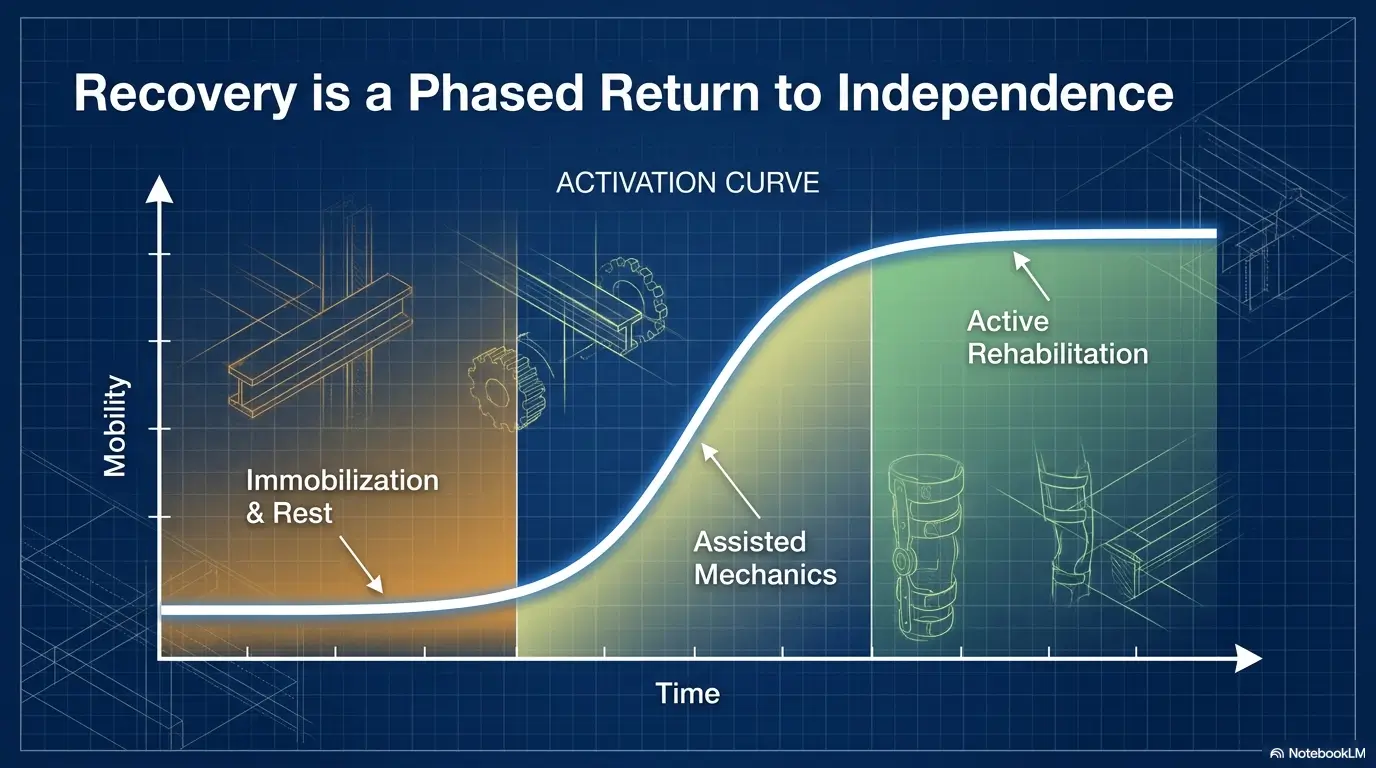
Mobility Gear: Choose the Right Device, Not More Devices
The prescribed mobility device is part of the treatment plan. It should be fitted to the patient, practiced before discharge, and used until the clinician approves a change.
Do not switch from a walker to a cane because a calendar says the patient should be ready. Strength, balance, gait quality, pain, weight-bearing orders, and the operated side all matter. MedlinePlus advises patients to continue using crutches or a walker until the surgeon says stopping is appropriate. Official guidance
Essential mobility and transfer supplies
- Prescribed walker, crutches, cane, wheelchair, sling, boot, or brace
- Nonslip, closed-back footwear
- Firm chair with arms and a suitable seat height
- Approved walker pouch or basket
- Reacher or grabber
- Long-handled shoehorn
- Sock aid
- Dressing stick
- Long-handled bathing sponge
- Elastic shoelaces if appropriate
Bring the exact device to the fitting appointment when possible. Record which side holds the cane, how the device is adjusted, how to manage steps, and how to move from bed to chair. A printable walker appointment checklist can keep those instructions from dissolving into post-appointment fog.
Upper-body and lower-body recoveries need different tools
| Recovery type | Likely friction points | Helpful preparation |
|---|---|---|
| Hip or knee | Standing, toilet transfers, bending, carrying, stairs | Walker path, raised surfaces if approved, reacher, secure footwear |
| Ankle or foot | Weight-bearing restrictions, stairs, bathing, fatigue | Prescribed crutches or walker, shower plan, seated task stations |
| Shoulder or arm | Dressing, opening packages, washing hair, meal preparation | Front-opening clothing, pump containers, one-handed meal setup |
| Dominant-hand procedure | Medication bottles, phone use, writing, toileting | Easy-open approved containers, voice controls, caregiver assistance |
| Bilateral procedure | Fewer strong limbs available for transfers | Individual therapist assessment and more caregiver coverage |
Shoulder patients may benefit from planning loose or front-opening clothing. This guide to choosing shirts after shoulder surgery focuses on dressing access rather than fashionable acrobatics.
Give the device a parking spot
A walker leaning behind a bedroom door is unavailable when the patient wakes suddenly. Choose a consistent parking location beside the bed and main chair, with the handles facing the direction of use and no cords wrapped around the legs.
The parking area should not block a caregiver, bathroom route, or emergency exit. For room-by-room examples, review this walker parking spot guide.
The five-part safe recovery setup
Bathroom Safety: Fix the Room Where Small Mistakes Become Falls
The bathroom combines water, hard surfaces, narrow turns, lowered clothing, and urgent timing. It deserves more preparation than any decorative “recovery basket.”
Bathroom stability checklist
- Approved shower chair or transfer bench
- Wall-secured grab bars
- Nonslip surface inside the tub or shower
- Nonskid mat outside the bathing area
- Raised toilet seat, safety frame, or commode only if recommended
- Handheld showerhead
- Soap and shampoo at reachable height
- Clean, dry floor with no loose bath rugs
- Night-light between the bed and bathroom
- Space to position the prescribed mobility device
MedlinePlus recommends secure bathroom grab bars, slip-resistant surfaces, reachable toiletries, and stable shower seating where appropriate. It specifically advises that grab bars be secured to the wall. Official guidance
A towel rack is not a grab bar
Decorative fixtures, suction handles, unstable stools, and lightweight patio chairs are not substitutes for equipment designed and installed to support body weight. A handle can feel solid during a gentle test and still fail during a sudden loss of balance.
Where permanent installation is not possible, ask an occupational therapist about safer temporary options. Renters should obtain property approval before drilling, but the lease should not become the patient’s balance strategy.
Toilet height is a measurement, not a product category
A raised toilet seat can help some hip and knee patients, but excessive height can create its own transfer problems. The correct setup depends on patient height, operated side, arm strength, joint precautions, toilet shape, and whether the patient uses a frame or grab bars.
Measure before buying, check the weight rating, and ask whether a riser, safety frame, or bedside commode is most appropriate. The toilet seat riser height guide explains which measurements to bring to the therapist.
Key takeaway
Bathroom safety products should support a transfer method the patient has practiced. Buying a seat, rail, or chair without checking dimensions can create a confident-looking hazard.
Medication and Wound Care: Two Systems That Need Written Rules
Medication errors and improvised wound care often begin with good intentions. Someone adds an over-the-counter pain reliever, removes a dressing early, or applies an ointment that has always worked for household cuts. Surgical care is not the place for family folklore.
Build a medication station with guardrails
- One current medication list, including supplements
- Written dose and timing schedule
- Pharmacy and prescriber contact information
- Single-day organizer if the pharmacist approves its use
- Side-effect and bowel-movement log
- Lockbox for controlled medicines
- Driving and alcohol restrictions written plainly
- Plan for refills, weekends, and after-hours questions
- Disposal instructions for unused medicine
Use one person or one documented system to mark doses. A pill bottle moved from one side of a table to another is not a reliable medical record. Larger, clearer labels may help older adults and caregivers; this guide to pill bottle labels after surgery includes a low-clutter setup.
Do not stack over-the-counter pain relievers blindly
Some prescription pain products contain acetaminophen. Adding a separate acetaminophen product may unintentionally duplicate the ingredient. Anti-inflammatory medicines such as ibuprofen or naproxen may be unsuitable with certain blood thinners, kidney conditions, bleeding risks, or surgeon instructions.
Ask the pharmacist to review the complete schedule, not merely one bottle at a time. The question is: “Can these exact products be taken together at these exact doses and times?” For a broader discussion of tradeoffs, review this guide to NSAIDs for joint pain.
Put opioid safety on the printable
- Take only as prescribed.
- Do not share medicine.
- Do not combine it with alcohol.
- Confirm interactions with sleep aids, anxiety medicines, muscle relaxants, or other sedating products.
- Confirm when driving may resume.
- Store medicine away from children, teenagers, visitors, and pets.
- Ask whether naloxone should be available and who should know how to use it.
- Use an authorized take-back or mail-back option for leftovers when available.
Dangerously slowed or stopped breathing can occur during an opioid overdose. Severe difficulty waking, slow or shallow breathing, and blue or gray lips or fingertips require emergency action. CDC guidance advises treating a suspected overdose urgently and notes that naloxone can reverse an opioid overdose. Official guidance
The FDA identifies drug take-back programs and prepaid mail-back envelopes as preferred disposal options for most unused medicines. Do not keep leftover opioids “just in case” without asking the prescriber or pharmacist what to do. Official guidance
Keep the wound-care kit boring and exact
- Written incision and dressing instructions
- Approved gauze or dressing type
- Approved medical tape for the patient’s skin
- Disposable gloves if directed
- Hand soap and clean towels
- Small mirror for hard-to-see areas
- Sealable waste bags
- Caregiver handwashing reminder
Do not add peroxide, alcohol, powders, creams, antibiotic ointments, waterproof covers, adhesive removers, or wound cleansers unless the team has approved the exact product. More ingredients do not produce more healing. Sometimes they produce irritation and a confusing phone call.
Show me the nerdy details
A useful medication chart separates the scheduled time, earliest permitted time, actual time taken, and maximum daily amount. Those fields are not interchangeable.
For “as-needed” medicine, record the reason it was taken and the response. This helps the clinician distinguish medication failure from activity-related pain, side effects, missed doses, or a complication requiring assessment.
Keep the original prescription labels available even when an organizer is used. The label contains the prescriber, strength, directions, pharmacy, and identifying details a caregiver may need during a call.
Food, Sleep, and Constipation: The Quiet Recovery Supplies
Recovery is often described in grand verbs: heal, strengthen, mobilize. Daily life is less cinematic. It involves opening yogurt, getting out of bed, drinking enough water, and noticing that no bowel movement has appeared for several days.
Make food and hydration easy to open
- Single-portion prepared meals
- Protein foods the patient already tolerates
- Fiber-containing foods unless restricted
- Lightweight plates and cups
- Easy-open containers
- Leak-resistant water bottles
- Freezer and refrigerator labels
- Grocery delivery or caregiver shopping schedule
- Small cooler near the recovery area if appropriate
Do not promise that a special powder, drink, vitamin, or “healing food” will accelerate recovery. Ask about diet restrictions, nausea, diabetes management, kidney disease, and medicine-related food instructions before stocking the house.
Ask for a bowel plan before constipation becomes the main event
Opioids, reduced movement, lower fluid intake, and changes in eating can contribute to constipation. Ask the team whether the patient should use a stool softener, laxative, adjusted fiber intake, additional fluids, or another plan.
Do not automatically add several constipation products. Record bowel movements and ask when the team wants to be contacted. Severe abdominal pain, vomiting, marked swelling, or inability to pass stool or gas may need prompt medical advice rather than another scoop of fiber.
Prepare sleep without mixing sedatives
- Approved positioning pillows
- Clean pillowcases and sheets
- Bedside light
- Clear exit path
- Phone and prescribed device within reach
- Earplugs or sleep mask
- Written overnight medication plan
- Caregiver call method
Do not add over-the-counter sleep aids, alcohol, cannabis products, antihistamines, or borrowed anxiety medicine to prescription pain treatment without a prescriber or pharmacist reviewing the combination. “Available without a prescription” does not mean “compatible with tonight’s medications.”
What Not to Buy Before Orthopedic Surgery
The most wasteful recovery purchase is rarely the cheapest item. It is the product that encourages the wrong movement, duplicates hospital equipment, does not fit the home, or distracts the patient from a symptom that needs medical attention.
Mark these products “ask before buying”
- Walker, cane, crutches, wheelchair, or rollator not prescribed or fitted
- Brace, sling, boot, or immobilizer
- Compression sleeve, stocking, or pneumatic device
- Continuous passive-motion machine
- Heating pad
- Massage gun or vibrating massager
- Electrical stimulation device
- Topical pain cream or patch
- Cold-therapy machine
- Leg-elevation wedge
- Raised toilet seat or commode
- Supplements marketed for healing
- Additional over-the-counter pain medicine
- Wound ointment, cleanser, or waterproof covering
Common mistake versus safer alternative
| Common mistake | Why it fails | Safer alternative |
|---|---|---|
| Buying a bargain walker online | Wrong height, style, width, or weight-bearing use | Get the prescribed device fitted and practiced |
| Using a towel rack for support | Not designed to bear body weight | Install approved grab bars or use therapist-recommended equipment |
| Adding heat to fresh swelling | May conflict with the surgical plan | Follow the written cold, heat, and elevation instructions |
| Using a soft recliner because it feels comfortable | May be too low or difficult to exit | Test a firm chair with arms and approved height |
| Carrying food beside crutches | Removes a hand from balance support | Use sealed containers, a compatible pouch, or caregiver delivery |
| Starting supplements for healing | Possible medication, bleeding, or medical-condition conflicts | Review every supplement with the care team |
When free preparation is enough, and when paid help may be worth it
A free DIY setup may be reasonable when the home has clear routes, the patient has practiced transfers, the bathroom is safe, equipment is fitted, and a capable caregiver is available.
Consider asking about a paid occupational therapy home assessment, equipment rental, home-health visit, transportation service, meal delivery, or extra caregiver hours when the patient lives alone, has memory or balance concerns, cannot avoid stairs, has bilateral restrictions, or needs substantial help with bathing and toileting.
Before paying, ask what the service includes, whether a clinician supervises it, what insurance may cover, whether equipment can be rented, and how cancellation or return policies work. A glossy package is not automatically a safer package.
When Post-Surgery Pain Is Not Normal
Pain is expected after orthopedic surgery, but the shopping checklist must not train the patient to answer every new symptom with another product. A worsening problem may require a call, an urgent assessment, or emergency help.
Call the surgical team promptly for concerning changes
- Pain that is increasing rather than gradually settling
- Pain not controlled by the prescribed plan
- New or increasing redness, warmth, tenderness, or swelling near the incision
- New, persistent, or foul-smelling wound drainage
- Fever or chills at the threshold given by the team
- Bleeding that soaks through the dressing
- New calf pain, tenderness, redness, or swelling
- New numbness, unusual color, coolness, or loss of function in the limb
- Medicine side effects affecting safe walking, food or fluid intake; breathing trouble or difficulty waking requires emergency help
- A fall involving the surgical area
AAOS lists calf pain, tenderness, redness, and increasing leg swelling among warning signs of a possible blood clot after joint replacement. Sudden chest pain or shortness of breath may indicate that a clot has traveled to the lungs. Official guidance
Call 911 for possible pulmonary embolism or opioid overdose
- Sudden shortness of breath
- Sudden chest pain
- Chest pain that worsens with coughing
- Severe difficulty waking the person
- Slow, shallow, irregular, or stopped breathing
- Blue, gray, or unusually pale lips or fingertips
- Collapse, sudden confusion, or unresponsiveness
Use naloxone if it is available and an opioid overdose is suspected, but do not delay calling emergency services. Follow the product instructions and the dispatcher’s directions.
Pain after a fall needs a different response
Do not force the patient back to standing after a significant fall when there is severe pain, deformity, head injury, loss of consciousness, inability to bear weight, or concern that the surgical joint has been damaged.
Keep the person still and comfortable, call for appropriate help, and follow emergency instructions. After a minor fall without obvious injury, notify the surgical team as directed and document what happened, including whether the operated area struck the floor or furniture.
Key takeaway
A new cold pack, pillow, or pain cream is not the answer to rapidly worsening pain, breathing difficulty, unusual limb color, wound drainage, severe drowsiness, or calf swelling. Use the contact plan.
Printable Surgery Recovery Supply Checklist
Print this section and take it to the pre-op visit. Check only items that apply. Circle every item marked “confirm” and ask a clinician to cross out anything unnecessary.
Patient and procedure labels
- ☐ Hip
- ☐ Knee
- ☐ Shoulder or arm
- ☐ Ankle or foot
- ☐ Fracture repair
- ☐ Spine procedure
- ☐ Other orthopedic procedure
- ☐ Right side
- ☐ Left side
- ☐ Bilateral
- ☐ Weight-bearing restriction confirmed
- ☐ Caregiver available
A. Confirm before surgery
- ☐ Procedure and operated side written down
- ☐ Weight-bearing status written down
- ☐ Joint and movement precautions written down
- ☐ Mobility device prescribed and fitted
- ☐ Transfer method practiced
- ☐ Pain-management plan received
- ☐ Blood-thinner instructions received
- ☐ Cold-therapy schedule received
- ☐ Elevation or positioning instructions received
- ☐ Wound and bathing rules received
- ☐ Emergency contact numbers saved
- ☐ Transportation home arranged
- ☐ First follow-up appointment confirmed
- ☐ Caregiver schedule arranged
B. Must-have home supplies
- ☐ Prescribed mobility device
- ☐ Firm chair with arms
- ☐ Two approved cold packs
- ☐ Skin barrier and timer
- ☐ Thermometer
- ☐ Medication schedule
- ☐ Pain and symptom log
- ☐ Water bottle with easy-open lid
- ☐ Nonslip, closed-back footwear
- ☐ Phone and long charging cable
- ☐ Night-lights
- ☐ Approved dressing supplies
- ☐ Easy-open meals and drinks
- ☐ Small waste container
C. Bathroom and dressing aids
- ☐ Approved shower chair or transfer bench
- ☐ Secure grab bars
- ☐ Nonslip bath surfaces
- ☐ Raised toilet equipment if recommended
- ☐ Handheld showerhead
- ☐ Reacher
- ☐ Sock aid
- ☐ Long-handled shoehorn
- ☐ Long-handled sponge
- ☐ Front-opening or loose clothing if needed
D. Ask before buying or using
- ☐ Compression sleeve, stocking, or device
- ☐ Cold-therapy machine
- ☐ Heating pad
- ☐ Massage device
- ☐ Electrical stimulation device
- ☐ Brace, sling, boot, or immobilizer
- ☐ Topical pain product
- ☐ Stool softener or laxative
- ☐ Vitamins or supplements
- ☐ Additional over-the-counter pain medicine
- ☐ Sleep aid
- ☐ Wound ointment, cleanser, or waterproof cover
E. Daily recovery tracker
- ☐ Pain at rest recorded
- ☐ Pain during movement recorded
- ☐ Medicines and times recorded
- ☐ Side effects recorded
- ☐ Incision checked as directed
- ☐ Cold therapy recorded
- ☐ Prescribed exercises completed
- ☐ Walking or mobility goal completed
- ☐ Hydration checked
- ☐ Meals checked
- ☐ Bowel movement tracked
- ☐ Questions written for follow-up
Caregiver handoff rule
When caregivers change shifts, review the last medication time, current pain pattern, mobility completed, food and fluids, bowel status, wound observations, and unanswered questions. Do not rely on “Everything seemed okay.”
For families dividing tasks among siblings, neighbors, or friends, a caregiver group chat after surgery can help, provided personal medical information is shared only with the patient’s permission.

Frequently Asked Questions
What supplies should I buy before knee replacement surgery?
Prioritize the prescribed walker or cane, two cold packs, a stable chair with arms, bathroom safety equipment, medication organization, nonslip footwear, a pain log, and approved dressing supplies. Confirm what the hospital, clinic, or equipment supplier will provide before buying duplicates.
Do I need a raised toilet seat after joint surgery?
Some hip and knee patients benefit from one, but the need and height depend on the procedure, patient height, transfer ability, toilet dimensions, joint precautions, and therapist instructions. Measure the existing toilet and ask which design is appropriate.
Is a cold-therapy machine better than reusable ice packs?
A machine may be more convenient, but it is not universally required. Reusable packs are often sufficient when they fit the area, can be rotated, and are used according to instructions. Compare approval, cost, rental terms, cleaning, skin protection, and ease of use.
What should I keep beside the recovery chair?
Keep the medication schedule, pain log, water, phone, charger, thermometer, tissues, emergency contacts, approved cold pack, eyeglasses, hearing aids, and frequently used personal items within safe reach.
Can I take Tylenol or ibuprofen with prescription pain medicine?
Confirm the exact combination and total daily dose with the surgical team or pharmacist. Some prescriptions already contain acetaminophen, while anti-inflammatory medicines may conflict with blood thinners, kidney conditions, bleeding risks, or procedure-specific instructions.
How many ice packs do I need after joint surgery?
Two reusable packs make rotation easier for many households. The correct size, placement, barrier, and application schedule should come from the surgical team. Do not place ice directly on the skin.
Should I buy compression socks before surgery?
Not until the required type, pressure, size, and duration are confirmed. Some patients receive specific stockings or mechanical compression equipment, while others follow a different blood-clot-prevention plan.
What pain after joint surgery should worry me?
Seek prompt guidance for rapidly worsening pain, pain that remains uncontrolled despite the prescribed plan, pain with increasing redness or drainage, new calf pain or swelling, unusual limb color or coolness, or symptoms following a fall. Call 911 for sudden chest pain, shortness of breath, unresponsiveness, or dangerously slow breathing.
Your 15-Minute Next Step Before the Pre-Op Visit
Use 15 minutes to print the checklist and inspect the intended sleeping, bathroom, and kitchen routes with a helper. Plan how restrictions will affect ordinary tasks without deliberately disabling a limb, reducing support, or imitating non-weight-bearing walking. A therapist should teach the actual technique.
- Write the exact procedure and operated side at the top of the page.
- Circle every unknown instruction, especially weight-bearing, bathing, medication, cold therapy, and wound care.
- Mark three hazards along the walking route.
- List what the hospital may provide before buying anything.
- Choose one caregiver who will maintain the medication and symptom record.
Bring the page to the surgeon, nurse, physical therapist, occupational therapist, or discharge coordinator. Ask them to remove unnecessary items and write the patient’s exact instructions beside the remaining ones.
That marked-up sheet is the real printable. It is not merely a list of objects. It is a quiet agreement between the patient, caregiver, and clinical team about how the first days at home will work.
Last updated: October 14, 2026
Targeted editorial update: October 21, 2026. Added a topic-specific record, question and follow-up guide and revised the title and search description. Existing useful material was retained; this update is not a complete medical, legal or insurance review. Confirm individual instructions, current prices and benefits with the relevant service.