
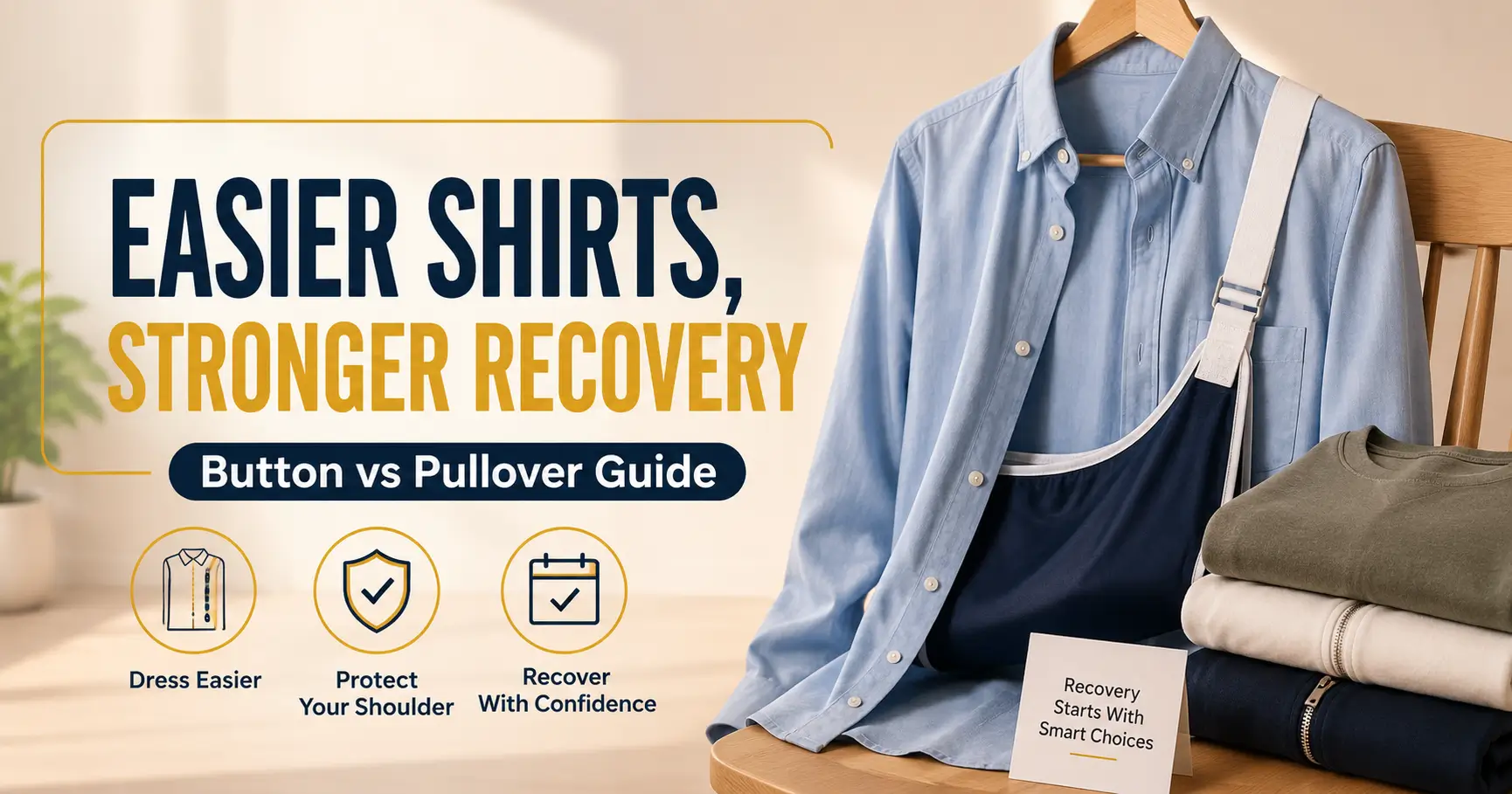
After shoulder surgery, choose clothing within the dressing method and sling instructions taught for your operation. A button shirt or a loose pullover is not automatically suitable for every repair.
Written from a family caregiver perspective. The operator cares for an older mother with rheumatic, spinal and knee problems and is not a medical professional. This is planning information, not individual clinical assessment or clearance.
Get the method before choosing the garment
Ask the treating team what shoulder movement is permitted, whether and how the sling may be removed and what assistance is required. Do not force the operated arm through a sleeve or reproduce an online sequence when your instructions are unclear.
Compare garments without a shoulder test
A helper can inspect openings, sleeve space, fasteners and whether fabric might interfere with the device or dressing. Prepare alternatives and ask the therapist about them. Do not perform a one-handed challenge or a painful overhead attempt to decide which garment wins.
Include the whole routine
Dressing includes getting the garment, washing if permitted, managing the sling, putting clothes on and taking them off later. Plan the needed help at both times. A shirt that can be put on with help may still be difficult to remove when that helper has left.
Record the arrangement and backup
Keep the taught method, permitted device handling, helper and alternative clothing together in a private note. If a garment cannot be used as taught, choose an agreed alternative or get trained help instead of pushing through pain. Report a new problem to the care team rather than treating successful dressing as proof of healing.
Source and correction scope
NHS: moving and handling support supports the distinction between general information and individual care planning.
Editorial rewrite: October 21, 2026. Replaced the previous self-test or universal task instructions and narrative examples with individual assessment questions, practical arrangements and a backup plan. No independent medical review is claimed.
Clothing choices within the dressing plan
Use these prompts for a private note or your next care-team conversation. Record what is known and mark unanswered questions; completing this table does not establish safety, independence or treatment eligibility.
| Record or clarify | Question and next action |
|---|---|
| Movement and sling instructions | What dressing and device-removal method has the team taught for this operation? |
| Actual garment and help | Which openings, fasteners and fit work with that method, and who provides the required help? |
| A difficult garment | Can another garment or trained assistance replace it? Do not force a pullover or test the repaired shoulder to compare shirts. |
Keep the person’s own report separate from a helper’s observation. Share only with consent and only with people who need the information. Do not put identifying health details in public comments. The visit preparation tool can organize questions; it cannot assess symptoms or approve a task.
Background resource: NHS: moving and handling support. This resource supports general care planning; it does not validate every instruction elsewhere in this article.