
Joint pain relief without the hidden trapdoor
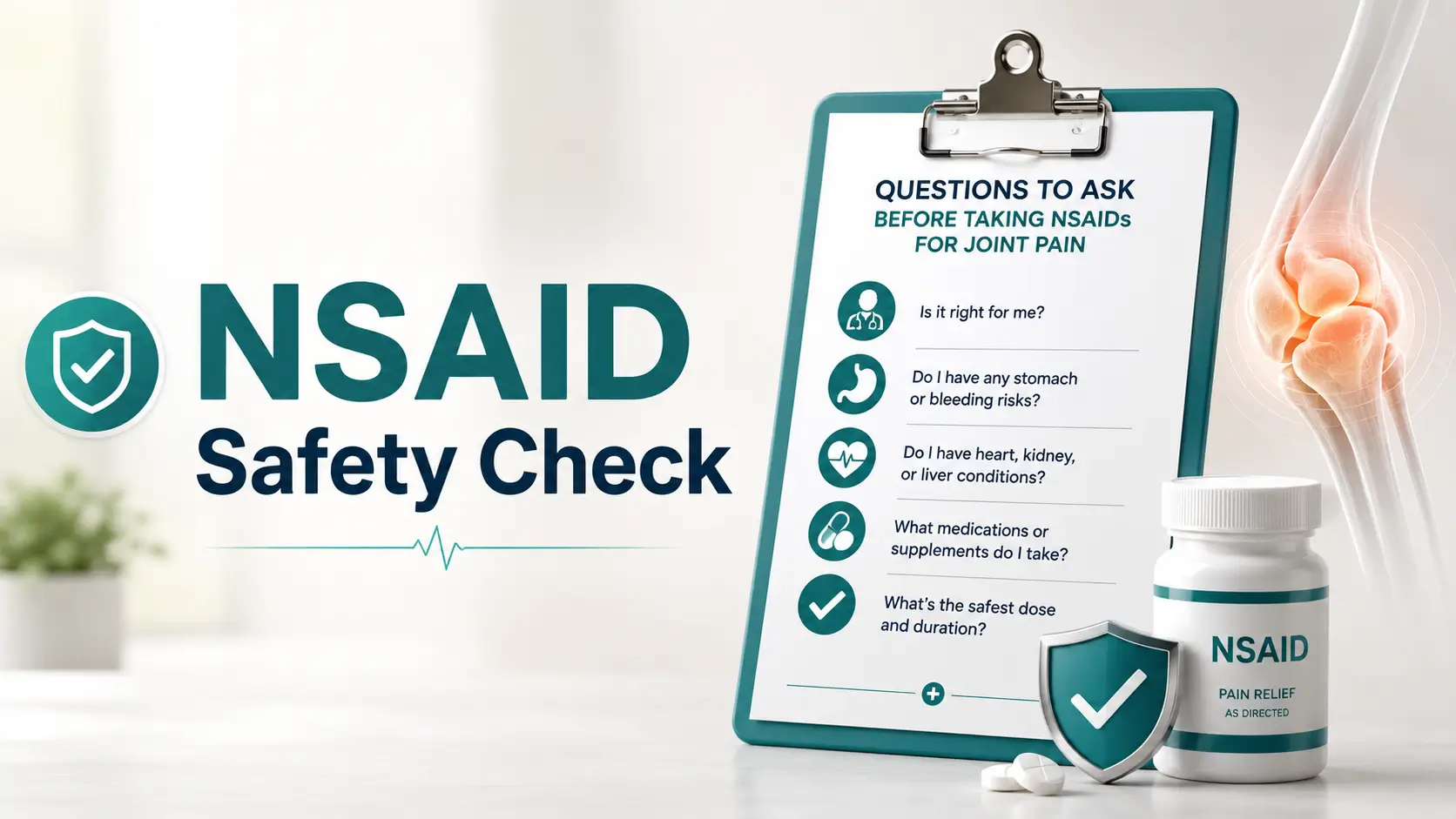
Questions to Ask Before Taking NSAIDs for Joint Pain
A safer checklist for real-world aches
NSAIDs can feel wonderfully practical: the knee is angry, the hand is stiff, the hip has started a tiny opera, and the medicine cabinet offers a quick answer. But ibuprofen, naproxen, diclofenac, celecoxib, and aspirin are not tiny neutral objects. They are real medicines with real benefits and real edges.
This guide is for adults who want joint pain relief without making a preventable mistake. The question is not simply, “Which NSAID works best?” The better question is, “Given my body, my medications, my risks, and this exact pain, is an NSAID the right next move today?”
We will walk through the safety doors that matter most: stomach bleeding, kidneys, heart and blood pressure, pregnancy, surgery, drug interactions, topical gels, and the red flags that deserve diagnosis rather than another dose. Think of it as a pocket lantern before you step onto a dim stair.
Pain pattern
Learn when joint pain sounds inflammatory, mechanical, injury-related, or unusual.
Risk scan
Check the stomach, kidney, heart, pregnancy, and interaction issues before dosing.
Next step
Leave with one clean question to ask a pharmacist, clinician, or surgeon.
The goal is not to fear NSAIDs. It is to use them with adult-level respect. 🩺
Snapshot: This article is for US and UK adults considering over-the-counter or prescription NSAIDs for joint pain. It helps you decide what to check before taking a dose, when a topical option may be worth asking about, and when symptoms or health risks should push you toward a qualified healthcare professional instead.
Table of Contents
Before You Act: NSAIDs Are Helpful, But They Are Not Casual
NSAIDs, short for nonsteroidal anti-inflammatory drugs, can reduce pain and inflammation. Common examples include ibuprofen, naproxen, aspirin, diclofenac, and celecoxib. Some are sold over the counter. Others require a prescription. The label may look ordinary, but the body does not treat these medicines as ordinary.
This article is educational and cannot tell you what is safe for your personal medical history. That matters because NSAIDs can affect the stomach, kidneys, blood pressure, heart risk, pregnancy, surgery planning, and other medicines.
For occasional joint pain in a generally healthy adult, an NSAID may be one option to compare with rest, ice, heat, acetaminophen, topical treatments, bracing, or a physical therapy plan. For someone with kidney disease, a stomach ulcer history, blood thinner use, heart disease, pregnancy, or a complicated medication list, the same pill may deserve a pharmacist or clinician conversation first.
Before you act
Use this guide to prepare better questions, not to replace medical advice. If you have chronic health conditions, are pregnant, take blood thinners, use aspirin for heart protection, have upcoming surgery, or have persistent joint pain, confirm your plan with a qualified healthcare professional.
A good safety question sounds plain: “Given my health history and current medications, is this NSAID appropriate for this joint pain, and if so, what dose and how many days?” That sentence is small, but it carries a sturdy umbrella.
First, Is Your Joint Pain Actually an NSAID Problem?
Not every sore joint is begging for an anti-inflammatory. Some pain is inflammatory. Some is mechanical. Some is injury-related. Some is your body waving a tiny red flag while wearing a serious hat.
Before choosing a pill, name the pain pattern. The medicine that makes sense for a swollen arthritic knee may not be the best answer for a fresh fall, a tendon strain, a nerve problem, or a joint that is hot, red, and suddenly severe.
The pain clue that changes the decision
Inflammatory joint pain often has swelling, warmth, stiffness, or a flare pattern. Mechanical pain often shows up with use, load, stairs, lifting, twisting, gripping, or a specific movement. Injury pain may follow a fall, awkward bend, sports move, or sudden “that was not supposed to happen” moment.
If your knee aches after a long walk but calms down with rest, that may be different from a wrist that is swollen and warm in the morning. If your hip pain shoots down your leg with numbness, the story may involve nerve irritation more than joint inflammation.
| Pain pattern | What it may suggest | Why it matters before NSAIDs |
|---|---|---|
| Swelling, warmth, morning stiffness | Possible inflammation | An NSAID may be worth discussing if risk factors are low |
| Pain only with stairs, gripping, lifting, or walking | Mechanical load or overuse | Bracing, activity changes, physical therapy, or ergonomics may matter more |
| Sudden pain after fall or twist | Possible injury | Diagnosis may be more important than masking pain |
| Hot, red, very swollen joint with fever | Possible urgent joint problem | Do not treat this as routine soreness |
Morning stiffness, swelling, and heat
Morning stiffness that lasts, visible swelling, warmth over the joint, and pain that improves as you move can point toward inflammation. That does not automatically mean you should take an NSAID. It means the pain pattern deserves a better question.
For arthritis flares, bursitis, tendon irritation, or other inflammatory problems, NSAIDs may be part of a plan. But if flares keep returning, the deeper issue is not “How many tablets can I keep taking?” It is “Why does this keep happening?”
When acetaminophen, ice, heat, rest, or physical therapy may fit better
Sometimes the safer choice is not a stronger medicine. It is a better match. Ice may help after a fresh strain. Heat may feel better for stiffness. Rest and load management may calm an overworked joint. A physical therapist may help you change the mechanics that keep poking the same bear.
Acetaminophen may be an alternative for some people who need pain relief without NSAID-related stomach, kidney, or blood pressure concerns, though it has its own liver-related cautions and dosing limits. The best option depends on your risks, your medications, and the pain pattern.
Key takeaway
Before choosing an NSAID, ask what kind of joint pain you are treating. Inflammation, overuse, injury, nerve pain, and infection warning signs do not belong in the same decision basket.
Who Should Pause Before Taking an NSAID?
Some readers are comparing occasional over-the-counter options for a short flare. Others are standing near a risk cliff without realizing it. The difference is not moral strength, pain tolerance, or whether the bottle came from a grocery store. The difference is health context.
If you are lower risk, you still need label discipline. If you are higher risk, the safest first step may be a clinician or pharmacist conversation before taking the dose.
Good-fit readers for a basic label check
A lower-risk adult may be someone with a short-term, familiar joint flare, no history of stomach bleeding or ulcers, no kidney disease, no heart disease, no uncontrolled high blood pressure, no pregnancy concerns, no blood thinner use, and no complex medication stack.
Even then, the label matters. The “lowest effective dose for the shortest needed time” is not a decorative phrase. It is the little fence that keeps casual use from turning into a creeping habit.
Not-so-fast readers
Pause before using NSAIDs if any of these apply: past stomach ulcer or bleeding, kidney disease, heart disease, heart failure, recent heart attack, high blood pressure, blood thinner use, daily aspirin for heart protection, steroid use, heavy alcohol use, pregnancy, older age with frailty, or upcoming surgery.
This does not always mean “never.” It means “do not wing it.” The right answer may be a topical NSAID, acetaminophen, a non-drug plan, a different prescription, lab monitoring, a shorter course, or a clinician-supervised approach.
Pause-first checklist
- You have had a stomach ulcer, stomach bleeding, black stools, or vomiting blood.
- You have kidney disease, diabetes with kidney concerns, dehydration, vomiting, or diarrhea.
- You have heart disease, heart failure, high blood pressure, swelling, or a recent heart attack.
- You take blood thinners, daily aspirin, steroids, SSRIs, diuretics, ACE inhibitors, ARBs, or multiple pain medicines.
- You are pregnant, trying to become pregnant, or have been told to avoid certain medicines.
- You have surgery, dental work, injections, or procedures coming up.
“I take it sometimes” can still matter
“Sometimes” is slippery. Sometimes might mean two tablets after pickleball once a month. It might also mean naproxen in the morning, ibuprofen after work, and a cold medicine at night that quietly adds another pain reliever to the parade.
Frequency, dose, duration, and stacking matter. A medication log may sound dull, but dull tools often save the day. Write down the drug name, strength, number of doses, and why you took it. Bring that note to your next appointment if joint pain keeps coming back.
The Medicine-Cabinet Question Most People Skip
The biggest NSAID mistake often starts before the first tablet. It starts with not knowing what else is in the cabinet, purse, gym bag, desk drawer, or prescription bottle.
Brand names can be velvet curtains. Behind them may be ibuprofen, naproxen, aspirin, diclofenac, or another active ingredient. If you do not read the active ingredients, you may accidentally combine similar drugs.
The overlap problem
Cold and flu medicines, menstrual pain products, sleep-and-pain combinations, headache medicines, arthritis products, and prescription pain medicines can overlap. The front label may talk about “aches,” “sinus,” “nighttime,” or “arthritis,” while the active ingredient panel tells the truth.
Before taking an NSAID for joint pain, line up every medicine and supplement you took in the last 24 hours. Then check the active ingredients. This is not glamorous work. It is kitchen-table safety, the kind that quietly prevents trouble.
Blood thinners, steroids, aspirin, SSRIs, and the bleeding-risk conversation
NSAIDs can increase bleeding risk, especially when combined with certain medicines. The main categories to ask about include anticoagulants, antiplatelet drugs, daily aspirin, oral steroids, some antidepressants such as SSRIs, and other NSAIDs.
A pharmacist can often help quickly because they are trained to spot interaction patterns. Bring the actual bottles or a phone photo of the labels. “I think it is the small blue one” is a charming sentence, but not a safe medication history.
The aspirin wrinkle
If your clinician told you to take low-dose aspirin to help prevent a heart attack or stroke, do not casually add ibuprofen without asking about timing and suitability. Ibuprofen may interfere with aspirin’s heart-protective antiplatelet effect when taken too close together.
This is one of those small details that can matter more than it looks. The practical move is simple: ask a healthcare professional before combining ibuprofen with aspirin used for heart protection.
Stomach, Heart, Blood Pressure, and Kidney Checks
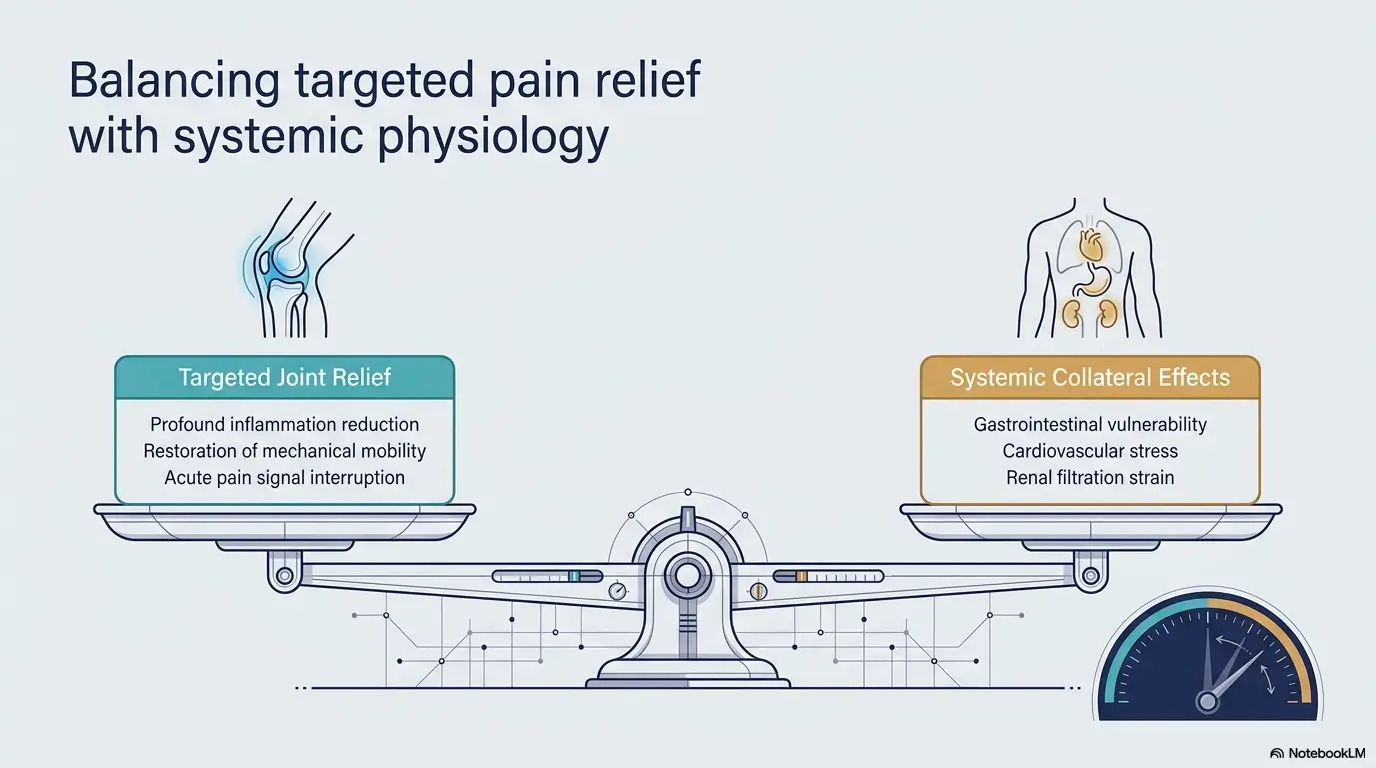
NSAID risk is not one big shadow. It is several smaller doors: stomach bleeding, heart and stroke risk, blood pressure, fluid retention, and kidney strain. You do not need a medical degree to ask better questions, but you do need to stop treating every ache as a coupon for another dose.
Stomach risk: comfort is not the same as safety
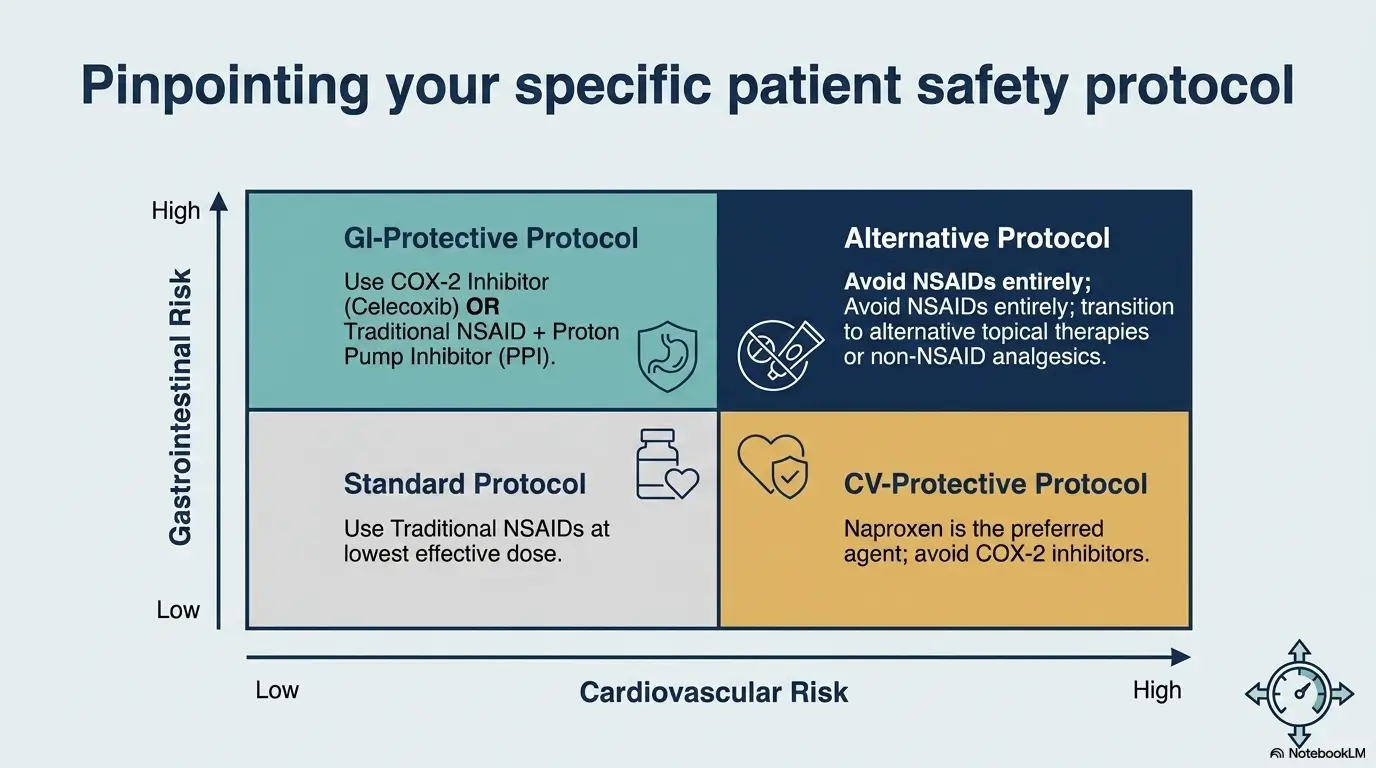
NSAID-related ulcers and bleeding can happen without dramatic warning symptoms. That is why “my stomach feels fine” is not a complete safety test. Risk can be higher with older age, past ulcers, longer use, higher doses, smoking, heavy alcohol use, poor overall health, or certain medicines.
Taking NSAIDs with food may reduce stomach irritation for some people. But food is not armor. It does not erase the risk of serious bleeding, especially in higher-risk people.
Heart and blood pressure: the quiet fine print
NSAIDs may raise the risk of heart attack or stroke in some people, especially with higher doses, longer use, or existing cardiovascular risk. They can also affect blood pressure and fluid retention. If you track blood pressure, have heart failure, notice leg swelling, or get short of breath, this is not a shrug-and-swallow situation.
Over-the-counter does not mean risk-free. It means you can buy it without a prescription. That is a very different sentence.
Kidney risk: dehydration changes the equation
NSAIDs can be harder on the kidneys in certain situations. Dehydration is a major one. Vomiting, diarrhea, intense exercise, heat exposure, poor fluid intake, or illness can turn a normal medication decision into a more delicate one.
Extra caution is also important for people with kidney disease, diabetes with kidney concerns, older adults who are frail, and people taking diuretics, ACE inhibitors, or ARBs. This cluster deserves professional review because kidneys like boring conditions. NSAIDs plus dehydration plus certain blood pressure medicines can make the plot thicken fast.
Show me the nerdy details
NSAIDs work partly by blocking cyclooxygenase enzymes involved in prostaglandin production. Prostaglandins help drive pain and inflammation, but they also help protect the stomach lining, support kidney blood flow in certain situations, and interact with blood vessel and platelet behavior. That is why the same mechanism that can reduce joint pain can also create stomach, kidney, bleeding, blood pressure, or cardiovascular concerns in higher-risk people.
This does not make NSAIDs bad. It makes them context-sensitive. The risk conversation changes when the dose rises, duration stretches, health conditions are present, or other medications join the orchestra.
Key takeaway
If you are sick, dehydrated, older and frail, taking blood pressure medicines, or managing heart, kidney, or ulcer risk, ask before taking NSAIDs. The body reads the whole situation, not just the pain label.
Topical vs Oral NSAIDs: Could the Smaller Door Be Smarter?
For localized joint pain, the smartest NSAID question may be, “Do I need this medicine in my whole bloodstream, or could I ask about a topical option first?” Topical NSAIDs, such as diclofenac gel, are applied to the skin over the painful area.
For some osteoarthritis situations, especially knee osteoarthritis, topical NSAIDs are often considered before oral NSAIDs because they may provide local relief with less total body exposure. That does not make them magic. It makes them worth comparing.
Why a gel may be worth asking about
A topical NSAID may be a useful question for one painful knee, a sore hand joint, or another localized area. It may be less useful for widespread pain across many joints. The more specific the sore spot, the more logical the topical question becomes.
Readers with stomach, kidney, or blood pressure concerns should still ask a healthcare professional. Lower exposure does not mean no exposure, and labels still matter.
Best-fit joints: knees, hands, and localized pain
Topical NSAIDs tend to make the most practical sense when pain is near the surface and easy to locate. Knees and hands often fit that description better than deep hip pain or pain spread through multiple joints.
If you are a budget-conscious reader comparing joint pain options, a topical gel may seem more expensive than a basic bottle of tablets. But the better comparison is not just price. It is price plus risk, fit, duration, and whether the medicine matches the pain pattern.
| Option | May fit when | Questions to ask before paying |
|---|---|---|
| Low-cost basics | Short-term soreness, mild flare, clear label, low risk | Do I know the active ingredient, dose, and stop point? |
| Topical NSAID | One localized joint, especially knee or hand pain | Is this safer for my risks than an oral NSAID? |
| Pharmacist review | Multiple medicines, uncertainty, aspirin, blood thinner, blood pressure drugs | Can you check interactions and duplicate ingredients? |
| Clinician visit or physical therapy | Recurring, worsening, swollen, injury-related, or function-limiting pain | What diagnosis or movement problem are we trying to solve? |
When topical still needs caution
Topical NSAIDs can irritate skin. They also have dosing limits. Do not smear more because “it is just gel.” Avoid applying to broken skin unless the label or clinician says otherwise, and do not combine topical and oral NSAIDs casually without asking.
If you are using prescription NSAIDs, anticoagulants, aspirin, or multiple pain products, include topical products in your medication review. The skin may be the doorway, but the medicine still counts.
Common Mistakes That Turn NSAIDs Into a Problem
NSAID trouble often does not begin with one dramatic choice. It begins with little practical mistakes that stack up like loose change in a coat pocket. One tablet becomes two. One product becomes three. One day becomes two weeks. The label becomes wallpaper.
Mistake 1: Taking two NSAIDs because the brand names look different
Ibuprofen plus naproxen is not a clever combo. Diclofenac plus over-the-counter ibuprofen is not a bonus round. Taking more than one NSAID can raise risk without creating a neat, predictable improvement in pain.
Look for the active ingredient, not the brand mood. If two products belong to the NSAID family, ask before combining them.
Mistake 2: Chasing pain with extra doses
Pain can make time stretch. The next dose starts to look friendly before the label allows it. That is the moment to pause. Taking more than directed may increase the chance of stomach bleeding, kidney strain, blood pressure problems, and other side effects.
If label dosing is not enough, that is information. It may mean the pain needs a different plan, not a larger pile of tablets.
Mistake 3: Ignoring the reason joint pain keeps returning
Recurring pain is a message. It may be arthritis progression, overuse, poor footwear, workstation strain, tendon irritation, inflammatory disease, an old injury, or a movement pattern that keeps loading the same tissue.
A pain flare trigger log can help. Note the activity, joint, pain level, swelling, stiffness, medication used, and what happened afterward. If you already track pain patterns, an organized pain flare trigger log can make your next appointment more productive.
Mistake 4: Treating new injury pain like old arthritis pain
A familiar arthritic knee and a new injury are not twins. If pain follows a fall, twist, pop, collision, or sudden inability to bear weight, do not simply repeat your old routine. New injury pain may need evaluation.
Seek care promptly for deformity, severe swelling, inability to move or bear weight, numbness, fever, spreading redness, or a hot swollen joint. Pain relief is useful. Missing the diagnosis is expensive in a much larger currency.
Key takeaway
If pain keeps returning, gets worse, limits function, or follows an injury, the next best step may be documentation and evaluation rather than another dose.
The 6-Door NSAID Safety Flow
1. Name pain
Inflammation, overuse, injury, nerve, or unusual?
2. Scan risks
Stomach, kidney, heart, BP, pregnancy.
3. Check meds
Aspirin, blood thinners, steroids, duplicates.
4. Compare route
Topical, oral, acetaminophen, ice, heat, PT.
5. Set stop
Lowest useful dose, shortest needed time.
6. Escalate
Red flags need care, not improvisation.
Pregnancy, Surgery, and Other Calendar Red Flags
Some NSAID decisions depend less on the joint and more on the calendar. Pregnancy timing, upcoming surgery, dental procedures, injections, and recent heart events can change what is appropriate.
Pregnancy after 20 weeks: ask before using NSAIDs
If you are pregnant or may be pregnant, NSAID use needs special caution. Around 20 weeks or later in pregnancy, NSAIDs may cause rare but serious kidney problems in the unborn baby, which can lead to low amniotic fluid and complications. Do not self-direct NSAID use in pregnancy.
If joint pain appears during pregnancy, ask your obstetric clinician which pain relief options are appropriate for your exact stage and health history. The answer may change across pregnancy.
Before or after surgery: do not improvise
NSAIDs can affect bleeding risk and may interact with the plan your surgeon, dentist, or proceduralist has made. Before surgery, dental work, injections, or procedures, ask when to stop NSAIDs and when it is safe to restart.
This is especially important after orthopedic procedures, joint replacement, spine procedures, and any situation where your care team has specific instructions about bleeding, swelling, bone healing, anesthesia, or medication timing. If you are preparing for an appointment, an orthopedic visit checklist can help you organize medication questions before the room starts moving too fast.
After a heart attack or CABG: this is not DIY territory
People who recently had a heart attack should not use NSAIDs unless a healthcare professional says to do so. NSAIDs are also not for use right before or after coronary artery bypass graft surgery, often called CABG.
If you have heart disease and joint pain, ask directly: “What pain options fit my heart history?” That question is cleaner than trying to decode a shelf of bottles while your knee complains.
When to Get Help Instead of Taking Another Dose
A good NSAID safety plan includes knowing when to stop. Pain relief is not the only goal. The goal is to avoid missing danger signals, especially when the body stops whispering and starts knocking on the table.
Urgent symptoms: do not wait it out
Seek urgent medical help for chest pain, shortness of breath, weakness on one side of the body, slurred speech, fainting, vomiting blood, black or bloody stools, severe stomach pain that does not improve, or sudden swelling with trouble breathing.
These symptoms are not normal “side effects to monitor.” They are reasons to get help now.
Joint-specific warning signs
Get medical guidance promptly for fever with joint pain, a hot swollen joint, sudden severe pain, spreading redness, major swelling, deformity, inability to bear weight, numbness, or pain after significant injury.
A painful joint can be a local problem, but it can also be part of a larger medical issue. If your instinct says, “This is different,” give that instinct a chair at the table.
The 10-day checkpoint
Many over-the-counter NSAID labels advise not using the medicine longer than 10 days for pain unless directed by a doctor. If your joint pain still needs medicine after that point, the question should shift from “What else can I take?” to “What is causing this, and what plan fits?”
Bring a simple record: when pain started, what makes it worse, what helps, swelling or stiffness patterns, medications used, and whether function has changed. A clear pain timeline can reduce appointment fog. If you need a structure, this pain timeline before an orthopedic visit is a useful next read.
Bring this to the pharmacist or clinician
- Exact NSAID name, dose, and how often you took it.
- All prescription medicines, over-the-counter medicines, and supplements.
- History of ulcers, kidney disease, heart disease, high blood pressure, or bleeding problems.
- Pregnancy status or pregnancy possibility.
- Upcoming surgery, dental work, injections, or procedures.
- Your pain pattern: swelling, warmth, stiffness, injury, fever, or function limits.
FAQ
Can I take ibuprofen and naproxen on the same day?
Do not combine ibuprofen and naproxen casually. They are both NSAIDs, and stacking NSAIDs can increase side effect risk. If one is not helping enough, ask a healthcare professional about a safer plan rather than adding another NSAID.
Are NSAIDs safe if I have high blood pressure?
They may not be the best choice for everyone with high blood pressure. NSAIDs can affect blood pressure, fluid retention, and kidney function in some people. If you monitor blood pressure or take blood pressure medicines, ask a pharmacist or clinician before using NSAIDs, especially for more than occasional use.
Is topical diclofenac safer than oral ibuprofen?
Topical diclofenac may be a useful option for localized joint pain because it usually produces less total body exposure than an oral NSAID. But it still has dosing limits, possible skin effects, and potential concerns for some people. Ask if it fits your risks and pain location.
Can I take NSAIDs with aspirin for heart protection?
Ask before combining them. Ibuprofen may interfere with aspirin’s heart-protective effect if taken too close together. People taking daily aspirin for heart attack or stroke prevention should get timing and safety guidance from a healthcare professional.
What should I take for joint pain if NSAIDs are risky for me?
Possible alternatives may include acetaminophen, topical treatments, ice, heat, activity changes, bracing, physical therapy, or clinician-guided treatments. The right option depends on why the joint hurts and which NSAID risks apply to you.
How long is too long to take NSAIDs for joint pain?
Follow the product label. Many over-the-counter NSAID labels advise not using them for pain longer than 10 days unless directed by a doctor. Pain that persists, worsens, swells, or limits function deserves evaluation.
Do NSAIDs help arthritis or just hide the pain?
NSAIDs can reduce pain and inflammation, so they may help some arthritis flares. They do not fix joint mechanics, rebuild cartilage, cure inflammatory disease, or explain why pain keeps returning. For ongoing arthritis pain, ask about a broader plan that may include exercise, weight management, physical therapy, topical options, injections, or other treatments depending on diagnosis.
Should I stop NSAIDs before surgery or dental work?
Ask your surgeon, dentist, or procedural team. NSAID timing can matter because of bleeding risk and procedure-specific instructions. Do not assume the same rule applies to every surgery, injection, or dental procedure.
Build Your 60-Second NSAID Safety Check
The best next step is not heroic. It is tidy. Before taking an NSAID for joint pain, spend one minute turning a vague decision into a safer one.
Start by naming the exact drug and dose. Is it ibuprofen, naproxen, aspirin, diclofenac, celecoxib, or a combination product? Then scan the five risk doors: stomach bleeding, kidney disease or dehydration, heart or blood pressure history, pregnancy, and interacting medications.
Finally, ask one clean question: “Given my health history and current medications, is an NSAID appropriate for this joint pain, and if so, what dose and how many days?”
Your 15-minute action plan
- Take a photo of the front label and active ingredient panel for every pain medicine you use.
- Write down your last three doses, including time and amount.
- Circle any risk door that applies: stomach, kidney, heart/BP, pregnancy, interactions, surgery.
- Ask a pharmacist or clinician the clean question above before continuing if any risk door is open.
NSAIDs can be useful tools. The trick is not to treat them like candy with a pharmacy accent. Use the smallest useful plan, the clearest stop point, and the right professional question when the situation is not simple. That is how you make joint pain relief less of a guess and more of a calm, well-lit decision.
Last reviewed: 2026-07