
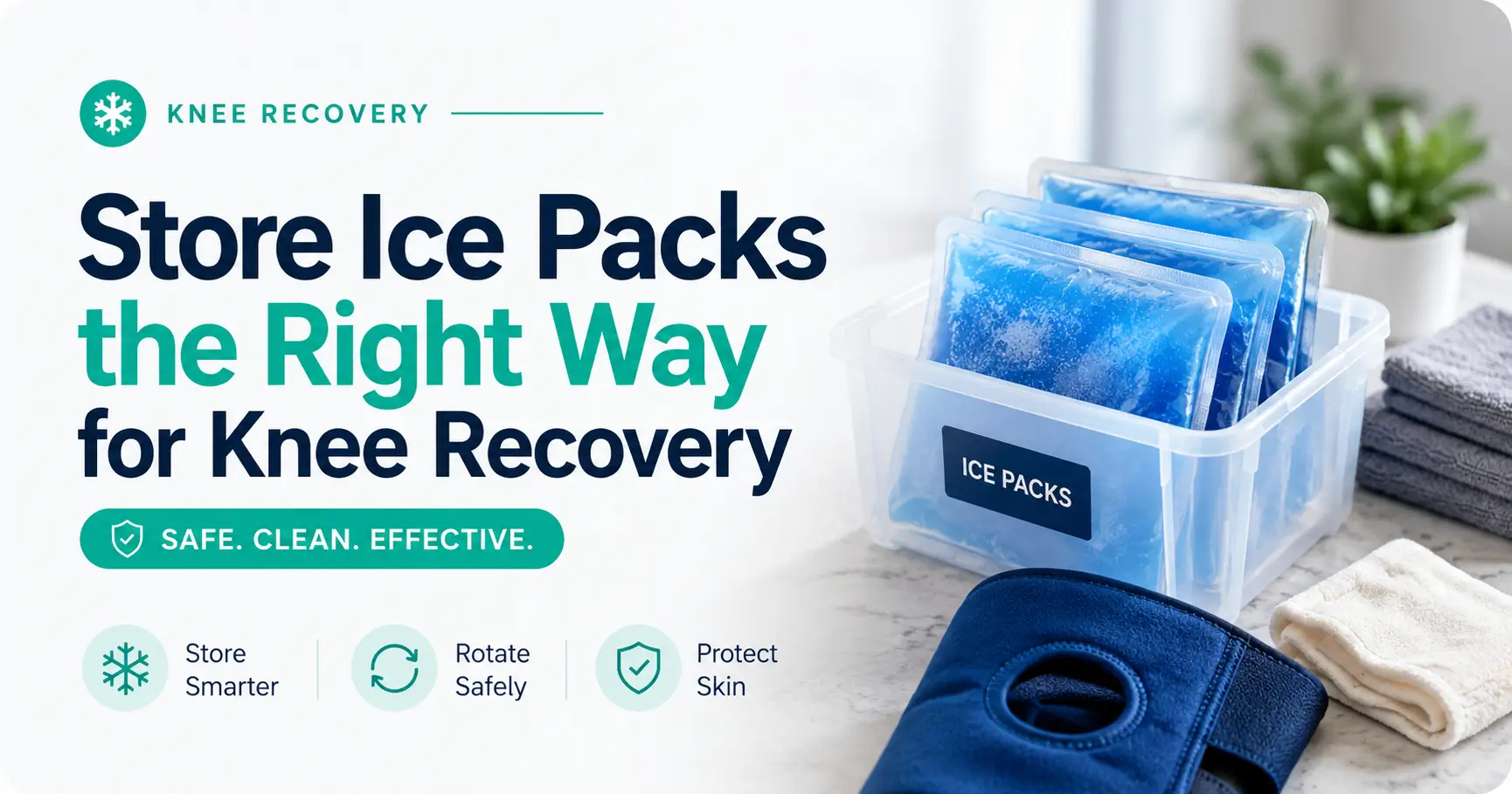
Ice-pack storage is a handling and access problem. It cannot determine how long, how often or whether you should use cold treatment after knee surgery.
Written from a family caregiver perspective. The operator cares for an older mother with rheumatic, spinal and knee problems and is not a medical professional. This is planning information, not individual clinical assessment or clearance.
Identify the actual product
Keep the pack or cooling-device instructions available. Check storage temperature, preparation, cleaning, inspection and replacement advice for that product. A gel pack may not become solid; do not use hardness as a universal readiness test. Do not substitute a frozen household item for a prescribed device without advice.
Separate treatment instructions from freezer organization
Ask the surgical or therapy team for the application method, protection, duration and monitoring appropriate to you. This article sets no fifteen- or twenty-minute treatment schedule. Do not remove a wound dressing or change the prescribed arrangement to make a pack fit.
Plan retrieval and return
A helper can keep suitable packs in an accessible, labeled storage area, prepare only what the instructions allow and handle transport. The recovering person should not carry a loose wet pack while using a walking aid. Keep leaks and condensation off the walking route and ask a helper to clean spills.
Keep a problem and backup plan
Ask the team what to do if the product leaks, the prescribed method is unavailable or skin or symptoms change. Do not compensate by making the pack colder or using it longer. A neatly organized freezer does not establish that cold treatment is appropriate for an individual.
Source and correction scope
FDA: water-circulating hot/cold therapy devices explains why water-circulating devices require product-specific and clinical instructions; these devices differ from ordinary ice packs.
Editorial rewrite: October 21, 2026. Replaced the previous self-test or universal task instructions and narrative examples with individual assessment questions, practical arrangements and a backup plan. No independent medical review is claimed.
Separate ice-pack storage from a treatment schedule
Use these prompts for a private note or your next care-team conversation. Record what is known and mark unanswered questions; completing this table does not establish safety, independence or treatment eligibility.
| Record or clarify | Question and next action |
|---|---|
| Exact pack or cooling device | What storage, inspection and handling does its manufacturer specify? |
| Prescribed cold-treatment instructions | What application method, protection and limits has the team set for this person? Storage advice cannot set treatment duration. |
| Access and spills | Who retrieves and returns the pack without the patient carrying it with a walking aid, and who cleans leaks? |
Keep the person’s own report separate from a helper’s observation. Share only with consent and only with people who need the information. Do not put identifying health details in public comments. The visit preparation tool can organize questions; it cannot assess symptoms or approve a task.
Background resource: NHS: falls and getting help. This resource supports general care planning; it does not validate every instruction elsewhere in this article.