
Small-Space Recovery Guide
How to Create a Recovery Corner in a Studio Apartment That Already Feels Full
In a studio apartment, every square foot seems to have two jobs and an unpaid internship. The dining table becomes an office. The bed becomes a sofa. The chair collects clothes until it develops its own weather system. Creating a recovery corner can sound unrealistic when the entire apartment is already negotiating for space.
Yet a useful recovery zone does not require a spare room, a renovation, or a catalogue-perfect reading nook. It needs a clear purpose, a physical boundary and a setup that asks almost nothing from you when your energy is already low. A six-square-foot patch beside a window may serve you better than an elaborate arrangement that must be rebuilt every evening.
This guide shows how to choose the right location, control light and noise, compare budget options, avoid clutter disguised as wellness and test the idea before buying furniture. The goal is not to decorate exhaustion. It is to make one restorative action easier to begin.
Choose the right footprint
Measure the activity rather than guessing how much furniture will fit.
Build a one-minute setup
Reduce the small frictions that quietly kill otherwise good routines.
Spend only after testing
Use what you own for seven days before upgrading the space.
The best recovery corner is not the prettiest one. It is the one you can enter before your tired brain begins negotiating. 🌿
Snapshot
This guide is for renters, remote workers, students, caregivers and people recovering in compact homes. You will learn how to define one restorative activity, find a safe footprint, compare low-cost and upgraded setups, and run a seven-day test before spending money.
Table of Contents
Before You Rearrange the Room
A recovery corner can support ordinary rest, gentle movement and post-work decompression. It does not replace medical care, mental-health support, physical therapy or an accessible home setup. Keep exits, heaters, vents, smoke alarms and walking routes clear. Confirm seating, exercise and recovery equipment with an appropriate professional when pain, surgery, balance problems or mobility restrictions are involved.
Who a Studio Recovery Corner Is For, and When It Is Not Enough
A recovery corner is a small, intentionally arranged area used for one or two low-demand restorative activities. It may contain a supportive chair, a mat, a lamp and a basket. Its real value, however, comes from what the area does not contain: work files, laundry, unopened mail and six different hobbies waiting to become obligations.
For a remote worker, the corner can provide a visible transition away from the desk. For a student, it may become a screen-free reading seat. For someone managing a temporary injury, it can keep frequently used comfort items within easy reach without turning the entire apartment into a supply room.
A good fit for small-space living
- Renters who cannot make permanent alterations
- Remote workers who struggle to leave work mode
- Students who need a low-stimulation place to reset
- Caregivers and shift workers with limited quiet time
- People managing ordinary fatigue, stiffness or sensory overload
- People recovering at home who need a simple resting station
If your corner is intended for surgery recovery or limited mobility, begin with function rather than mood. Our knee replacement apartment setup guide explains how pathways, seating height and essential-item placement affect the wider room. A recovery corner should support that plan rather than compete with it.
When a corner is not the real solution
Décor cannot repair an unsafe apartment, chronic sleep loss, untreated pain or a schedule with no true recovery time. Pause the project when the proposed area is damp, excessively hot, poorly ventilated, unstable underfoot or positioned where it blocks an exit.
Persistent panic, severe anxiety, depression, major insomnia or thoughts of self-harm require more than a calming chair. The National Institute of Mental Health’s help resources explain how to find appropriate support in the United States.
The mobility and fall-risk check
A soft rug may visually define the zone, but it can also create a raised edge. A floor cushion may look compact, yet require more knee and hip strength than the user comfortably has. Test how the person sits down, stands up and reaches for items before treating any object as suitable.
Households using a walker or cane should review the walker path safety checklist before adding baskets, footstools or dividers. The Centers for Disease Control and Prevention also provides practical information through its older adult fall prevention resources.
Key takeaway
A recovery corner is appropriate when it removes friction from a healthy routine. It is inappropriate when it adds a trip hazard, hides a serious problem or asks the body to perform a difficult movement.
The Six-Square-Foot Test: How Little Space Is Enough?
There is no universal minimum size. A seated breathing routine may fit beside a window. Floor stretching requires enough room to extend the body safely. Reclined recovery may require a supportive chair with room for the footrest, side table and clear exit path.
The practical question is not “How much furniture can I fit?” It is “What body position does this activity require, and can I enter and leave it without bumping, twisting or moving three other objects?”
Measure the activity, not the furniture
| Primary activity | Space to test | Useful starting elements | Common conflict |
|---|---|---|---|
| Seated reading or breathing | Chair footprint plus elbow and standing room | Supportive chair, light, small basket | Chair blocks a closet or walkway |
| Floor stretching | Body length plus safe arm movement | Folding mat, cushion, wall hook | Mat overlaps kitchen or entry traffic |
| Reclined rest | Chair or cushion fully deployed | Neck support, throw, side surface | Footrest blocks the route out |
| Journaling | Comfortable seated reach | Chair, lap desk, pen container | Corner slowly becomes a second office |
| Cold or heat routine | Seat plus safe storage and cable clearance | Supportive seat, timer, insulated storage | Loose cords or damp packs create hazards |
Use the elbow-and-exit check
- Mark the proposed footprint with painter’s tape.
- Sit, stand, recline or stretch exactly as you expect to use the area.
- Move both elbows and reach for the lamp, water and storage.
- Stand up without pulling on unstable furniture.
- Walk to the bathroom, kitchen and exit without stepping over anything.
- Leave the setup in place for one normal evening and watch how household traffic moves around it.
The final step matters because an area that works during a quiet measurement may fail once groceries, shoes, pets or another person enter the room.
Borrow space instead of owning it
A studio recovery area does not always need a permanent footprint. A reading chair can become the recovery seat after the laptop closes. A clear bedside strip can hold a folding mat for ten minutes and disappear into under-bed storage afterward.
The arrangement works when the transformation is fast. If you must move a coffee table, roll a rug, find a missing cushion and relocate a drying rack, the ritual has acquired too many tollbooths.
1
Choose one activity
Reading, stretching, breathing or quiet rest.
2
Mark the footprint
Use painter’s tape before moving or buying furniture.
3
Check every pathway
Protect exits, doors, vents and daily walking routes.
4
Test before upgrading
Use the basic setup for seven days, then edit.
Start With a Recovery Trigger, Not a Shopping List
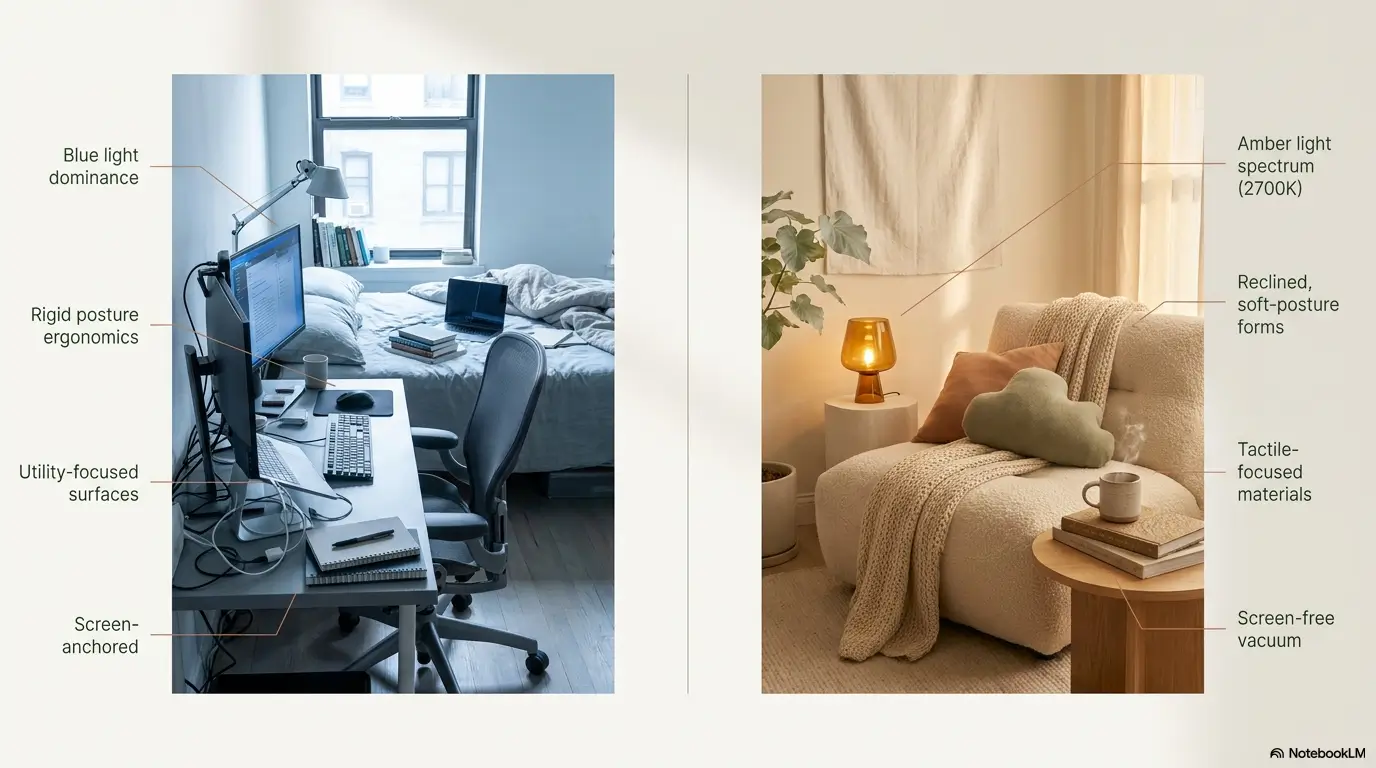
Many recovery corners begin with attractive objects and end as decorative storage. The safer sequence is purpose, trigger, setup, test and only then purchase. This keeps the corner tied to behavior rather than the brief thrill of arranging new things.
Give the corner one job
Choose a purpose narrow enough to describe in one sentence. “This is where I recover” is vague. “This is where I sit for ten screen-free minutes after closing my laptop” tells you exactly what belongs there.
- Gentle morning stretching
- A ten-minute post-work reset
- Screen-free evening reading
- Low-light rest during an ordinary headache
- Journaling before bed
- A seated comfort routine during temporary recovery
Remote workers who are also recovering physically may need a clearer separation between work and rest. The remote work after surgery guide can help you review desk demands before deciding where a recovery zone should begin.
Attach the space to a repeatable moment
The corner becomes easier to use when it follows an event that already happens. This is sometimes called a contextual cue, but you do not need a psychology lecture to use it. You simply need a reliable “after this, I do that.”
- After closing the laptop, turn on the corner lamp.
- After a shower, sit for ten minutes with a book.
- After returning home, place the phone in the storage basket.
- Before getting into bed, complete a short breathing routine.
- After a scheduled comfort treatment, reset the supplies immediately.
Make entry almost frictionless
The lamp should turn on from the seated position. The blanket should be reachable. The mat should unfold without emptying half a closet. Headphones should be charged or have a consistent storage spot.
Use the one-minute rule: the complete setup should be ready immediately or deployable in less than sixty seconds. A routine that requires ten minutes of preparation rarely survives a genuinely tiring week.
Key takeaway
Do not ask the corner to motivate you. Ask it to remove the next obstacle: finding the cushion, dimming the light, clearing the floor or putting the phone somewhere else.
Short Story: The Beautiful Corner That Never Got Used
Maya worked from a small studio where her desk faced the bed. She wanted a place to decompress, so she bought a round rug, three cushions, a basket, a candle warmer and a narrow table. The corner looked polished in photographs.
Using it was another matter. To sit down, she had to move the table, stack two cushions and carry her laptop charger out of the way. Within two weeks, the basket held unopened mail and the rug was half covered by laundry.
She started again without purchasing anything. One chair turned away from the desk. One lamp. One book. Her phone went into a drawer after work.
The second setup looked less impressive, but she used it almost every evening. The lesson was plain: a recovery corner succeeds when it makes the desired action easier, not when it creates a new room to maintain.
The Hidden Layout Rule That Makes One Corner Feel Separate
A studio apartment contains all of its unfinished business in one visual field. The dishes wait behind the chair. The desk glows beside the bed. Laundry announces itself from a rack. Physical distance helps, but sightlines often matter more.
Face away from visual noise
Before buying a divider, rotate the chair or mat. Try facing a window, blank wall, curtain or calm shelf rather than the desk, television, kitchen sink or entrance. A quarter turn can create more psychological separation than another piece of furniture.
This does not mean hiding every ordinary object. It means avoiding a seated view dominated by cues that say “resume work,” “clean me” or “check your notifications.”
Create a boundary without building a wall
- A washable low-profile rug
- A tension-rod curtain where the structure allows it
- A lightweight folding screen
- A narrow open bookshelf anchored or positioned safely
- A directional floor lamp
- Removable wall color or renter-safe wallpaper
- A consistent basket and textile combination
Use one boundary first. Several boundaries in a studio can make the room feel segmented and cramped. A rug plus a screen plus a tall plant plus a side table may turn six square feet into an obstacle course wearing soft beige.
Protect the path before the mood
Do not block the apartment entrance, bathroom route, kitchen route, closet door, radiator, baseboard heater, air-conditioning unit or emergency exit. Check the setup in dim light as well as daylight.
For people preparing a home around joint surgery or mobility changes, the fall-risk checklist before surgery offers a broader room-by-room review. The recovery corner is only one island in the apartment. The bridges still matter.
Renter-safe boundary checklist
- The boundary does not require drilling or permanent construction.
- No fabric hangs near a heater, cooking surface or open flame.
- The rug lies flat and does not curl at the edge.
- The screen or shelf cannot topple into the walking path.
- The arrangement can be removed without damaging walls or flooring.
Build Sensory Control Into the Smallest Details
A useful recovery corner changes the room’s tempo. It does not need to become silent, dark or spa-like. It needs to give the user a small amount of control over light, sound, touch, temperature and visual stimulation.
Lighting should change the room’s tempo
A warm, dimmable lamp usually offers more flexibility than relying on bright overhead lighting. Place the light beside or slightly behind the seated position to reduce glare. Make sure the switch is reachable without twisting, crawling or walking across a dark room.
People arranging a corner during physical recovery may also benefit from the practical ideas in our bedroom lighting setup after joint surgery guide. The same principle applies: light should support movement as well as comfort.
Reduce noise without sealing yourself in
Soft materials can absorb some harsh reflections: a rug, upholstered chair, curtain, wall hanging or dense cushion. A fan or white-noise machine may mask intermittent building sounds, although alarms, doorbells and necessary household signals must remain audible.
Noise-canceling headphones can be useful for a short, supervised routine. They may be a poor choice when you need to hear a child, caregiver, smoke alarm, delivery or medical equipment.
Choose washable, touchable materials
A throw blanket, supportive cushion and textured rug can make the corner feel inviting, but each textile adds cleaning and storage work. Favor removable covers, washable fabrics and items compact enough to store when the season changes.
Comfort supplies used for pain or recovery need consistent storage. The knee ice-pack storage guide shows how labeling, rotation and a designated freezer location can prevent a comfort routine from becoming a scavenger hunt.
Be cautious with scent and air quality
Candles, incense and essential-oil diffusers are often presented as default relaxation tools. They are not neutral. Smoke and fragrance can aggravate headaches, respiratory symptoms, allergies, pets or nearby neighbors.
An unscented corner can still feel comforting through lighting, texture, temperature and sound. Review the U.S. Environmental Protection Agency’s indoor air quality guidance when ventilation, moisture, pollutants or strong odors are concerns.
Key takeaway
Sensory control is not about adding more stimulation. It is about giving yourself a simple way to reduce glare, noise, uncomfortable texture or visual demand.
Show me the nerdy details
A recovery corner works partly through cue control. Objects, lighting direction, body orientation and repeated timing can become signals associated with a particular behavior. When the same chair is used for email, meals, streaming, storage and relaxation, the cue becomes muddy.
This is why a tiny, consistent distinction can matter. Turning the chair away from the desk, switching to one lamp and placing the phone out of reach can create a clearer behavioral sequence without changing the floor plan.
The practical design target is low activation energy: fewer steps between noticing the need for rest and beginning the restorative activity.
What Makes a Recovery Corner Actually Get Used?
The strongest predictor of use is not beauty. It is readiness. A visible chair, reachable lamp and pre-positioned comfort item invite action. A buried mat, tangled charger and basket of unrelated objects make the corner feel like another task.
Leave one visible invitation
Choose one object that signals the ritual: a book, folded blanket, journal, meditation cushion or pair of headphones. Keep the object visible without covering the seat or walking surface.
One invitation feels intentional. Seven invitations feel like inventory.
Hide everything that creates visual work
Chargers, resistance bands, eye masks, spare covers and care supplies should have one concealed location. A lidded basket, storage ottoman, under-seat box or drawer can work, provided the user can reach it safely.
Do not store work materials in the same container. Unfinished tasks have a remarkable ability to escape through closed lids.
Reset the zone immediately after use
A reset should take less than one minute: fold the blanket, return the book, coil the cable and place the cup in the kitchen. Treat this as the final step of the ritual rather than a separate chore for a future version of yourself.
For people who dislike turning recovery into a stream of scores and alerts, recovery without a fitness tracker offers a quieter way to notice function, routine and energy.
The five-element limit
- One supportive surface
- One light source
- One comfort item
- One recovery tool
- One storage container
Recovery Corner Cost and Buying Options
A recovery corner can cost nothing when you repurpose a chair, blanket and lamp. It can also become surprisingly expensive once specialty seating, acoustic materials, lighting and storage enter the cart.
The best way to avoid wasting money is to upgrade the part that limits use. If the chair causes discomfort, improve support. If overhead glare keeps you away, improve lighting. If setup time is the problem, improve storage. Do not buy a divider to solve a seating problem.
Good, Better, Best: a decision table
| Setup level | What it may include | Best for | Before paying |
|---|---|---|---|
| Good: use what you own | Existing chair or mat, household lamp, blanket, reused basket | Testing the location and routine | Confirm that the seat is supportive and the path remains clear |
| Better: targeted upgrade | Supportive cushion, dimmable lamp, low-profile rug or lidded storage | Solving one known comfort or friction problem | Measure dimensions and review cleaning requirements |
| Best: specialized setup | Compact ergonomic seating, adjustable lighting, acoustic treatment or mobility-aware storage | Frequent use or clearly defined physical needs | Check return terms, weight limits, stability and professional guidance where relevant |
What to compare before buying
- True dimensions: Include the chair when reclined, doors when open and baskets when pulled out.
- Seat height: Confirm that sitting and standing are comfortable for the intended user.
- Stability: Avoid lightweight pieces that slide when used for support.
- Cleaning: Check whether covers can be removed and washed.
- Storage access: Make sure lids and drawers do not require awkward bending.
- Cord management: Keep power cords away from feet and walking aids.
- Return policy: Comfort is difficult to judge from product photos.
- Rental constraints: Confirm wall, floor and installation restrictions before drilling or mounting.
When paid help may be worth considering
Most ordinary recovery corners are suitable DIY projects. Professional input becomes more useful when the arrangement must accommodate a recent surgery, repeated falls, significant mobility limits, persistent pain, sensory disability or complex caregiving needs.
An occupational therapist may help evaluate how a person performs daily activities in the home. A physical therapist may advise on movement restrictions and support needs. An electrician or qualified installer may be appropriate when new outlets, permanent lighting or mounted fixtures are required.
Before paying for equipment or caregiver time, compare the actual task being solved. Our home equipment versus caregiver hours guide can help frame that decision without assuming that the most expensive option is automatically the most useful.
Key takeaway
Upgrade only after you can name the problem in one sentence. “The lamp switch is unreachable” is a buying reason. “The corner does not feel complete” is usually a browsing reason.
Common Recovery-Corner Mistakes That Shrink the Apartment
Small apartments rarely become uncomfortable because of one dramatic decision. They tighten gradually: one basket, one side table, one floor cushion and one decorative ladder at a time.
Mistakes and safer alternatives
| Common mistake | Why it fails | Safer alternative |
|---|---|---|
| Choosing the darkest leftover corner | The area feels neglected or difficult to enter | Choose an accessible area with controllable light |
| Buying an oversized lounge chair | The chair dominates traffic and storage | Mark the full dimensions with tape before ordering |
| Adding several decorative objects | Usable space becomes display space | Keep one visible invitation and hide the rest |
| Mixing work and recovery supplies | The corner continues to signal unfinished tasks | Use separate storage for work materials |
| Using unstable furniture for support | The item may slide or tip during standing | Choose stable seating and keep mobility routes open |
| Adding unrestricted screens | The corner becomes another scrolling station | Use a timer, guided audio or screen-free routine |
| Ignoring cleanup | The area accumulates cups, cables and laundry | End each session with a one-minute reset |
The wellness-shelf trap
Books, candles, plants, gadgets and baskets can make a corner look restorative while leaving nowhere to sit or move. A recovery zone is not successful because it contains objects associated with wellness. It is successful because the intended activity can happen comfortably.
Use a one-in, one-out rule. When a new object enters, another object leaves or moves elsewhere. Small spaces lose their calm one innocent purchase at a time.
Ignoring how the body feels after ten minutes
A floor cushion is not automatically comfortable. A deep chair is not automatically supportive. A soft mattress topper is not automatically appropriate for resting during pain or recovery.
Test the position for ten minutes, then notice the neck, back, hips and knees. Consider how easy it is to stand. When pain is changing daily routines, the guide to pain changing your routine can help you document functional effects for a medical conversation.
Stop and revise the setup when:
- You must step over an object to leave.
- The rug moves, curls or catches a walking aid.
- The seat causes increasing discomfort.
- The corner blocks ventilation or heat clearance.
- Cords cross the walking path.
- The setup takes longer to prepare than the recovery routine itself.
Reviewing an apartment’s escape routes is also worthwhile after changing furniture placement. The U.S. Fire Administration provides a practical home fire escape planning guide.
Recovery Corner FAQ
Where should I put a recovery corner in a studio apartment?
Choose a low-traffic area that does not face your main work surface or block essential pathways. A window corner, underused wall, foot-of-bed area or compact reading chair may work. Test the sightline, lighting and route to the bathroom before committing.
How much space does a recovery corner need?
A seated setup may need only the chair footprint plus room to stand safely. Stretching requires enough floor space to extend the body without striking furniture. Measure the activity in its fully used position rather than measuring stored items.
Can my recovery corner be next to the bed?
Yes. Create distinction with a directional lamp, small rug, curtain, different seating position or specific routine. Avoid letting the corner become a holding zone for bedding and clothes.
What furniture works best in a tiny recovery space?
Compact, supportive and multipurpose pieces usually perform best: an armless chair, stable storage ottoman, folding floor chair, narrow side surface or wall-mounted light installed correctly. The best choice depends on the user’s body position, mobility and storage needs.
How can renters create privacy without damaging walls?
Consider a freestanding screen, open bookshelf, tension-rod curtain, removable hooks or a change in furniture direction. Check the lease and product instructions before attaching anything to walls, ceilings or floors.
Should a recovery corner include plants?
Plants are optional. A healthy, manageable plant may soften the area, but it also requires light, watering and floor space. Choose pet-safe varieties and avoid crowding the only usable surface.
Can I use the corner for meditation and exercise?
Yes, when both activities need similar conditions and minimal equipment. A folding mat and cushion may support gentle movement and seated meditation. Keep heavier or specialized exercise equipment elsewhere if it creates clutter or safety concerns.
How do I keep the corner from becoming messy?
Give every loose item one concealed storage location, maintain a five-element limit and reset the space immediately after use. Do not place objects there “temporarily” unless you are willing to watch temporary become a permanent resident.
Is a recovery corner safe after surgery?
It can be helpful when it follows the person’s discharge instructions and mobility restrictions. Seating height, stability, walking-aid clearance, medication storage and access to help may matter more than appearance. Someone recovering alone may also benefit from reviewing the shoulder surgery recovery alone checklist or the equivalent plan for their procedure.
Your 15-Minute Start: Run a Seven-Day Recovery-Corner Test
You do not need a finished design today. You need one honest experiment. The seven-day test reveals whether the location, activity and setup fit your real life before money and furniture make the decision harder to reverse.
What to do in the next fifteen minutes
- Write down one activity the corner will support.
- Choose one existing area that does not block a pathway.
- Mark the footprint with painter’s tape or a folded blanket.
- Add one seat or mat, one light and one comfort item you already own.
- Place distracting work items and your phone outside the zone.
- Sit in the corner for ten minutes.
- Reset it before leaving.
The seven-day scorecard
Ask these questions after one week
- Did I enter the space without rearranging the apartment?
- Did the corner help me shift away from work or task mode?
- Was sitting down and standing up comfortable?
- Did any object block a route, door, vent or outlet?
- Which item supported the routine?
- Which item became clutter?
- What single upgrade would remove the largest remaining obstacle?
Keep only what earned its square footage
At the end of the test, remove anything that was not used. Reposition anything that made movement awkward. Buy nothing unless the week exposed a specific limitation that a purchase can reasonably solve.
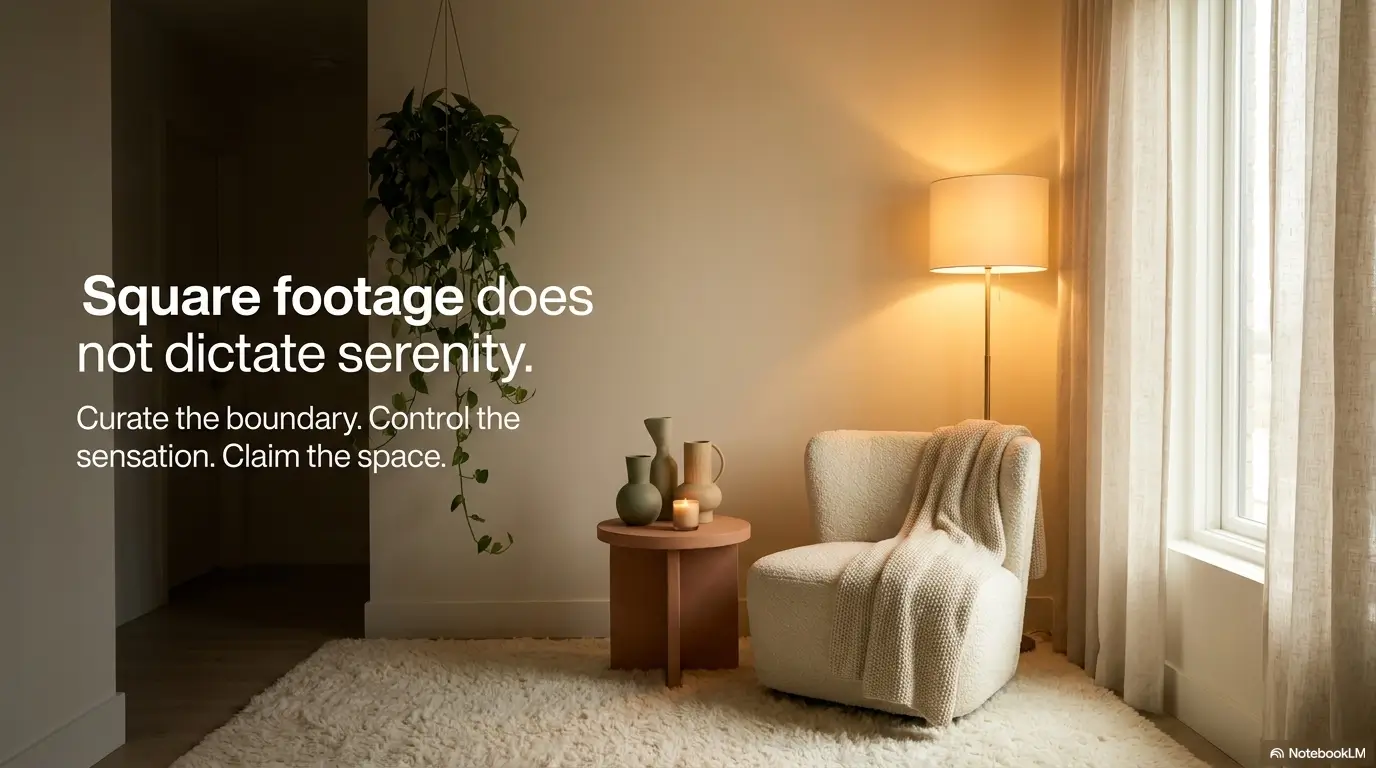
A studio apartment does not offer endless room, but it can offer one reliable pause. The corner may be only a chair turned toward softer light, a blanket within reach and ten minutes during which nothing else is required.
Final takeaway
Begin with one activity, one marked footprint and objects you already own. Let seven ordinary days decide what the corner needs next.
Last reviewed: 2026-09