
If Medicare denied your back brace, do not start by assuming the brace is simply “not covered.” First check the exact denial reason, the HCPCS billing code, the medical-necessity documentation, the order from your treating provider, the supplier’s Medicare status, and whether prior authorization was required. A correctable paperwork or coding problem may need a different response from a true coverage denial.
Medicare Part B can cover medically necessary back braces when they are ordered by a doctor or other qualified health care provider. However, coverage depends on the specific brace, documentation, supplier, billing rules, and, for certain orthoses, prior authorization requirements. If you have Medicare Advantage rather than Original Medicare, your plan also has its own coverage-review and appeal process.
Find your denial reason and next step
Start with the written decision. The categories below are conversation prompts, not a diagnosis of a denial code or a promise that an error can be fixed. Match the notice’s actual explanation before choosing a route.
| Issue in your notice | Documents to check | Contact first | Next action to discuss |
|---|---|---|---|
| Coding or claim details | Billed HCPCS code, modifiers, item supplied, and written denial. | Supplier billing office. | Ask which submitted detail was wrong and whether a corrected claim is appropriate. |
| Missing clinical support | Denial wording, order, and clinical records actually submitted. | Prescribing office and supplier. | Ask which finding or record is missing; request an accurate response from the treating office. |
| Prior authorization | Brace code, service date, submission, and authorization decision. | Supplier; your plan if Medicare Advantage. | Ask which requirement applied on that date and what review route the notice permits. |
| Earlier brace / same or similar | Previous paid claim, delivery date, and reason another brace is needed. | Supplier and prescribing office. | Ask whether repair, replacement, or a changed medical need is at issue. |
| Supplier eligibility or network | Claim details, supplier status, and any plan network rule cited. | Supplier; your plan if Medicare Advantage. | Request the exact eligibility issue and a written explanation of any proposed patient charge. |
| Reason unclear / bill only | MSN or plan decision, itemized bill, and service date. | Supplier billing office; Medicare or your plan. | Ask whether a claim decision exists. A bill alone does not identify appeal rights or the denial reason. |
On a narrow screen, swipe the table horizontally or focus it and use the arrow keys.
For an earlier-brace issue, read replacement rules and their limits or use the early-replacement call record. Do not apply a knee-brace interval to a back brace.
Private call note: record the notice date, date received, deadline shown, denial wording, billed code, person contacted, promised next step, and follow-up date. Keep medical records and Medicare identifiers private.
Source check: October 27, 2026. The appeal deadlines and routes above were checked against the linked official Medicare guidance and CMS form. This action table organizes questions; it is not an individual coverage determination.
Table of Contents
Start with the denial notice, not the bill
The first question is not “How do I appeal?” It is “What exactly was denied, and why?”
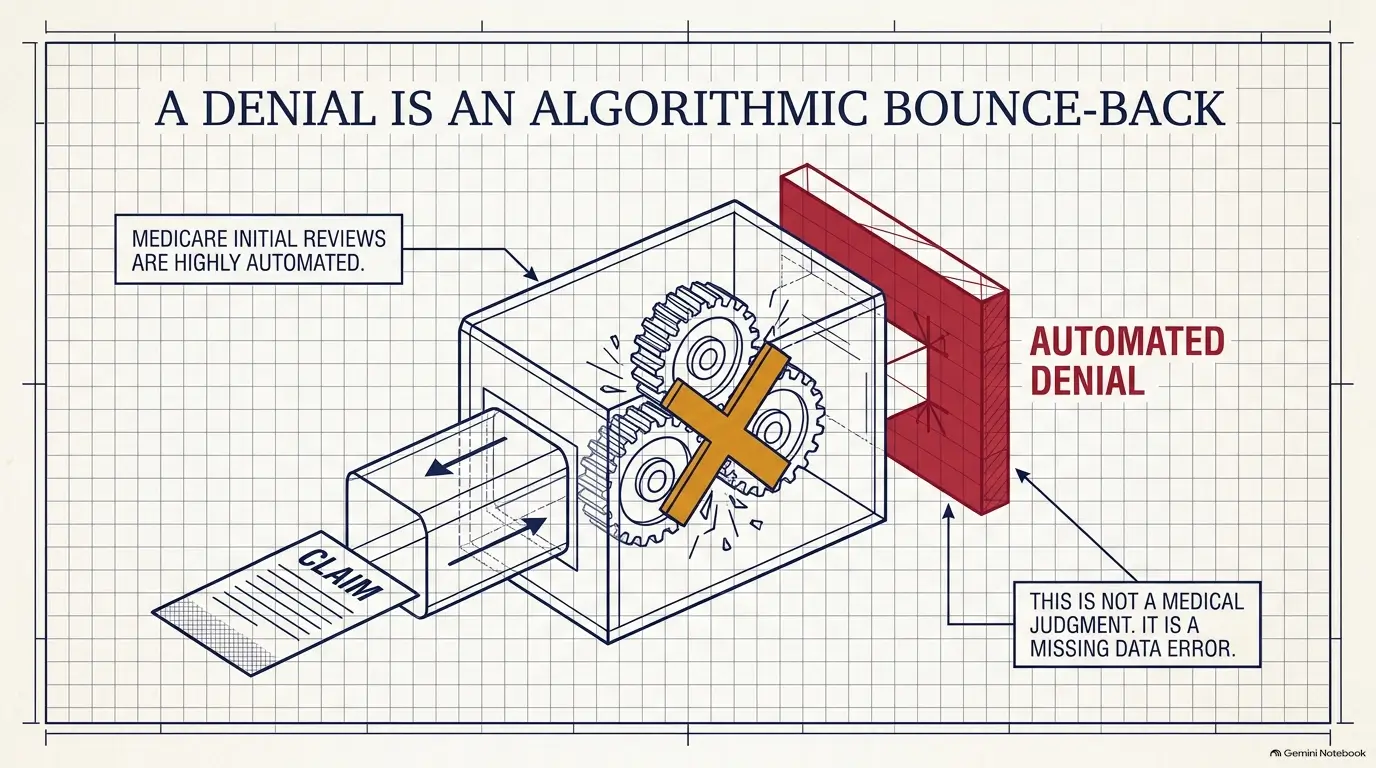
If you have Original Medicare, review your Medicare Summary Notice (MSN). Medicare specifically advises beneficiaries to contact the doctor or supplier when an item is denied to make sure the correct information was submitted. If something was submitted incorrectly or incompletely, the provider or supplier may be able to correct and resubmit the claim.
If you have Medicare Advantage, look at the written denial or Explanation of Benefits and identify the plan’s stated reason. Coverage decisions in Medicare Advantage are handled through the plan rather than through the Original Medicare claims process.
- Write down the denial or remark code.
- Identify the exact brace and HCPCS code billed.
- Check the date the brace was ordered and supplied.
- Confirm whether Medicare says the problem involves medical necessity, documentation, prior authorization, supplier eligibility, coding, or another requirement.
- Keep the denial notice, prescription, order, supplier paperwork, receipts, and related medical records together.
Do not rely only on a supplier representative saying that “Medicare rejected it.” The written notice is the map. Without it, you may end up appealing a coding problem that could have been corrected much faster.
1. Check whether the brace itself fits Medicare’s coverage rules
Medicare Part B covers medically necessary arm, leg, back, and neck braces when they are ordered by a doctor or another qualified health care provider. Medicare describes covered braces as rigid or semi-rigid devices used to support a weak or deformed body part or restrict movement of an injured body part.
You can review Medicare’s current brace coverage information on the official Medicare brace coverage page.
A prescription alone does not necessarily settle the coverage question. The documentation must support why the particular orthosis supplied meets Medicare’s requirements for the patient’s condition.
If you are still trying to understand the broader insurance rules, see how orthopedic brace insurance coverage works before treating the denial as an isolated billing event.
2. Ask for the exact HCPCS code that was billed
“Back brace” is a consumer description, not a sufficiently precise billing description. Medicare processes orthoses using HCPCS codes, and different lumbar or thoracic-lumbar braces can fall under different codes and requirements.
Ask the supplier this directly: “What HCPCS code did you bill Medicare for my brace?”
Then compare that code with the item you actually received and with the order in your medical record. If the wrong code, modifier, or brace category was submitted, the solution may involve a corrected claim rather than an argument that Medicare should ignore the billing error.
This matters especially for back braces because certain lumbar-sacral and thoracic-lumbar-sacral orthoses are subject to Medicare’s DMEPOS prior authorization rules.
3. Check whether prior authorization was required
Prior authorization is one of the most important issues to check after a Medicare back-brace denial. It is also an area where a vague answer from a supplier is not enough.
CMS maintains a Required Prior Authorization List for selected Durable Medical Equipment, Prosthetics, Orthotics, and Supplies (DMEPOS). Certain lumbar-sacral orthoses, including HCPCS codes L0648 and L0650, are already subject to required prior authorization in applicable circumstances.
CMS is also continuing to change the list. As of September 21, 2026, CMS says three additional thoracic-lumbar-sacral orthosis codes, L0456, L0457, and L0486, are scheduled to become subject to nationwide required prior authorization beginning October 28, 2026.
Because the rules depend on the code, date of service, and circumstances, do not assume that every back brace requires prior authorization or that none does. Ask the supplier:
- Was this HCPCS code on Medicare’s Required Prior Authorization List on my date of service?
- Was a prior authorization request actually submitted?
- What was the Medicare prior authorization decision?
- If it was not submitted, why not?
- If Medicare requested additional documentation, was it provided?
CMS explains the current program on its DMEPOS prior authorization page.
For a broader preparation guide, you can also review this orthopedic prior authorization checklist.
4. Confirm that the medical record explains why you needed this specific brace
A short order saying only “back brace” may not tell the whole clinical story. Coverage can depend on documentation showing the condition being treated and why the particular orthosis was medically necessary.
Ask the prescribing office whether the records supporting the order include relevant findings such as the diagnosis, symptoms or functional limitations, examination findings, treatment plan, and reason the specific brace was selected.
You do not need to invent a better medical argument yourself. Ask the clinician and supplier what documentation Medicare said was missing and whether the existing medical record actually addresses it.
A useful question for the prescribing office is:
“Medicare denied the brace. Can you review the denial reason and confirm whether the documentation you sent supports the exact brace code the supplier billed?”
5. Verify the supplier’s Medicare status
Coverage rules and supplier rules are separate pieces of the puzzle. Medicare tells beneficiaries using DME suppliers to make sure their doctors and suppliers are enrolled in Medicare and to ask whether the supplier participates in Medicare or accepts assignment.
Assignment affects what a Medicare supplier may charge for a covered item. If a participating supplier accepts assignment, the supplier accepts the Medicare-approved amount under Medicare’s payment rules. Your actual responsibility still depends on factors such as the Part B deductible, coinsurance, other insurance, and whether the claim is covered.
Do not confuse a supplier being willing to sell you a brace with Medicare agreeing to pay for that brace.
6. Find out whether the supplier can correct or resubmit the claim
Ask whether the denial resulted from information that can legitimately be corrected, while also recording the appeal deadline in your notice. Do not assume a supplier’s correction, resubmission, phone call, or promise to investigate extends that deadline. If the deadline is approaching and you still disagree with the decision, follow the notice’s filing instructions rather than waiting indefinitely for the supplier.
- Was the wrong HCPCS code used?
- Was a required modifier missing?
- Was the prescribing information incomplete?
- Were medical records omitted?
- Was the claim submitted before required documentation was available?
- Did Medicare request additional information that the supplier failed to send?
Medicare’s guidance on the Medicare Summary Notice specifically recommends checking with the provider when an item or service is denied to see whether correct information was submitted. A corrected submission and a beneficiary appeal are not the same process, so ask which route actually fits the denial.
7. If the denial stands, identify which appeal system applies
The next step depends heavily on whether you have Original Medicare or Medicare Advantage.
If you have Original Medicare
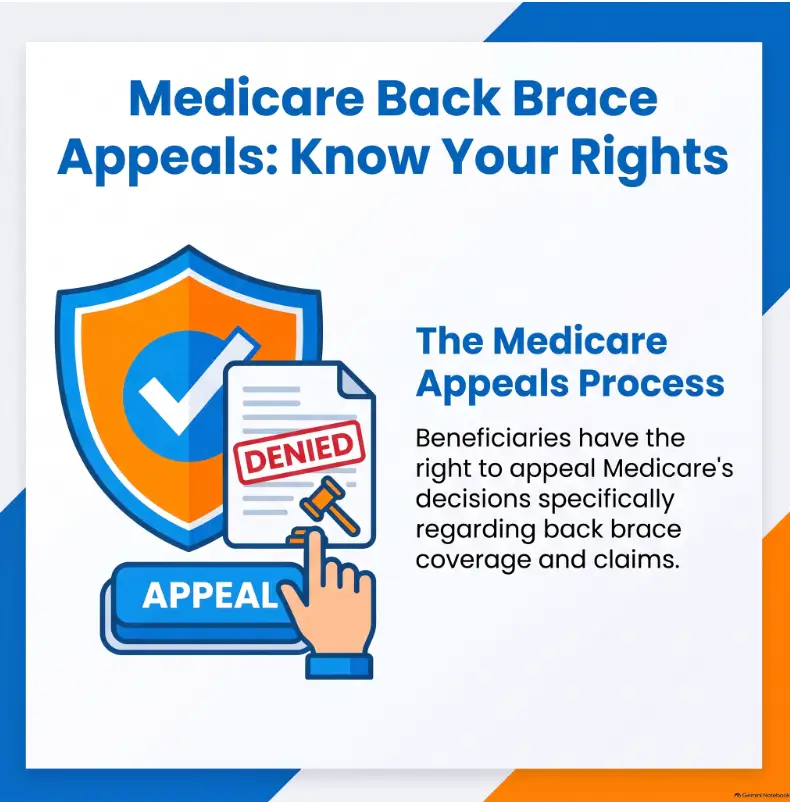
If the denied brace appears on your Medicare Summary Notice and you disagree with Medicare’s coverage or payment decision, you can request a Level 1 redetermination.
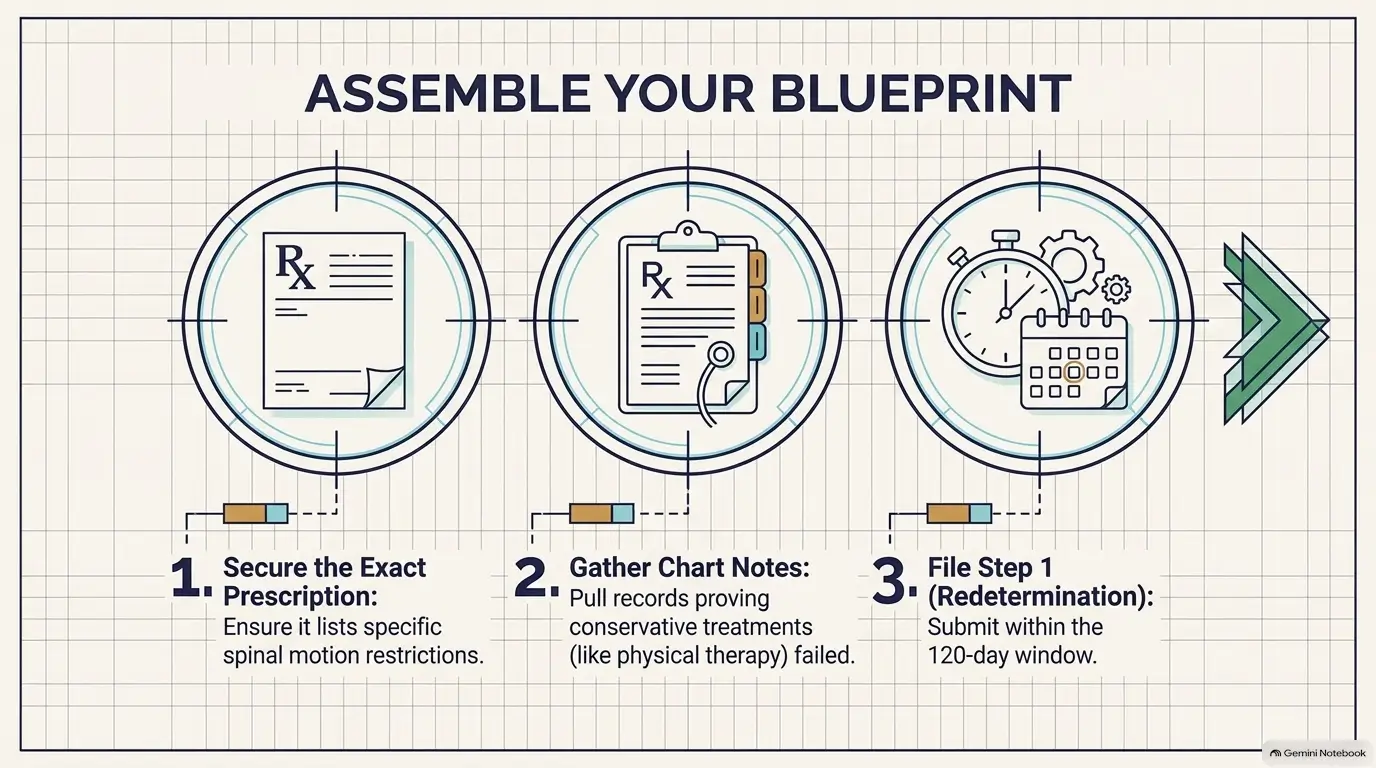
Medicare says you generally have 120 days after receiving the MSN to request this first-level redetermination. Follow the appeal instructions on the notice rather than mailing paperwork to an address found in an unrelated article.
Supporting information may include the denial notice, relevant medical records, the brace order, documentation from your clinician, and information from the supplier explaining why the item meets Medicare requirements.
Medicare provides the current process on its Original Medicare appeals page.
If you have Medicare Advantage
Medicare Advantage uses the plan’s coverage-determination and reconsideration process. A coverage decision by a Medicare Advantage plan is called an organization determination.
If the plan issues an initial denial, Medicare states that you, your representative, or your provider generally must request reconsideration within 65 days from the date on the initial denial notice. Follow the instructions in the plan’s denial letter because the filing destination and procedures are plan-specific.
If waiting for a standard decision could seriously jeopardize your life, health, or ability to regain maximum function, Medicare Advantage also has an expedited appeal process when the applicable criteria are met.
See Medicare’s Medicare health plan appeals guidance for current federal information.
For background on how orthopedic benefits may work differently in these plans, see Medicare Advantage orthopedic care.
What information should you collect before appealing?
An appeal is stronger when it addresses the actual reason for denial rather than simply stating that you needed the brace.
- The Medicare Summary Notice or Medicare Advantage denial letter.
- The exact HCPCS code and any modifiers billed.
- The prescribing provider’s order.
- Relevant clinical notes supporting medical necessity.
- Prior authorization records, if prior authorization applied.
- The supplier’s claim information.
- Proof of what brace you actually received.
- Receipts or bills if you have already paid.
- A short explanation matching your evidence to the denial reason.
Medicare itself recommends asking your provider or supplier for information that could strengthen an appeal. If you need to challenge a denied orthopedic brace more generally, this guide to a denied brace insurance appeal provides additional context.
Do not pay a large bill before understanding what it represents
A denial may lead to a supplier bill, but the amount on that bill does not by itself tell you whether you are ultimately responsible for the full amount.
Compare the supplier’s bill with the Medicare Summary Notice or Medicare Advantage Explanation of Benefits. Confirm what Medicare or the plan says you may owe and whether the supplier is billing you because of a final noncovered determination, a pending claim problem, a deductible or coinsurance amount, or another reason.
If the numbers do not line up, ask for an itemized explanation before paying. Keep records of every conversation, including the date, the organization you contacted, the representative’s name when available, and what you were told.
A five-question call to the brace supplier
If you want to cut through the paperwork fog quickly, call the supplier with these five questions:
- What exact HCPCS code did you bill for my back brace?
- What exact Medicare denial reason or code did you receive?
- Did this item require prior authorization on my date of service, and if so, what was the authorization result?
- What medical documentation did you submit with the claim or authorization request?
- Can this be corrected or resubmitted, or do I need to file an appeal?
Those answers usually tell you far more than the single sentence “Medicare denied the brace.”
The bottom line
A Medicare back-brace denial is a starting point for investigation, not automatically the final word on coverage. Check the written denial first, then verify the HCPCS code, medical documentation, supplier status, and any applicable prior authorization requirement.
If information was submitted incorrectly or incompletely, ask whether the supplier or prescribing office can correct it. If Medicare or your Medicare Advantage plan maintains the denial and you disagree, use the appeal instructions and deadline in your notice. The right strategy depends on why the claim was denied, so solving that small mystery first can save a great deal of paperwork later.
Editorial update: October 27, 2026. Hong Dal Oh added the denial-response table, deadline reminder, official appeal links, and private call-note prompts with AI assistance. Original publication: October 24, 2026. This update checked the appeal guidance identified above; it is not an independent medical review or a re-verification of every policy elsewhere in this article.