
Orthopedic pain while living alone can change the help you need, even when calls are answered and services have started. This guide compares the support actually required with the work a helper or service has accepted and really provided. Its purpose is to make an unmet daily need visible and prepare a request for an actual answer and action—not to decide whether someone is safe to live alone.
Start with the support need–actual provision comparison, use seven essential support checks, read two fictional examples, or download the free offline support-gap record. One concern is enough. No full-day log, trial alone, painful movement or failed care task is required before asking for help.
This page focuses on a change in everyday support needs during ongoing life at home with orthopedic pain. It is not a discharge checklist, missed-contact procedure, medicine schedule or transfer tutorial. Pain, sleep, the person’s wishes, daily activities and treatment concerns all matter. The family-caregiver site operator is not a medical professional; no independent clinical review is claimed.
Table of Contents
Immediate needs come before a support-gap record
Breathing difficulty, chest pain, inability to wake normally, new confusion, bleeding that will not stop, head/spine injury or other serious acute symptoms need immediate medical help. Use local emergency services—911 for a U.S. emergency. Do not wait for the next call, finish a diary, reach every helper or obtain a routine service reply. MedlinePlus emergency guidance supports these selected examples, not a complete triage checklist.
After a fall, seek emergency help if the person cannot get up or may have injured the head, neck, back or hip. Do not ask an untrained helper to lift the person or repeat a transfer to establish what happened. See NHS falls guidance. This article supplies no self-rescue or lifting sequence.
If necessary help with a care task is absent or the existing plan cannot be followed, contact the appropriate clinical or care team for individual guidance and an actual plan for the current need. Do not treat a future visit, an alert device or an answered phone call as care already provided. A worksheet cannot determine a safe time to remain unsupported.
Compare support needed with the help actually provided
| Need or current instruction | Support actually accepted | What really happened | Gap to communicate |
|---|---|---|---|
| Help required with a personal-care task, as actually advised. | A family member accepted phone contact. | The call was answered. | Required physical help may still be absent. |
| Meal-related need already identified. | A service accepted meal delivery. | Food arrived. | Setup, access or help eating may remain outside that service. |
| An unresolved medicine instruction or use concern. | Someone agreed to collect a prescription. | The medicine was collected. | Collection does not answer dosing questions or establish medication assistance. |
| A movement or daily-task difficulty already noticed. | A review or teaching session was booked. | Appointment arranged; teaching not yet received. | The current task and help need remain unresolved. |
| A change in pain, sleep or daily activities. | A service or helper was informed. | Receipt acknowledged. | Acknowledgement is not a clinical explanation or completed change. |
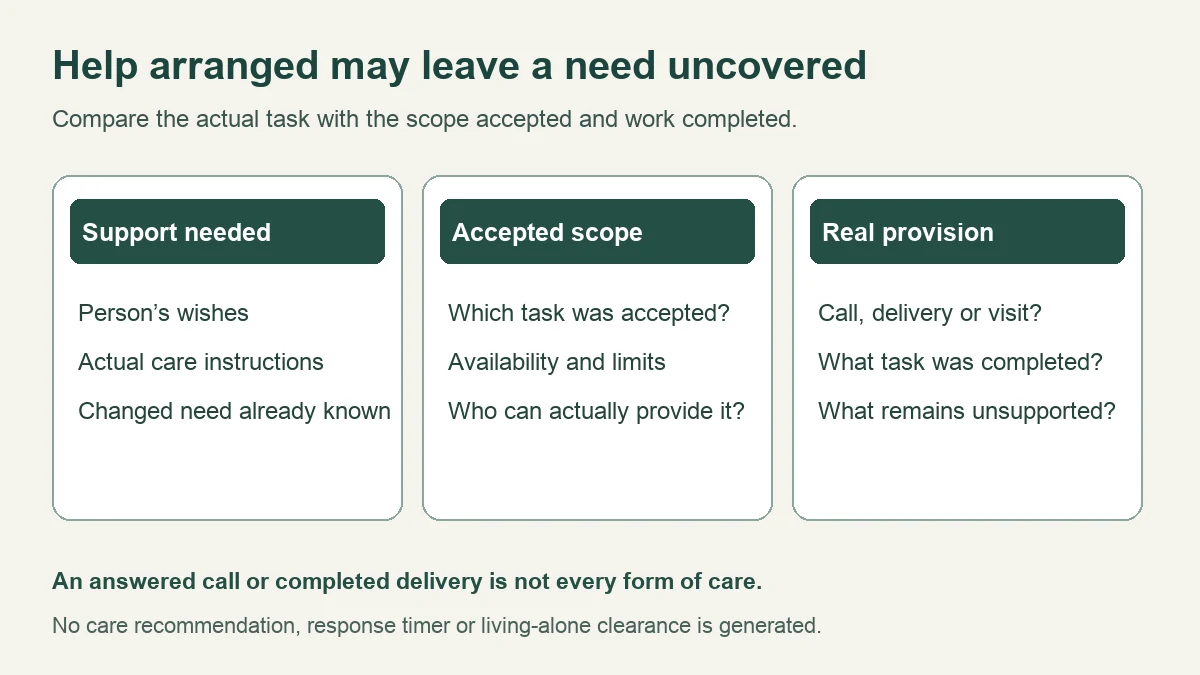
These are scope comparisons, not recommendations for a particular service. Actual roles vary. Ask what the person or service has agreed to do, what is outside its role and what has really been completed. A label such as “home support,” “family help” or “care arranged” is too broad to confirm that a specific need is covered.
Keep partial provision visible. A useful call, delivery or visit can be valuable while another need remains unmet. Do not dismiss the support received, but do not mark the entire problem resolved because one job is complete.
Orthopedic pain while living alone: seven essential support checks
Keep the person’s wishes and consent central
Ask what help the person wants and what information they agree to share. Preserve their own account of pain, sleep, concerns and daily life separately from a helper’s observation. A family interpretation of “I’m fine” is not a substitute for the person’s voice. There is no function-first ranking, and completing a task does not make its pain acceptable.
Identify the changed need using existing information
Describe the task or support need that has changed and the current instructions already available. Keep the source and required assistance, if known. Do not time a walk, stand until symptoms appear, attempt bathing alone or recreate a failed task for this record. Unknown and partly known are valid entries.
Clarify the actual scope of accepted support
Ask which task was accepted, by whom, with what availability and limits. A proposed helper is different from someone who has agreed and can provide the needed help. A service referral, approved request or scheduled visit does not establish that support has begun or covers every task. Record the answer rather than inferring it from the service name.
Record provision without assuming the whole need was met
Describe what really occurred: a call, delivery, visit, education or task assistance. Distinguish presence from the work completed. If help covered one part but left another part unsupported, retain both facts. No outcome or safety conclusion follows automatically from attendance.
Raise the gap with the appropriate role
State the specific mismatch and what remains needed. A service-scope question may need a coordinator’s answer; a symptom or instruction question needs appropriate clinical advice. If the first recipient cannot answer, ask who owns the remaining issue. Do not replace an unanswered question with an improvised care method.
Keep real answers and agreed changes separate
Retain the actual reply, its source and scope. An administrative acknowledgement or booking is not a clinical assessment. A proposal is not an instruction, and an accepted change is not completed work. If individual instructions conflict, preserve both sources and ask the responsible team which applies.
Confirm execution and the remaining owner
Record what support, teaching or other agreed action actually happened and what remains pending. Keep any professional interim plan exactly as received; leave it unconfirmed if none was supplied. A promised visit or replacement arrangement is not completed support. Retain the actual next owner and follow-up arrangement without inventing a waiting period.
Ask about service scope before assuming a need is covered
A person living alone with orthopedic pain may already receive help but still face a mismatch between the help offered and the current need. “Someone comes by” does not tell you whether that person provides meals, household assistance, personal care, education or a clinical service. Ask about the actual task and limits; this page does not assign professional duties or entitlement.
For example, a delivered meal and assistance with eating are different events. Transport arranged and help getting into a vehicle are different tasks. Collecting medicine and clarifying its instructions are different responsibilities. A home visit may address one question while leaving another outside its scope.
Ask: “Which part of this need does your role cover? What is excluded? What has actually been provided? If the remaining task is outside your service, who should receive that request?” Keep the answer attributed. Do not assume a neighbour, building contact, relative or delivery worker can provide physical care because they are nearby.
For physical assistance, training matters. The NHS moving-and-handling guide discusses carer injury, relevant training and assessment. It is general handling education, not condition- or procedure-specific clearance. A helper’s availability does not establish that a particular transfer method is appropriate. UK council arrangements described there are not U.S. service guarantees.
If the person is uncomfortable with a proposed helper or task, keep that concern in the discussion. The plan should address preferences and practical limits rather than treating acceptance of any offered arrangement as the only option. The worksheet cannot resolve consent, capacity or legal authority questions.
Communicate changes without a timer or a home task test
Bring existing observations: pain disrupting sleep, a daily task no longer manageable under the current plan, missed support, a medicine question or an already experienced near fall. A useful note can be short: “The help accepted covers delivery, but this other part remains unsupported.” No pain number or duration is required.
A new symptom should not automatically be blamed on the home, medication or orthopedic condition. Ask the relevant professional what needs assessment. Similarly, a person saying they need more help is useful information even when a family member has not witnessed a task failure.
CDC care-plan guidance supports starting the conversation with the person, organizing care needs and current treatments, updating information after changes and respecting privacy. It does not validate this worksheet or establish that a completed plan guarantees adequate care. This tool deliberately omits identifiers from public-page use.
Do not use a generic rule such as sitting after a fixed standing interval, waiting through an initial day of tracking, or completing a specified number of calls. Actual activity restrictions, help requirements and response arrangements belong in the individual plan. Known emergency symptoms override a routine support discussion.
If the person’s pain plan is unclear or not working, raise that with the prescriber or treating team. A support worker’s attendance does not resolve a dosing question. Use the actual instructions and obtain appropriate advice; this guide does not suggest additional doses, combining products or stopping prescribed medicine.
CDC fall-prevention guidance supports home-hazard attention and medicine review for dizziness or sleepiness. That background does not establish the cause of a particular person’s pain or authorize a walking test. Report an existing route or equipment difficulty without trying a new movement or rearranging care restrictions from this page.
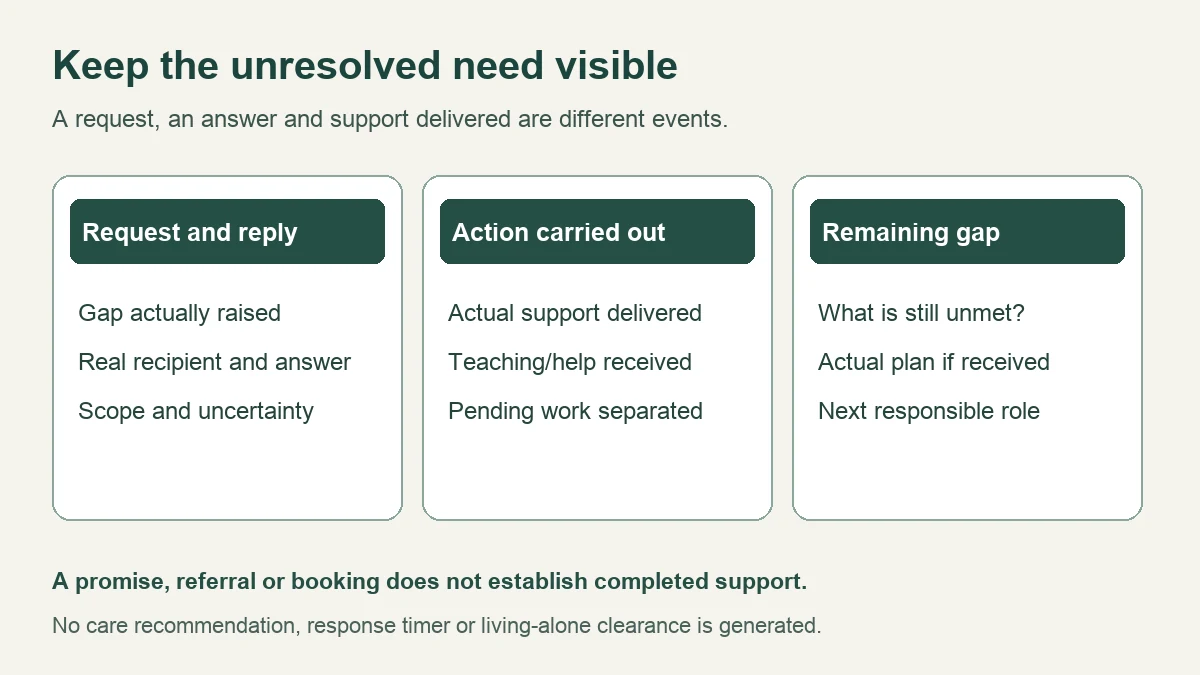
Track support execution and the unresolved gap
| Status | What to retain | What it does not establish |
|---|---|---|
| Help requested | Actual concern, recipient and response status. | That anyone accepted the task. |
| Role accepted | Actual task, limits and availability as confirmed. | That help was delivered. |
| Service attended | What happened during the visit. | That every needed task was covered. |
| Answer received | Actual service or clinical reply and source. | That a proposed action was implemented. |
| Change arranged | What was really agreed and who owns it. | Completed education, visit or support. |
| Action completed | Actual support or teaching provided. | That other needs or symptoms are resolved. |
| Gap remains | Uncovered need, next owner and actual plan if supplied. | A safe waiting interval or permission to manage alone. |
Separate two kinds of unresolved question. “Does the service include this task?” concerns scope. “What support or clinical instructions are needed for my current situation?” requires appropriate individual advice. One answer may help without resolving the other. A coordinator’s scheduling reply should not be rewritten as medical guidance.
Where cost, staffing, transport or access prevents the agreed support, record that barrier and ask what real options are available. This page predicts no eligibility, insurance payment or service availability. Do not assume a referral guarantees a visit or that a funded service includes every form of help.
At a review, bring the mismatch and the real answer rather than a general claim that “care is in place.” Keep the person’s experience, helper observations, service response and clinical instructions separate. Record an improvement only if actually observed; the worksheet makes no causal claim from a change in support.
This page is about ongoing support needs that no longer match actual provision while living alone with orthopedic pain. For contact attempts, missed calls and real local response, use Senior Recovery Alone: 6 Essential Contact Checks. For accepting help, education and service start during home recovery, see Orthopedic Home Recovery: 6 Essential Support Checks. This guide adds a review of the scope and adequacy of support already operating; it does not certify living-alone safety.
Two fictional support need and actual provision examples
These are invented records, not verified people, clinical advice or successful care outcomes. They show how to retain an unresolved need. Neither example creates a safe time alone, waiting rule, substitute care method or required service sequence.
Example A: a call was answered, practical help is still absent
| Record category | Fictional entry |
|---|---|
| Wishes / instructions | The person wants help with a personal-care need. Required assistance was reportedly advised; exact instructions are not reproduced. |
| Accepted support | Routine phone contact was arranged. |
| Actual provision | The call was answered. No visit or personal-care assistance is supplied in this example. |
| Gap / request | Required practical help remains unconfirmed. A question is prepared, not yet sent. |
| Actual answer / execution | No professional reply or completed support change supplied. No interim method invented. |
A question might read: “The call happened, but this care need remains unsupported. Who should review the assistance required, what is the actual plan for the current need, and who will arrange and provide it?” Contact is acknowledged without being treated as completed care.
Example B: a service started, but its scope does not cover every need
| Record category | Fictional entry |
|---|---|
| Existing needs | Meal-related help and a separate medicine question have been identified. Exact clinical instructions are not supplied. |
| Accepted role / provision | A meal-delivery service reportedly accepted delivery and a meal arrived. |
| Remaining gap | Help with eating or medicines is not established. Delivery does not settle those questions. |
| Actual reply | Delivery confirmation is the only reply supplied; no clinical answer invented. |
| Execution / next plan | Delivery complete, wider support change unconfirmed. Remaining owner and actual plan unknown; no benefit or safety outcome claimed. |
A question might read: “Which task does the current service actually cover, and who owns the needs outside that scope? What answer and support have really been provided?” This distinguishes useful partial help from a fully resolved support plan.
Private help request, actual answer and support-gap record
Download the offline tool before entering actual health or care details. Use fictional entries on this webpage because surrounding ads and analytics may be present. The tool itself makes no network requests, uses no browser storage and does not automatically save. Its offline export contains no external assets or automatic network requests.
Start with one unmet need. Leave unknown fields blank; blanks produce optional clarification questions, not care recommendations or urgency points. Omit names, addresses, private contacts, identifiers, access codes, medicine-label photos and full reports. Share only relevant information through an agreed private channel. Paper with the same headings works.
Living-alone support need, actual provision and gap record
Start with one goal or unresolved issue. You can leave any field blank; no full diary is needed.
Download the offline tool before entering actual health or care details. Use fictional entries here; surrounding ads and analytics may be present.
Offline copy. No ads, analytics, external assets or automatic network requests.
The tool makes no network requests, uses no browser storage and does not automatically save. Refreshing may lose entries. Omit names, addresses, contact details, identifiers and full reports. Needed care must not wait for this record.
Start with the fictional example or download a blank offline copy.
Paper alternative: wishes; current instructions; changed need; accepted support scope; actual provision; gap; request; actual answer; execution; remaining need and owner.
My living-alone support and gap record
Unverified personal record for discussion. Entries verify no diagnosis, advice, completed change or treatment outcome.
Guide: living.kioptrix.com/orthopedic-pain-management-for-older-adults-2/
Build a record, then copy, download text or print/save PDF. Editing hides the previous result until rebuilt. Example buttons replace entries and label output fictional. Offline exports include current entries; keep completed copies private. Refreshing or closing may lose unsaved notes. Nothing is sent, booked, assessed or medically cleared by the tool.
Common questions about support while living alone
Does an answered call mean support is adequate?
No. Record what help is actually required and provided. A useful conversation may leave a practical need unmet.
Can this tell me whether someone can live alone?
No. It organizes questions and existing facts; it does not determine capacity, safety or eligibility. Individual concerns need appropriate assessment.
How long can a person wait for support?
No universal waiting time is supplied. Known emergencies require immediate help; current unmet care needs require appropriate individual advice rather than a worksheet timer.
Does a service visit cover medication and personal care?
Do not infer scope from the label or attendance. Ask the actual service what tasks it accepted and can provide, and retain unresolved clinical questions separately.
Should a family member test a difficult task first?
No demonstration is required for this record. Existing information and the person’s account are enough to raise the concern.
What closes a support gap?
Record actual provision, the real answer and what remains unmet. A referral, booking or promise alone is not completed support.
Sources, corrections and editorial limits
Editorial revision and source check: October 30, 2026. This version removes fixed standing/rest times, first-day tracking expectations, example contact timers and generic movement instructions. It replaces function-first language with the person’s pain, sleep, activities and wishes considered together. No independent medical review is implied by earlier update dates.
- CDC: Creating and maintaining a care plan — general care organization, participation and privacy; not validation of this tool or proof of support adequacy.
- NHS: Moving, lifting and handling someone else — general handling education, training and assessment, not procedure-specific permission; UK service arrangements are not generalized to U.S. readers.
- CDC: Preventing falls and hip fractures — home hazards and medication-related dizziness/sleepiness background, not a personalized activity limit.
- NHS: Falls — selected after-fall help guidance, not a transfer demonstration.
- MedlinePlus: Recognizing medical emergencies — selected immediate-help examples, not a complete triage assessment.
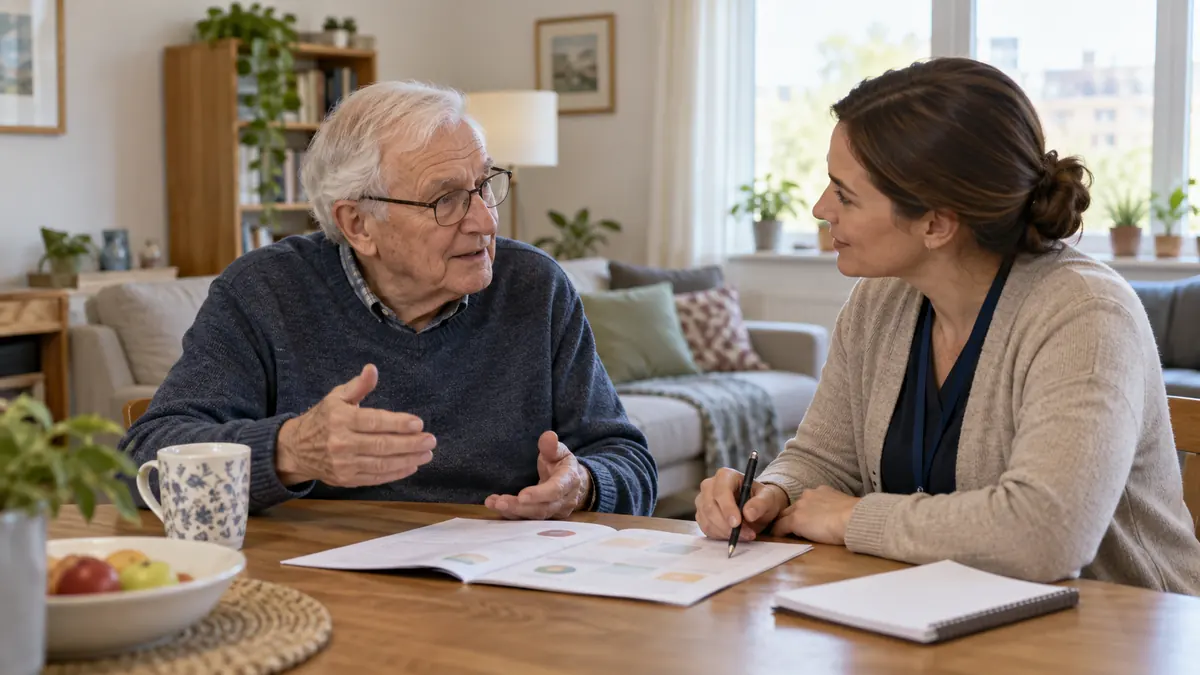
The new representative image is an AI-generated fictional support discussion, not a real assessment or promise of pain relief or safer days. Two editorial diagrams explain scope and unresolved support. The earlier promotional artwork, duplicated image, video and broad household routine are not retained.
The seven checks, tables and tool are editorial communication aids. They are not validated instruments for diagnosis, risk prediction, care eligibility, living-alone clearance or service matching. No independent clinical review, direct service test or reader-outcome study is claimed. Qualified review and independent usability evidence would strengthen the resource further.