
A safer finish to recovery
How to Dispose of Unused Pain Medicine After Recovery
Recovery often ends quietly. The ice packs return to the freezer, the follow-up appointments grow farther apart, and a half-used bottle of pain medicine remains in a drawer, waiting for a decision nobody scheduled.
That bottle may contain an ordinary over-the-counter pain reliever, a prescription opioid, a liquid medicine, or a patch that still holds active medication. The safest disposal route depends on what it is, whether a take-back option is available, and what the label specifically instructs you to do.
This guide gives patients and caregivers a calm decision path: confirm that treatment is finished, secure the medicine, choose the right disposal method, protect personal information, and know when a cleanup has become an emergency.
Choose the route
Compare drop boxes, mail-back programs, household trash, and the narrow flush-list exception.
Avoid hidden risks
Keep medicine away from children, pets, visitors, and anyone vulnerable to accidental use or misuse.
Finish in minutes
Use the 10-minute cabinet reset to turn an easy-to-forget chore into a completed safety step.
The goal is simple: one less unsecured bottle, one safer household. 🔒
Snapshot
This guide is for US adults and caregivers clearing unused prescription or over-the-counter pain medicine after recovery. You will learn how to confirm the medicine is no longer needed, compare disposal options, handle liquids and patches, protect household members, and complete one safe next step today.
Table of Contents
Before You Decide the Medicine Is Finished
Before You Act
This article explains household medicine-disposal practices in the United States. It cannot determine whether you should stop a prescription, change a dose, skip a taper, or keep medicine for an active treatment plan. Confirm uncertain treatment decisions with the prescriber or dispensing pharmacist. Until disposal is complete, keep the medicine locked away from children, pets, visitors, and vulnerable adults.
Feeling Better Is Not Automatically a Stop Order
A bottle can look unused before the treatment plan is actually finished. Some pain medicines are intended only as needed, while others may be part of a scheduled plan, a taper, or a broader recovery strategy.
Before disposing of anything, ask a simple question: “Has the prescriber or pharmacist confirmed that I no longer need this?” That matters especially when the medicine has been used regularly, when withdrawal is possible, or when pain is still changing from day to day.
If pain is reshaping sleep, movement, work, or daily habits, document those changes before altering the plan. A simple pain and routine review can help you describe what is improving and what still needs attention.
Sort Medicine Into Current, Unused, and Uncertain
Do not begin by dumping the entire medicine cabinet onto a counter. That creates confusion, loose pills, and a cleanup pile that may be left unattended when the phone rings or someone needs help.
- Current: Medicine still being used according to an active plan.
- Confirmed unused: Medicine the prescriber, pharmacist, or treatment instructions indicate is no longer needed.
- Uncertain: Medicine with unclear directions, missing labels, conflicting instructions, or an unfinished treatment question.
Secure the uncertain group separately. Do not dispose of it until someone qualified has helped identify the medicine and confirm the next step.
Know What This Guide Does Not Cover
This is a guide for household pain medicines such as tablets, capsules, liquids, and medicated patches. Needles, syringes, lancets, and auto-injector components require a separate sharps-disposal process.
Medicine left by someone who has died may also require a more careful inventory, particularly when controlled substances, hospice instructions, or several caregivers are involved. Keep the supply secured while the pharmacy, prescriber, hospice provider, or local disposal program is contacted.
Key takeaway
Disposal begins with a treatment decision, not a trash can. Confirm what is current, what is truly unused, and what still needs a pharmacist’s answer.
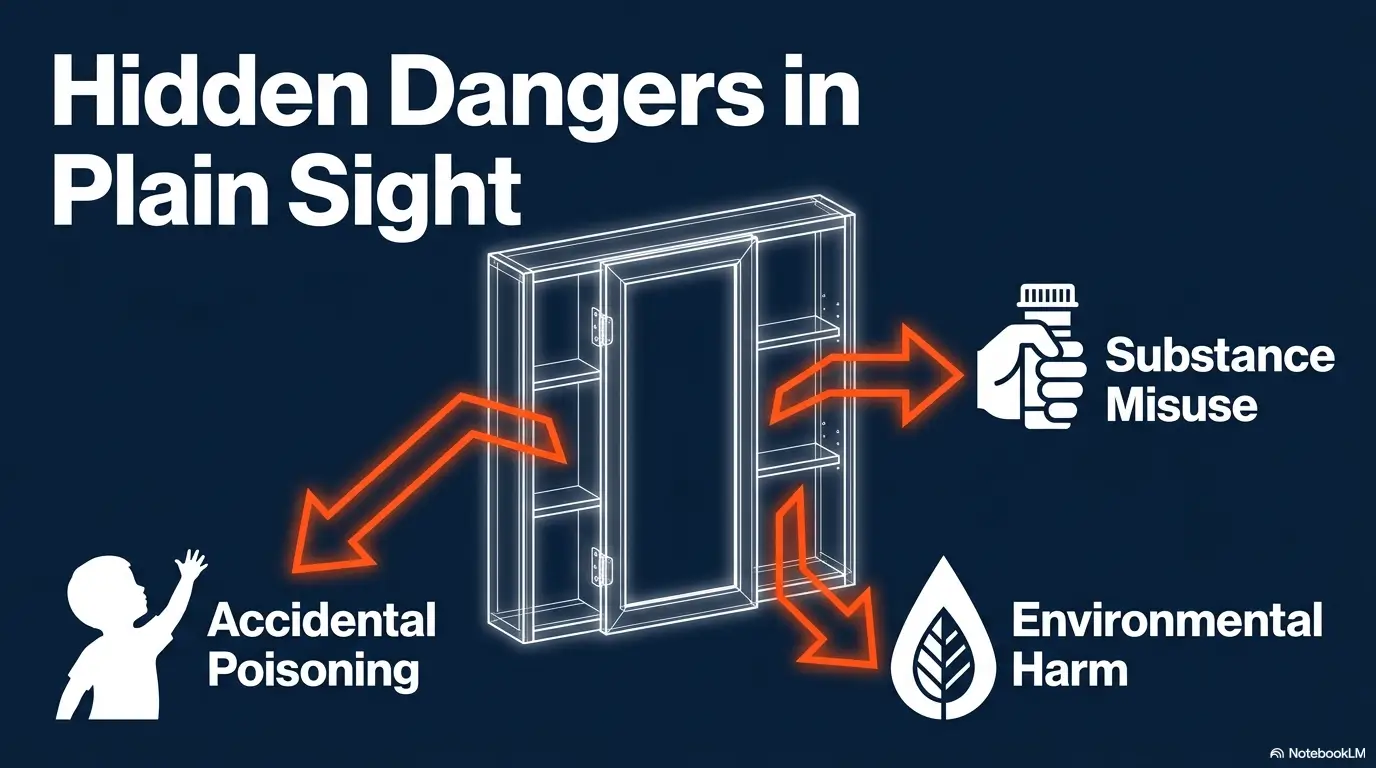
Start With Take-Back, Not the Kitchen Trash
For most unused or expired prescription and over-the-counter medicines, the preferred first choice is a take-back option. This may be a permanent collection box, an authorized pharmacy or hospital program, a participating law-enforcement location, or a prepaid mail-back package. :contentReference[oaicite:0]{index=0}
Compare the Main Disposal Options
| Option | Best for | Typical household cost | What to confirm first |
|---|---|---|---|
| Permanent drop box | Routine disposal of accepted tablets, capsules, and other medicines | Usually free | Hours, accepted dosage forms, packaging rules |
| Authorized mail-back package | Limited mobility, rural locations, caregiver logistics | May be free or involve a modest package cost | Which medicines the package accepts |
| Take Back Day event | A scheduled household cleanout | Usually free | Date, time, location, and event restrictions |
| FDA household-trash method | Most non-flush medicines when no take-back route is readily available | Minimal | Medicine is not on the Flush List and has no different label instruction |
| FDA Flush List method | A narrow group of especially dangerous medicines when take-back is not readily available | None | Exact drug and formulation appear on the current list |
The “best” method is not always the one requiring the fewest steps. A nearby kiosk may be simplest for one household, while a mail-back envelope may prevent a caregiver from making a difficult trip with a recovering parent.
Call Before You Drive
Collection rules are not identical. A site may accept tablets but decline liquids, aerosols, needles, or certain patches. Some locations allow medicines to remain in their containers, while others provide specific privacy or packaging instructions.
A 60-second call can prevent a wasted trip. Ask:
- Do you accept prescription controlled substances?
- Do you accept over-the-counter pain medicine?
- Can liquids remain in their original sealed bottles?
- Are used or unused medicated patches accepted?
- Should patient information be removed before arrival?
- Is the collection box available during all business hours?
Mail-Back Can Be the Practical Caregiver Option
A prepaid mail-back package can be valuable when the patient no longer drives, the nearest collection site is distant, or the caregiver is coordinating several recovery tasks at once.
Before using one, verify that the package is intended for medicine disposal and that the contents you plan to send are accepted. Do not place needles, loose liquids, inhalers, or other excluded items into an envelope simply because it fits.
The Safe Disposal Decision Flow
1. Confirm
Make sure the medicine is no longer part of an active treatment or taper.
2. Take back
Use an authorized drop box or mail-back option whenever one is readily available.
3. Check the list
If take-back is unavailable, check whether the exact medicine is on the current FDA Flush List.
4. Trash safely
For most non-flush medicines, mix intact medicine with an unappealing material and seal it.
The Bottle Is Not the Decision: Check Three Clues
Clue 1: Read the Medicine Instructions
Begin with the prescription label, Medication Guide, patient information leaflet, and manufacturer instructions. Disposal language printed for the medicine should carry more weight than a remembered rule from another prescription.
Do not assume that two bottles used after the same surgery follow the same path. An opioid tablet, an anti-inflammatory medicine, a topical patch, and a liquid pain reliever may require different handling.
Clue 2: Identify the Active Ingredient and Dosage Form
“The strong pain pill” is not an adequate identification. Look for the active ingredient, strength, and dosage form. For example, a tablet and a transdermal patch containing related pain medicine may not share the same disposal instructions.
If the original label is difficult to read, compare it with pharmacy records rather than guessing from pill color or shape. Caregivers managing several prescriptions may also benefit from a written medication-confusion monitoring plan.
Clue 3: Ask the Dispensing Pharmacist
The dispensing pharmacy can often answer two questions in one conversation: how the specific medicine should be disposed of and whether a local collection option accepts it.
Have the bottle nearby when calling. Read the drug name, strength, dosage form, prescription number if requested, and any disposal wording on the label. That small preparation turns a foggy question into a precise one.
Show me the nerdy details
Medicine-disposal guidance balances several risks that do not always point in the same direction. Take-back programs reduce household access and avoid unnecessary drain disposal. The FDA Flush List creates a narrow exception for certain medicines that can cause severe harm after accidental or unauthorized exposure. The household-trash method reduces recognition and casual retrieval by mixing intact medicine with an undesirable material and enclosing it in a sealed container. The exact dosage form still matters because patches, liquids, aerosols, and sharps can create physical or environmental handling issues beyond the active ingredient itself.
No Drop Box Nearby? Use the FDA Trash Method
If a take-back location or mail-back package is not readily available, most medicines that are not on the FDA Flush List can be discarded in household trash using a specific method. FDA guidance says to remove the medicine from its container, mix it without crushing with an unappealing substance, seal the mixture, and obscure personal information on the empty packaging. :contentReference[oaicite:1]{index=1}
Follow the Five-Step Trash Process
- Remove the medicine from its original container unless its instructions say otherwise.
- Mix tablets, capsules, or liquid medicine with dirt, used coffee grounds, cat litter, or another unappealing material.
- Do not crush tablets or open capsules solely for disposal.
- Place the mixture in a sealed bag or another closed, leak-resistant container.
- Scratch out or cover personal information on the empty bottle or packaging before discarding or recycling it.
Use enough mixing material to make the medicine difficult to recognize and unpleasant to handle. The goal is not chemistry. The goal is to reduce casual discovery, access, and retrieval.
Protect the Privacy Trail
Prescription labels may show the patient’s name, prescriber, pharmacy, prescription number, and other identifying details. Treat label cleanup as part of disposal, not a decorative final chore.
A thick permanent marker, label-removal tool, or opaque covering can work if the information becomes unreadable. Check the side label, cap, paper insert, and any outer bag. The post-surgery pill-bottle label guide offers a fuller privacy and organization checklist.
Avoid These Household-Trash Mistakes
| Common mistake | Safer alternative |
|---|---|
| Throwing loose, visible pills into an open bag | Mix intact pills with an unappealing material and seal the mixture |
| Crushing tablets into powder | Leave tablets and capsules intact unless official instructions say otherwise |
| Pouring liquid directly into the trash | Mix it with absorbent material inside a securely closed container |
| Leaving the cleanup bag on the counter | Keep it controlled and inaccessible until it enters the household trash |
| Discarding a readable prescription label | Obscure the identifying information first |
Key takeaway
Household trash is a fallback method, not permission to toss loose medicine into a bin. Mix, seal, obscure the label, and keep the package controlled until disposal is complete.
The Flush List Is Smaller Than You Think
The toilet is not a universal medicine-disposal system. EPA guidance advises households not to flush unwanted prescription or over-the-counter medicine unless no take-back option is readily available and the medicine’s instructions specifically direct flushing. :contentReference[oaicite:2]{index=2}
Check the Exact Medicine, Not the Drug Family
Do not reason that every opioid should be flushed, or that a familiar drug name automatically qualifies. Check the exact medicine and formulation against the current FDA Flush List.
The list exists for certain medicines that can cause especially serious harm if one dose is taken accidentally or misused. Even for medicines on the list, take-back remains the preferred first choice when it is readily available. :contentReference[oaicite:3]{index=3}
An Old Screenshot Is Not an Instruction
A saved image, old blog post, or memory from a previous prescription may not identify the same strength, dosage form, or current guidance. Use the official FDA resource each time the decision matters.
If the label and online resource appear to conflict, pause and call the pharmacist. Do not improvise a compromise by flushing part of the supply and throwing away the rest.
Why Not Flush Everything?
Routine drain disposal can send pharmaceutical ingredients into wastewater systems and the environment. The narrow flush-list exception is based on an urgent household-safety calculation, not a general endorsement of flushing medicine.
Special Forms Need Their Own Exit Route
Liquid Pain Medicine
Ask whether the collection site accepts liquids and whether they must remain tightly sealed in their original bottles. Do not arrive with a leaking container wrapped in optimism and two grocery bags.
If take-back is unavailable and the medicine is eligible for household-trash disposal, mix the liquid with enough absorbent, unappealing material to control leakage. Seal it inside a sturdy container before placing it in the trash.
Used and Unused Pain Patches
Medicated patches may retain active medicine after use. Keep both unused and used patches away from children and pets, and follow the product-specific label or pharmacist’s instructions.
Do not leave a used patch exposed in a wastebasket, stuck to furniture, or folded loosely on a bathroom counter. Some products include instructions for folding adhesive sides together, returning patches, or using another specific disposal route.
Inhalers, Aerosols, and Sharps
Pressurized inhalers and aerosol products may fall under local household hazardous-waste or recycling rules. Ask the pharmacy or local waste authority before puncturing, burning, or placing a pressurized container into ordinary disposal.
Needles, syringes, and lancets do not belong in pill-return kiosks or loose household trash. Use an appropriate sharps container and follow the local sharps-disposal program.
Choose Temporary Storage Based on Household Risk
| Temporary setup | When it may be enough | Limit to understand |
|---|---|---|
| Existing locked cabinet | Short wait before a planned drop-off in a low-confusion household | Access may be shared or the key may be easy to find |
| Small keyed or combination lockbox | Opioids, visiting children, shared housing, or repeated caregiver visits | It must stay locked and the code or key must remain controlled |
| Anchored or caregiver-controlled storage | Repeated medication concerns, cognitive impairment, or unexplained missing pills | Storage reduces access but does not replace prompt disposal or professional help |
A child-resistant cap is useful packaging, but it is not the same as locked storage. Choose the least complicated setup that reliably prevents access until the disposal handoff.
Do Not Save It “Just in Case”
Future Pain Deserves a Current Decision
A medicine prescribed after dental surgery may be inappropriate months later for back pain, a fall, or a new injury. Health conditions change. Other prescriptions change. Kidney, liver, breathing, balance, and interaction risks can change too.
Keeping a few tablets can feel economical, especially after paying a copay. Yet an old prescription is not a prepaid medical opinion. A new pain episode deserves a current assessment and current instructions.
Never Share Prescription Medicine
Two people can describe their pain with the same words and still have different diagnoses, contraindications, doses, and treatment needs. Do not give leftover prescription medicine to a spouse, neighbor, adult child, or friend.
Unopened packaging does not turn a personal prescription into a household resource. Formal drug-donation programs, where allowed, operate under specific state rules and are not the same as handing medicine directly to another person.
Short Story: The Bottle Behind the Lamp
After her father’s knee surgery, Elena kept three remaining pain tablets in the nightstand. He was improving, and the bottle felt harmless. She planned to ask the pharmacy about it “next week.”
Two months later, her young nephew visited. While searching for a phone charger, Elena noticed him opening the nightstand drawer. The bottle sat behind the lamp, exactly where everyone had forgotten it.
No pills were missing. Nothing dramatic happened. That was the point: the household received a warning without paying the full price of the lesson.
Elena moved the medicine into a locked container, called the pharmacy, and used its collection box the following morning. The practical lesson was small but durable. “Later” is not a storage system, and memory is a poor lock.
When Discarding Medicine Feels Hard
Some people hesitate because they fear pain returning. Others may feel anxious about giving up access to an opioid or may notice that the idea of disposal produces an unexpectedly strong reaction.
That is a reason to contact the prescriber, pharmacist, or a qualified substance-use treatment resource, not a reason for shame. Secure the medicine while seeking guidance. Do not force a confrontation or leave the supply accessible.
Key takeaway
The money has already been spent. Keeping an unnecessary medicine does not recover the cost. It only extends the period in which accidental use, misuse, confusion, or theft can occur.
When Cleanup Turns Into an Emergency
Someone May Have Swallowed the Medicine
Call Poison Control at 1-800-222-1222 promptly when someone may have swallowed medicine, even when the amount is uncertain or no symptoms have appeared. Do not induce vomiting unless a poison specialist or medical professional specifically instructs you to do so. :contentReference[oaicite:4]{index=4}
Keep the bottle, package, or medication list nearby. Be ready to provide the person’s age, the medicine name and strength, the possible amount, the time of exposure, and any symptoms.
Someone Is Difficult to Wake or Breathing Abnormally
Call 911 immediately for unconsciousness, seizures, severe breathing trouble, blue or gray lips, abnormal snoring or gurgling, or suspected overdose. Do not wait for certainty.
If an opioid may be involved and naloxone is available, administer it according to its instructions while emergency help is on the way. Naloxone can temporarily reverse the breathing effects of an opioid overdose, but the person still needs emergency care because symptoms can return. :contentReference[oaicite:5]{index=5}
Pills Are Missing and Nobody Knows Why
Secure the remaining supply, check whether a child, pet, visitor, or vulnerable adult could have accessed it, and seek professional guidance. Do not wait for symptoms merely because nobody admits taking the medicine.
Record the medicine name, strength, estimated number missing, and the last time the count was known. If several caregivers are involved, use one shared record rather than a chain of uncertain text messages. A caregiver medical summary template can help organize the facts for follow-up.
Emergency line, not a cleanup step
Call 911 for severe symptoms or a possible overdose. For suspected ingestion without severe symptoms, contact Poison Control at 1-800-222-1222. Keep the medicine package available and follow the responder’s instructions.
The 10-Minute Medicine Cabinet Reset
This reset is designed for one adult working carefully or for a patient and caregiver working together. Keep children and pets out of the room, and do not leave medicine unattended at any point.
Minutes 1–4: Sort and Identify
- Separate current medicine from confirmed unused medicine.
- Place anything uncertain in a clearly marked, secure holding group.
- Identify opioids, liquids, patches, aerosols, and medicines with special instructions.
- Count high-risk medicine if pills are unexpectedly missing or several caregivers have had access.
Minutes 5–8: Choose and Secure
- Search for one authorized collection option or call the dispensing pharmacy.
- Confirm whether your medicine’s form and packaging are accepted.
- Place everything awaiting disposal in locked or otherwise inaccessible storage.
- Put the drop-off trip on the calendar or prepare the approved mail-back package.
Minutes 9–10: Remove the Privacy Trail
- Obscure identifying information on packaging that will not remain with the authorized collector.
- Write down any unresolved question for the pharmacist rather than returning the medicine to an ordinary drawer.
Ready-to-dispose checklist
- Treatment status has been confirmed.
- The exact medicine and dosage form are known.
- The disposal destination accepts the item.
- The medicine is locked until handoff.
- Personal information has been protected.
- Needles and other sharps have been separated.
FAQ: Unused Pain Medicine Disposal
Can Any Pharmacy Accept Unused Prescription Pain Medicine?
No. Pharmacies participate voluntarily and may accept different dosage forms. Confirm that the location is an authorized collector and ask about liquids, patches, controlled substances, packaging, and collection-box hours before visiting.
Can I Flush Leftover Hydrocodone or Oxycodone?
Do not decide based only on the general drug name or the fact that it is an opioid. Use a take-back option whenever readily available. Otherwise, check the exact medicine and formulation against the current FDA Flush List and follow its instructions.
Can Acetaminophen or Ibuprofen Go in Household Trash?
Take-back is the preferred first choice. When take-back is not readily available and the product has no different disposal instruction, most non-flush medicines can use the FDA household-trash method: mix the intact medicine with an unappealing material, seal it, and protect personal information.
Should Pills Stay in the Prescription Bottle at a Drop Box?
Collector rules vary. Some programs permit original containers, while others provide different instructions. Ask whether labels should be removed or obscured and whether medicines can be combined. Never pour several unidentified medicines together unless the collector explicitly allows it.
How Should I Dispose of Leftover Liquid Pain Medicine?
First ask whether an authorized collection site accepts liquid medicine and whether it must remain sealed in the original bottle. When take-back is unavailable and household-trash disposal is appropriate, mix the liquid with absorbent, unappealing material and close it inside a leak-resistant container.
What Should I Do With Used or Unused Pain Patches?
Follow the medicine-specific label or ask the pharmacist. Patches can retain active medication after use, so keep them secured and do not leave them exposed in an ordinary wastebasket while deciding what to do.
Can Unopened Prescription Medicine Be Donated?
Do not personally transfer it to another patient. Drug-donation programs are governed by state-specific rules and controlled procedures. Ask the pharmacy or state program whether the medicine is eligible rather than arranging an informal handoff.
Should I Keep a Few Tablets for a Future Injury?
Generally, an old prescription should not become a future self-treatment kit. A new injury may require a different diagnosis, dose, medication, or safety review. Ask a clinician or pharmacist rather than using leftover prescription medicine.
Can Veterinary Pain Medicine Use the Same Disposal Options?
Many household collection programs accept pet medicines, but participation and restrictions vary. Contact the collection site or veterinarian first, especially for liquids, compounded products, patches, and controlled substances.
Remove One Bottle Today
You do not need to reorganize every shelf, decode every faded label, or make a heroic weekend project out of the medicine cabinet. Choose one bottle that has been confirmed as unused.
Within the next 15 minutes, identify the medicine, read its instructions, find one authorized take-back destination, and place the bottle in locked storage until handoff. If no take-back route is readily available, check the current FDA guidance before choosing the trash or flush-list method.
Recovery has many loose ends: a brace in the closet, an appointment card on the refrigerator, a prescription bottle behind the lamp. Closing this one is quiet work, but it protects the people and animals who share the home.
Last reviewed: 2026-08