
This site is written from a family-caregiver perspective. The operator is not a medical professional or an insurance, legal or financial adviser. Use this guide to organize questions for the relevant service.
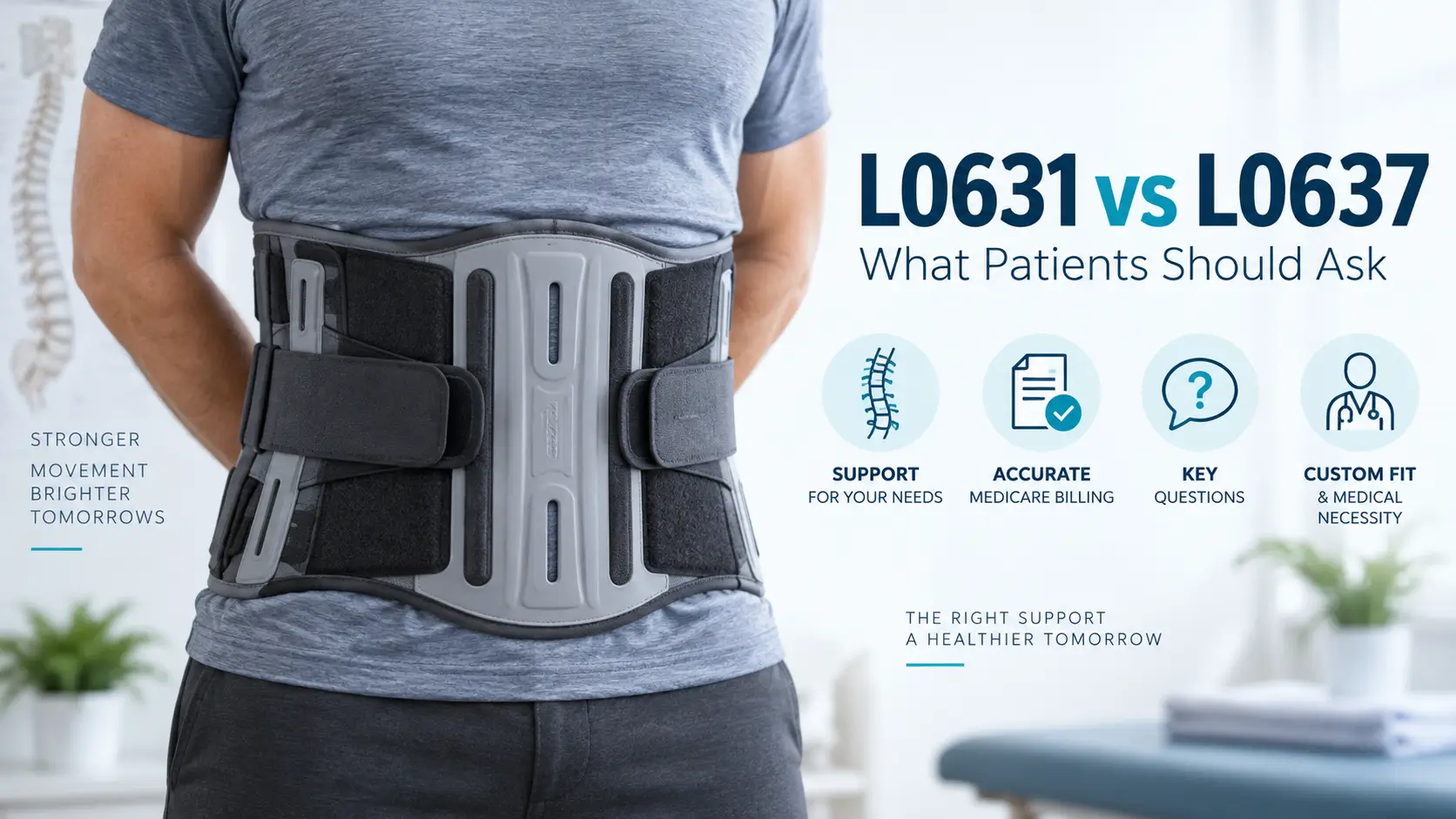
L0631 and L0637 are Medicare HCPCS codes for two different types of prefabricated, custom-fitted lumbar-sacral orthoses (LSOs). The central difference is not simply “basic brace versus better brace.” L0631 provides sagittal control with rigid front and back panels, while L0637 adds sagittal-coronal control and rigid lateral frame or panels for side-to-side support.
Before accepting either brace, ask the supplier which code it intends to bill, why that code matches the brace and your prescription, who will perform the custom fitting, and whether the required Medicare authorization and order documentation are complete. A higher-feature code should reflect the orthosis actually supplied and medically required, not merely a more expensive billing choice.
For Original Medicare, this distinction matters financially as well as clinically. Medicare Part B can cover medically necessary back braces ordered by an appropriate treating practitioner, but coding, documentation, supplier participation, fitting, and authorization requirements can determine whether a claim is paid.
Table of Contents
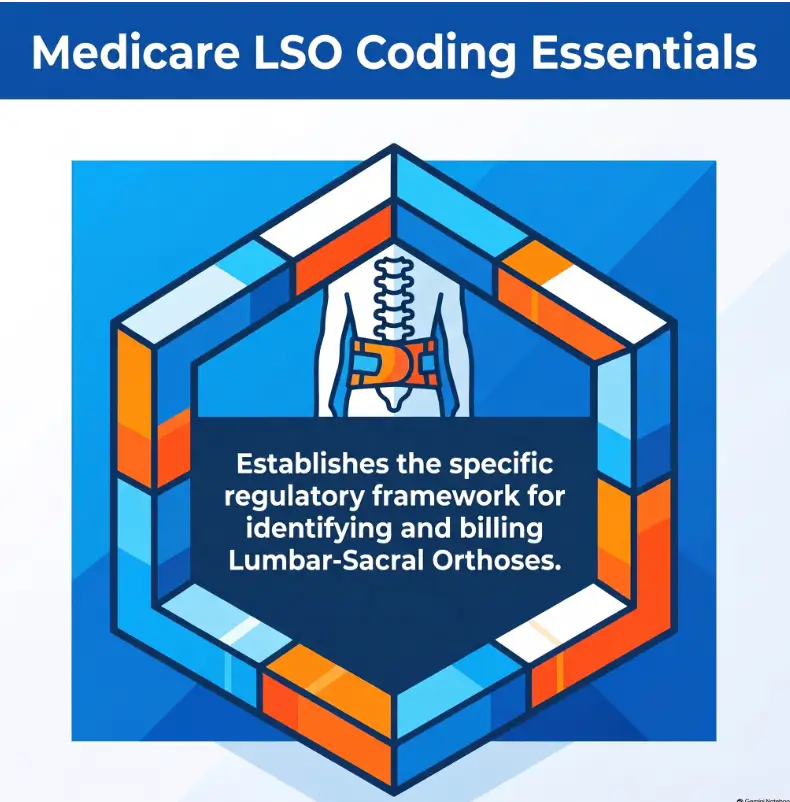
The Practical Difference Between L0631 and L0637
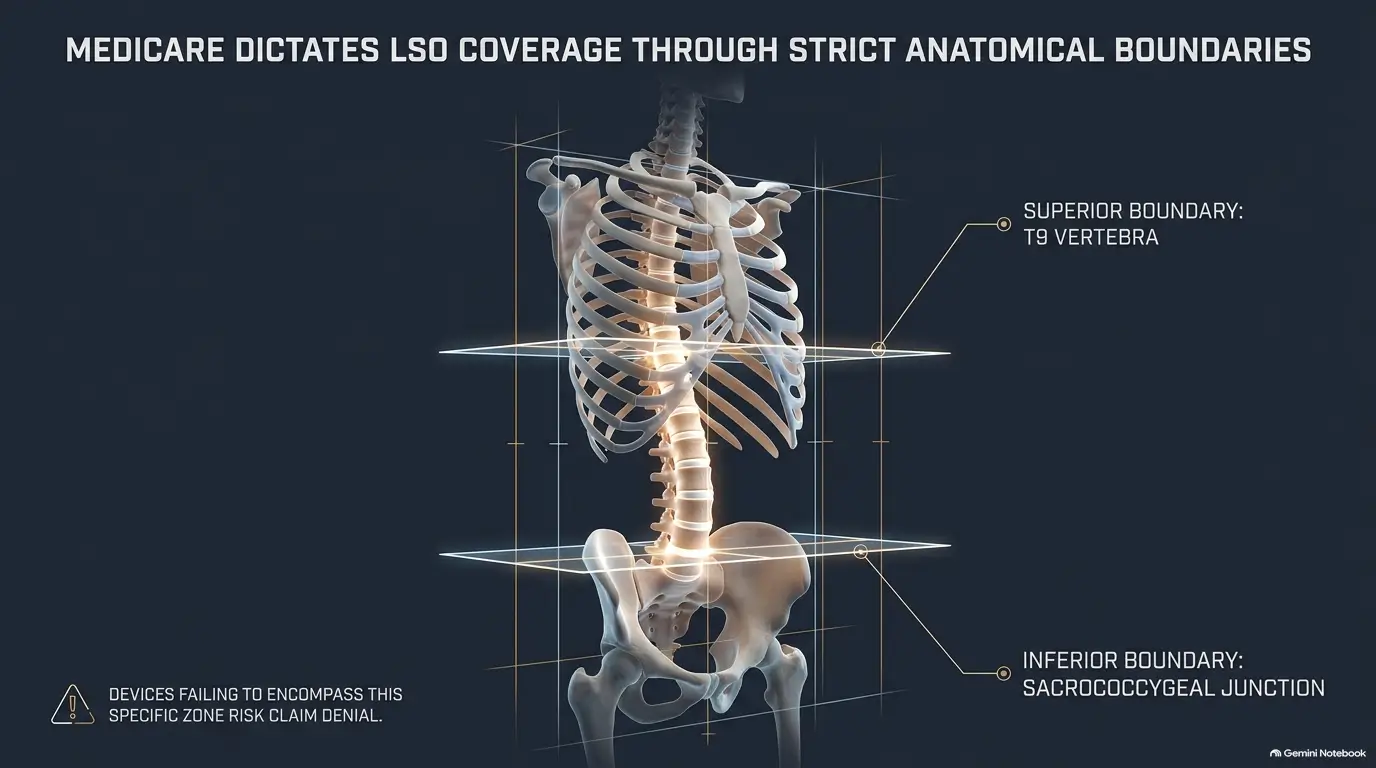
The fastest way to understand these codes is to look at what the brace is designed to control. Both describe lumbar-sacral orthoses extending high enough posteriorly to the T9 region and both describe prefabricated products that are customized to the individual patient by someone with expertise.
| Feature | L0631 | L0637 |
|---|---|---|
| Orthosis type | Lumbar-sacral orthosis | Lumbar-sacral orthosis |
| Primary control | Sagittal control | Sagittal-coronal control |
| Rigid anterior support | Yes | Yes |
| Rigid posterior support | Yes | Yes |
| Rigid lateral frame or panels | Not part of the defining L0631 description | Yes |
| Fitting category | Prefabricated, custom fitted | Prefabricated, custom fitted |
| Original Medicare prior authorization | Required unless an applicable supplier exemption or exception applies | Required unless an applicable supplier exemption or exception applies |
Match the fitted item to the proposed code
Use this follow-up record alongside the comparison above. It does not determine medical suitability, insurance eligibility or legal rights, and it does not guarantee a price.
- Keep together
- Order, proposed device, fitting description, code and the supplier’s written explanation.
- Unanswered question
- What feature and fitting work support this code, and does the supplied item match the order?
- Next contact and owner
- Have the supplier and prescribing team resolve a mismatch before treating a quote as complete.
- Recheck when
- The device or fitting plan changes.
For each response, record its date, source, reference number and what remains uncertain. Agree the next follow-up date instead of treating silence as confirmation. Use official contact channels and keep identifying health, account and policy information out of public comments.
CMS describes L0631 as a sagittal-control lumbar-sacral orthosis. By contrast, L0637 includes sagittal-coronal control and rigid lateral support.
That lateral-control distinction is the decision hinge. If a supplier tells you L0637 is simply a “premium” version of L0631, ask for a more precise explanation. The code describes structural and functional characteristics, not a retail quality tier.
Ask Why Your Brace Is Being Billed as L0631 or L0637
The most useful first question is: “What feature of the brace and my order makes this the correct HCPCS code?” That forces the conversation away from vague phrases such as “this is what Medicare pays for” and toward the actual product, fitting process, and medical record.
- What HCPCS code will you submit: L0631 or L0637?
- What physical feature of this brace distinguishes that code?
- If you are billing L0637, where are the rigid lateral frame or panels that provide coronal control?
- Does my treating practitioner’s documentation support the level of control being supplied?
- Are you billing any separate accessories or additional codes?
A patient does not need to become an orthotic coder. You are simply checking that the description on the claim makes sense when compared with the item placed in your hands.
Do Not Confuse L0631 and L0637 With Their Off-the-Shelf Counterparts
This is one of the easiest mistakes to miss. L0631 and L0637 are both codes for prefabricated orthoses that receive more than minimal customization by an individual with expertise. They are not the corresponding off-the-shelf codes.
Under the current Medicare spinal-orthosis coding framework, L0631 corresponds to off-the-shelf code L0648, while L0637 corresponds to off-the-shelf code L0650. CMS explains these paired codes in its Spinal Orthoses policy article.
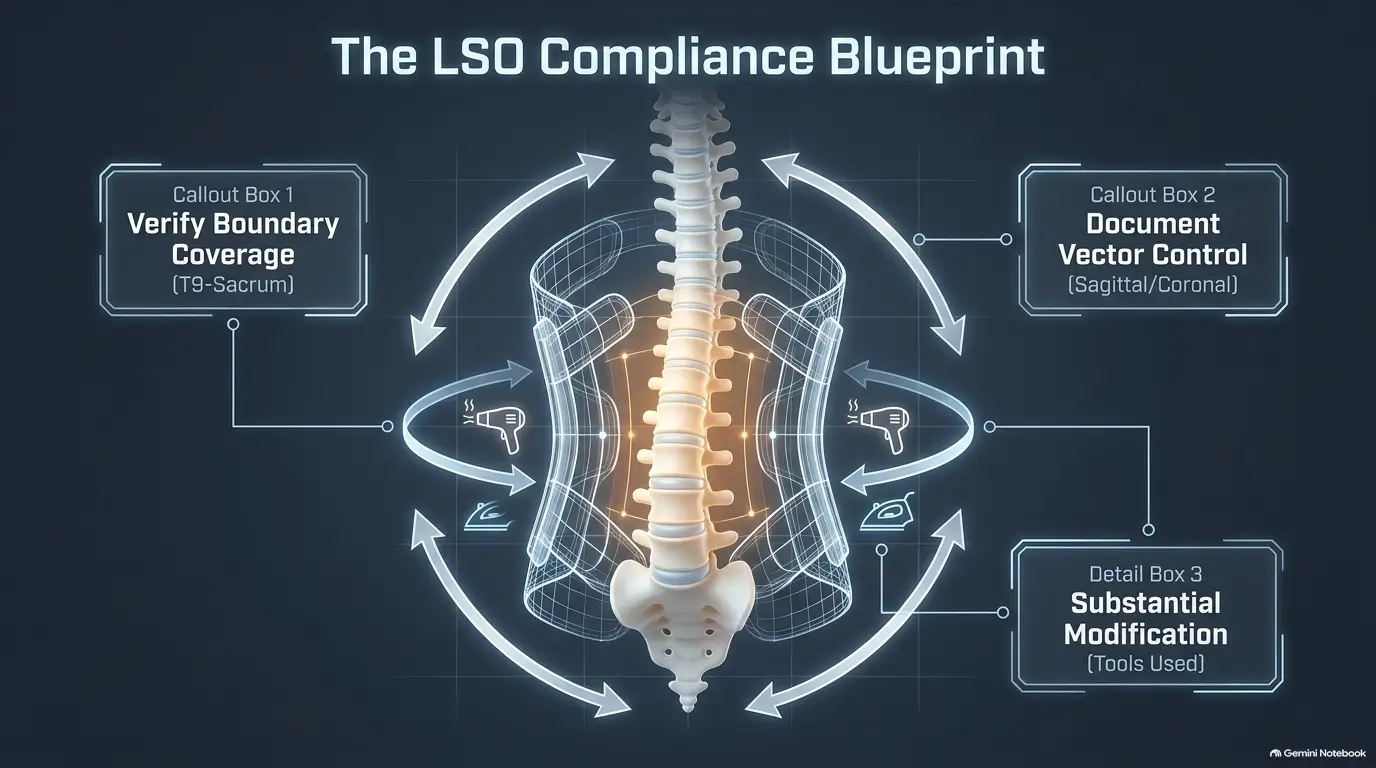
The physical product can sometimes be very similar. What changes the coding is the nature of the final fitting performed at delivery. Medicare distinguishes minimal self-adjustment from customization such as trimming, bending, molding, assembling, or otherwise modifying the prefabricated orthosis for a particular patient.
Ask who actually customized the brace
If L0631 or L0637 is being billed, ask what customization was performed and who performed it. “We tightened the straps” is not the same explanation as identifying specific fitting work that required expertise.
- What modifications are you making specifically for me?
- Who is performing those modifications?
- What training or qualification does that person have?
- Would this same brace have been coded differently if only minimal self-adjustment were needed?
If you want a broader explanation of how brace benefits are evaluated, see this guide to orthopedic brace insurance coverage.
Ask Whether Medicare Prior Authorization Is Already Approved
For Original Medicare, both L0631 and L0637 are on CMS’s Required Prior Authorization List. For a non-exempt supplier, the ordinary process requires a decision before delivery. Qualifying supplier exemptions began June 1, 2026, and limited urgent-furnishing exceptions can also apply. Ask which process applies to your exact supplier, claim, jurisdiction, and delivery date; an exemption does not remove the face-to-face, order, fitting, or medical-necessity requirements.
Ask the supplier: “Has Medicare prior authorization been obtained for this exact HCPCS code, and what was the decision?”
- Which code was submitted for prior authorization?
- Was the decision affirmative?
- Does the authorization correspond to the brace being delivered today?
- Was anything changed after authorization, including the code or product?
- If authorization was not obtained, why does the supplier believe delivery should proceed?
CMS currently also identifies these codes as subject to its face-to-face encounter and written-order-before-delivery requirements. The supplier should therefore know whether the necessary documentation exists before handing over the brace. CMS maintains the current requirements on its DMEPOS order requirements page.
Medicare Advantage is different administratively. The plan must cover medically necessary services that Original Medicare covers, but networks, authorization procedures, supplier rules, and cost sharing can vary by plan. If you have Medicare Advantage, ask both the supplier and the plan which authorization rules apply to your specific benefit.
Ask What Medical Need the Brace Is Supposed to Address
A valid HCPCS description does not by itself establish Medicare coverage. The brace also has to satisfy applicable medical-necessity requirements.
Under Medicare’s spinal orthosis coverage policy, an LSO may be covered when ordered to restrict trunk movement to reduce pain, support healing after spinal or related soft-tissue injury, assist healing after spinal surgery, or support weak spinal muscles or a deformed spine.
For a patient, the useful question is not “Do I have the right diagnosis?” but “What documented functional purpose is this brace being ordered to accomplish?”
The treating practitioner determines the clinical need. The supplier determines whether the product it delivers and bills is consistent with the order, documentation, and coding requirements. Those are related jobs, but they are not interchangeable.
Ask Whether the Supplier Accepts Medicare Assignment
Coverage and price are two different questions. Under Original Medicare, Part B generally covers medically necessary back braces when the requirements are met. After the Part B deductible, the beneficiary generally pays 20% of the Medicare-approved amount when assignment rules apply. Medicare explains the basic benefit on its back and other brace coverage page.
Before delivery, ask:
- Are you enrolled in Medicare as a DMEPOS supplier?
- Do you accept Medicare assignment for this brace?
- What Medicare-approved amount are you expecting?
- What amount are you asking me to pay today?
- Does that estimate include my deductible status and any secondary insurance?
- Could I owe anything beyond Medicare deductible and coinsurance?
Do not judge the brace merely by its retail sticker price. What matters for an Original Medicare beneficiary is the approved amount, assignment status, coverage decision, deductible, coinsurance, and any supplemental coverage.
Your Five-Minute Supplier Check Before You Accept the Brace
You can reduce most of the avoidable billing confusion by checking six things while you are still at the supplier rather than trying to reconstruct them after a denial arrives.
- Write down the exact code. Ask whether the claim will use L0631, L0637, or another code.
- Look at the brace. If L0637 is proposed, ask the supplier to identify the rigid lateral structure responsible for sagittal-coronal control.
- Ask what customization was performed. L0631 and L0637 are custom-fitted prefabricated orthoses, not simply off-the-shelf braces handed over unchanged.
- Confirm authorization. Ask whether Original Medicare authorization is required for this claim, and confirm the decision or the documented applicable exemption or exception.
- Confirm the order. Ask whether the supplier has the required written order and supporting practitioner documentation before delivery.
- Get the cost explanation. Ask about assignment, the expected approved amount, and your estimated responsibility.
Keep your delivery paperwork, product name and model, receipt, and any Medicare authorization information you are given. If a claim later shows a different code, those documents make the problem considerably easier to investigate.
Red Flags Worth Clarifying Before You Pay
A coding discrepancy does not automatically mean improper billing. Products, orders, and documentation can be complex. Still, some situations deserve an explanation before the transaction moves forward.
| What You Hear or See | Why It Deserves a Question | What to Ask |
|---|---|---|
| “L0637 is just the premium version.” | The code reflects defined structural and control features. | “What feature of this brace makes L0637 appropriate?” |
| No one appears to customize the brace. | L0631 and L0637 describe custom-fitted prefabricated items. | “What fitting work supports this code?” |
| The supplier cannot tell you whether authorization was obtained. | Both codes are subject to Medicare prior authorization. | “Can you verify the decision or applicable supplier exemption or exception before delivery?” |
| The code changes at pickup. | A changed code may affect authorization and documentation. | “Was the new code authorized and ordered?” |
| You are asked to pay a large unexplained amount upfront. | Assignment and coverage status materially affect patient cost. | “Please separate the Medicare-approved amount, deductible, coinsurance, and any noncovered charge.” |
If the brace is later denied, the next step is usually to identify the denial reason before assuming the entire item was noncovered. This guide to a denied brace insurance appeal explains how to organize the paperwork and determine what actually failed.
When Paying More May Be Justified
Paying more can be rational when a different orthosis is clinically required, has materially different structural support, needs skilled customization, or is not fully covered under your insurance arrangement. Paying more simply because a supplier labels one brace “advanced” is not the same thing.
The cheaper choice is sufficient when it is the product that meets the treating practitioner’s clinical objective, fits correctly, satisfies the applicable coding and coverage rules, and does not sacrifice a needed function. A patient should not choose L0631 merely because it sounds cheaper, nor L0637 merely because it sounds more substantial. The clinical requirement comes first.
If you are considering paying privately for a brace or support, you may also want to check whether the expense could qualify under an HSA or FSA. See the separate guide to HSA-eligible braces and supports.
FAQ About L0631 and L0637
Is L0637 automatically better than L0631?
No. L0637 includes lateral rigid support and sagittal-coronal control that are not part of the defining L0631 description. Whether that additional control is appropriate depends on the clinical purpose of the orthosis. More structural support is not automatically better for every patient.
Are L0631 and L0637 custom-made braces?
Not in the sense of being fabricated from raw materials uniquely for one patient. Both describe prefabricated orthoses that are subsequently trimmed, bent, molded, assembled, or otherwise customized to fit a specific patient by an individual with expertise. Medicare has separate coding distinctions for custom-fabricated orthoses.
Can a supplier use L0631 or L0637 if I adjusted the brace myself?
The fitting distinction matters. Medicare’s spinal-orthosis coding policy separates custom-fitted codes from corresponding off-the-shelf codes based on whether more than minimal self-adjustment is necessary and performed at delivery. Ask the supplier to explain what fitting work supports the code it intends to bill.
Does Medicare approval mean I will owe nothing?
No. An affirmative authorization does not erase normal cost sharing. Under Original Medicare, deductible and coinsurance can still apply, and secondary insurance may change what you actually owe. Supplier assignment status also matters.
What if the brace on my Medicare claim is not the code the supplier told me?
Start by comparing your Medicare Summary Notice, supplier receipt, order information, and the brace’s product or model information. Ask the supplier why the submitted code differs. A corrected claim may sometimes resolve a coding error; a coverage or documentation denial may require a different response.
What to Ask Before You Leave the Supplier
Before you take the brace home, ask one compact set of questions: “Which HCPCS code are you billing, what feature of this brace supports that code, what customization did you perform, is Medicare authorization required and approved—or does a documented exemption or exception apply—and what amount should I expect to owe?”
Write the answers on your receipt or in your phone and keep the brace model information with the paperwork. Five minutes of verification at delivery can prevent weeks of trying to determine later whether the problem was the product, the fitting, the code, the authorization, the documentation, or simply the bill.
Last updated: October 15, 2026
Targeted editorial update: October 21, 2026. Added a topic-specific follow-up record and recheck triggers, revised the title and search description, and removed unverified first-person claims or clarified selected wording where found. The existing body was retained. This update is not a complete legal, coverage or clinical review; confirm current rules and individual decisions with the relevant official source or service.