
This site is written from a family-caregiver perspective. The operator is not a medical professional or an insurance, legal or financial adviser. Use this guide to organize questions for the relevant service.
Check the ordered study and payment terms
Use this follow-up record alongside the guide below. It does not determine medical suitability, insurance eligibility or legal rights, and it does not guarantee a price.
- Keep together
- Exact order, protocol, facility, reading arrangement, included billers and cash offer terms.
- Unanswered question
- Does this offer cover the full ordered study and report, and what happens if extra services are needed?
- Next contact and owner
- Confirm clinical acceptance with the ordering team and written scope with the imaging service.
- Recheck when
- Order, protocol, location or payment terms change.
For each response, record its date, source, reference number and what remains uncertain. Agree the next follow-up date instead of treating silence as confirmation. Use official contact channels and keep identifying health, account and policy information out of public comments.

Self-Pay Orthopedic Imaging Guide
What to Ask Before Paying Cash
for Orthopedic Imaging
An advertised MRI price can look wonderfully simple. Then the order arrives with a body side, contrast instruction, specialty protocol, radiologist fee, and several small words that carry surprisingly large price tags.
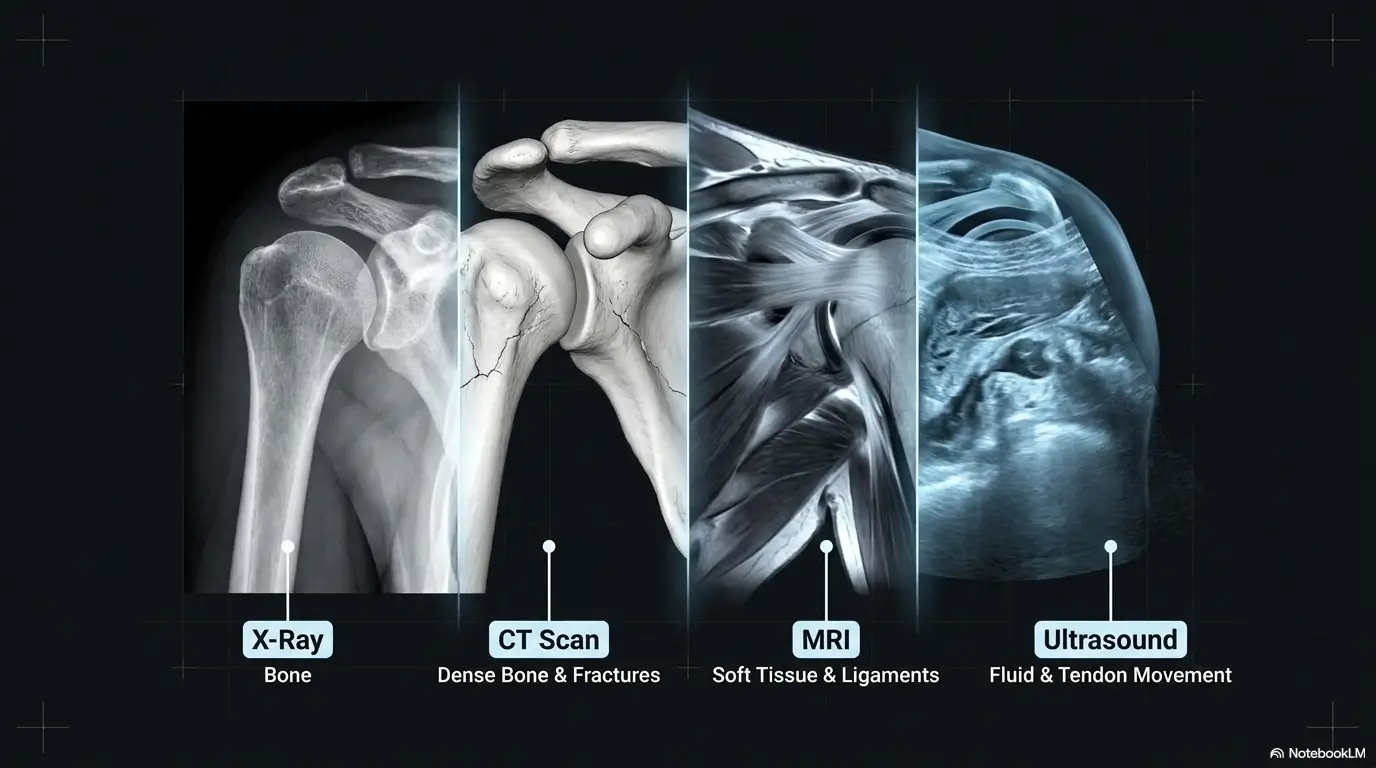
Before paying cash for an X-ray, MRI, CT scan, or ultrasound, you need more than a dollar amount. You need to know whether the quote covers the exact exam your clinician ordered, whether your orthopedist can use the study, and whether another bill could quietly follow the first.
This guide turns a foggy price-shopping call into a controlled buying decision. You will learn which questions expose incomplete quotes, how to compare self-pay and insurance costs, and what to secure in writing before your card leaves your hand.
The goal is the exact ordered study, accepted by the treating clinician, with clear written expected charges and payment terms. An estimate is not a guarantee that the final bill cannot change.
Snapshot
This guide is for U.S. adults comparing cash prices for scheduled orthopedic imaging, particularly people with no insurance, a high deductible, or an expensive in-network estimate. By the end, you will be able to request a complete written quote, compare equivalent exams, and decide whether self-pay is genuinely the better route.
Table of Contents
Before You Book: Know What This Guide Can and Cannot Decide
Price shopping is reasonable when an orthopedic scan is scheduled rather than urgent. It can be especially useful for people with high deductibles, no insurance, limited benefits, or a wide choice of local imaging centers.
Price shopping cannot tell you which test is medically appropriate. An MRI, CT scan, X-ray, and ultrasound answer different questions. Even two MRIs of the same joint may use different protocols.
Before You Act
This article offers general educational and billing-preparation guidance. It cannot determine which imaging exam you need, interpret symptoms, confirm insurance coverage, or replace advice from your clinician, insurer, or qualified billing professional.
Confirm the medical purpose of the exam with the ordering clinician. Do not delay urgent evaluation while waiting for a lower quote, a procedure code, or a written estimate.
Who can use this guide safely
A budget-conscious patient may use it to compare a hospital outpatient department with a freestanding imaging center. An insured patient may use it to test whether the cash price is actually lower than the plan-negotiated amount.
It is also useful when a family member is arranging care for an older adult. In that situation, keep the final order, written estimate, payment receipt, and report-access instructions together. A simple folder can prevent a small administrative maze from becoming a family group-chat opera.
When price shopping should stop
Contact the treating clinician promptly when pain is severe, rapidly worsening, or accompanied by symptoms the clinical team has described as urgent. Use emergency services when the situation appears life-threatening.
A cheap appointment next week is not a bargain if the medical instruction was to be evaluated today.
Key takeaway: Use price comparison to choose where to receive an appropriate scheduled exam, not to choose the exam itself.
One Missing Word Can Change the Entire Scan
“How much is a knee MRI?” sounds precise. It is not. To an imaging center, it can be the opening sentence of several different orders, prices, and technical setups.
Ask the ordering office for a copy of the final imaging order before requesting quotes. Do not rely on a portal message that says only “MRI recommended” or on a handwritten note you can barely read under the kitchen light.
Read the order line by line
- Imaging type, such as X-ray, MRI, CT, or ultrasound
- Exact body part
- Left, right, or bilateral
- With contrast, without contrast, or both
- Number of X-ray views
- Special positioning, weight-bearing views, or orthopedic protocol
- Whether an arthrogram or image-guided injection is involved
- Reason for the exam or clinical question
- Ordering clinician’s details
Laterality matters because an order for one side is not automatically an order for both. Contrast status matters because it can change preparation, supplies, screening, and cost. An arthrogram is not simply an MRI with a glamorous surname. It may involve a separate injection procedure and additional imaging work.
Ask what question the images must answer
The useful question is not merely, “What hurts?” It is, “What is the clinician trying to confirm or rule out?” Examples include a fracture, tendon tear, cartilage injury, nerve compression, infection, hardware problem, or postoperative complication.
A clear clinical question helps the imaging center choose the correct protocol and helps the radiologist focus the report. Before the visit, you may also want to prepare a concise description of your symptoms using this guide to describing pain to an orthopedist.
Find out whether the protocol can change
Ask whether a radiologist or technologist reviews the order before the appointment. If the center changes the protocol, adds contrast, requests additional views, or contacts the ordering clinician for clarification, ask how that would affect the quoted price.
The Scan-to-Quote Chain
The Cash Price Has a Back Room: What Is Actually Included?
A quoted price may represent the entire episode, or it may represent only the imaging facility’s portion. The difference is the difference between a closed tab and a second envelope arriving three weeks later.
Ask for a true all-in amount
Use the phrase “written all-in self-pay price.” Then ask the representative to identify every expected component rather than replying with a soothing but slippery “Yes, that should be everything.”
- Scanner or equipment use
- Technologist services
- Facility or technical charge
- Radiologist interpretation
- Contrast material and related supplies
- IV placement or nursing services
- Written radiology report
- Electronic access to the full images
- CD, USB, or other physical copy if requested
- Administrative, scheduling, or records fees
- Any expected tax or miscellaneous charge
One scan can produce more than one bill
The facility may perform the scan while a separate radiology group interprets it. Ask whether the radiologist is employed by the center, contracted separately, or expected to bill independently.
If more than one organization is involved, request the legal billing name and contact details for each. A separate professional bill is easier to investigate before the scan than after it has acquired a due date.
For a broader explanation of split medical charges, see this guide to an orthopedic bill involving multiple providers.
Request a Good Faith Estimate, not only a phone quote
People who are uninsured or who choose not to use insurance for scheduled care can generally request a Good Faith Estimate of expected charges. Keep the estimate in its original electronic or paper form and compare it with the final bill.
The estimate should be detailed enough to show what the issuing provider or facility expects to charge. Because different organizations may participate in the service, ask whether you need an estimate from anyone else.
| Quote language | What it may mean | What to ask next |
|---|---|---|
| “Starting at” | The advertised amount may cover only a basic version | What exact order, code, and services qualify for that price? |
| “Facility fee included” | The radiologist may still bill separately | Is interpretation included, and who employs the radiologist? |
| “No hidden fees” | A marketing phrase, not an itemized promise | Please list every included and potentially separate charge in writing. |
| “Contrast may be extra” | The final price depends on the protocol | What would the total be with contrast, supplies, IV placement, and labs? |
| “Cash package” | A prepaid bundle with its own restrictions | What happens if the order changes, the appointment is canceled, or the scan is incomplete? |
Key takeaway: A price becomes useful only when it names the exact exam, identifies every billing party, and states what is included.
Contrast Is Not a Footnote
Contrast material can help certain tissues, blood vessels, inflammation, tumors, infections, or postoperative findings appear more clearly. It is not required for every orthopedic MRI or CT scan.
The ordering clinician and imaging team should decide whether contrast is appropriate. Your role as a self-pay patient is to understand the plan, disclose relevant medical information, and learn how a change will affect the charge.
Ask which contrast-related costs are separate
- Contrast agent
- IV supplies and placement
- Nursing or monitoring services
- Kidney-function laboratory testing
- Additional sequences or scan time
- Medication used for a reaction, if needed
- Rescheduling charges if required preparation was not completed
Do not assume the answer is the same for MRI and CT. They use different types of contrast material, and screening questions may differ.
Complete the safety screening before payment
Tell the imaging center about prior contrast reactions, known kidney problems, pregnancy or possible pregnancy, implanted devices, metal fragments, recent surgeries, and any other condition listed in its screening process.
For MRI, implant and metal screening matters even without contrast. Bring the implant card or device information and let the imaging team verify the exact model and any conditions for scanning. Do not assume a previous MRI or metal-artifact protocol establishes safety. FDA advises treating an unknown MRI safety status as unsafe; the team must resolve it before the scan.
Agree on the price if the plan changes
Ask who has authority to add or remove contrast and whether the center will obtain your financial consent before performing a more expensive version of the exam.
If contrast is ordered but cannot be administered, find out whether the bill will be reduced, whether the noncontrast study remains clinically useful, and whether a later repeat exam would be charged separately.
Show me the nerdy details
“With contrast” and “without and with contrast” are not interchangeable phrases. The second generally describes imaging performed before and after contrast administration, which may require additional sequences and time.
An MR arthrogram is also different from a routine MRI with intravenous contrast. It commonly involves placing contrast into a joint under image guidance before the MRI. That can create separate procedure, facility, supply, and interpretation components.
For X-rays, the number and type of views can change the code and price. Weight-bearing knee or foot images, for example, may be ordered to answer a different question than non-weight-bearing views.
For patient-friendly information about imaging contrast and safety questions, review the RadiologyInfo contrast material guide.
Ask Why This Scan, Not Merely How Much It Costs
A scan is most useful when it is tied to a decision. Before spending hundreds or thousands of dollars, ask what the result could change.
What happens after the result?
- Will the result change physical therapy?
- Could it alter medication or activity restrictions?
- Is it needed before an injection?
- Could it guide surgical planning?
- Will it determine whether another specialist is needed?
- What is the next step if the study is normal?
The last question is especially revealing. A normal study is still information, but you should understand what the care plan would be afterward.
Could a simpler test answer the question?
Depending on the symptoms and clinical concern, an X-ray or ultrasound may sometimes be considered before a more expensive MRI or CT. In other situations, the advanced scan may be the appropriate first choice.
Do not substitute one test based on price alone. Ask the ordering clinician why the selected modality is appropriate and whether timing matters. Readers deciding whether more conservative steps belong before an MRI may find this guide to orthopedic pain management before asking for an MRI useful for preparing that conversation.
Could existing images prevent a repeat?
Tell the clinician about previous imaging of the same body area, even if it was performed at another health system. Bring the report and, when possible, the actual images.
An old scan may not replace a new one, particularly when symptoms or anatomy have changed. Still, prior studies can help the clinician judge whether repeating the exam is useful and can give the radiologist a comparison point.
Real-world example: the attractive quote that answered the wrong question
Imagine that Maya receives an order for a postoperative shoulder MRI using a metal-artifact reduction protocol. She calls three centers and hears prices of $430, $610, and $880.
The $430 center quotes a routine noncontrast shoulder MRI. It does not confirm the requested protocol and tells her to “bring the order on the day.” The $610 center reviews the order, confirms the protocol, includes the radiologist’s interpretation, and provides downloadable images. The $880 hospital quote includes similar services but carries a higher facility structure.
The lowest number is not truly comparable. Maya chooses the $610 center after her surgeon confirms that its protocol and images are acceptable.
The lesson is quiet but expensive: compare the service that will be performed, not the headline number that first answers the phone.
The Cheapest MRI May Cost More Later
Technical quality is difficult for a patient to judge in advance, but you can ask questions that reveal whether the center is prepared for your exam.
Can the center perform the exact orthopedic protocol?
Ask whether the center routinely performs the ordered study and has the necessary equipment, coil, positioning setup, weight-bearing capability, or metal-artifact reduction technique.
More expensive equipment is not automatically better for every patient or every question. The practical issue is whether the center can perform the requested study safely and adequately.
Who will interpret the images?
Ask whether the interpreting physician has experience with musculoskeletal imaging and whether the report will be reviewed by a radiologist who regularly reads the relevant body area or postoperative condition.
You do not need to turn the call into a credentialing investigation. A simple question works: “Does a radiologist with musculoskeletal imaging experience normally read this type of study?”
Will your orthopedist accept the study?
Call the ordering office before payment. Give it the imaging center’s name and ask whether the clinician is willing to use studies from that location, especially when the result may guide surgery, an injection, or a second opinion.
Some offices may care about the imaging protocol, image quality, access method, or the radiology group. Confirmation now is easier than explaining later why the full study exists on a disc that nobody’s computer wishes to acknowledge.
Get the images, not only the report
- Online image-sharing link
- Downloadable DICOM-compatible study
- CD or USB copy
- Written radiology report
- Instructions for sending images to another clinician
- Retention period and replacement-copy fees
A written report summarizes the radiologist’s findings. It does not replace access to the images when an orthopedist or second radiologist needs to review the study directly.
Key takeaway: Before choosing a low-cost imaging center, confirm protocol capability, radiologist interpretation, image access, and acceptance by the treating clinician.
Do Not Compare Quotes Until They Describe the Same Exam
Two numbers are comparable only when the underlying services match. Otherwise, you are comparing a complete meal with the price of the plate.
Request the procedure code and plain-English description
Ask the center which CPT code or other procedure identifier it used to prepare the quote. Then ask it to read back the plain-English description, body part, side, contrast status, and protocol.
A code alone does not settle every question. Multiple charges may apply, and coding can depend on the final service performed. Still, the code provides a useful comparison anchor.
Use one quote sheet for every center
| Comparison field | Center A | Center B | Center C |
|---|---|---|---|
| Exact exam and body side | Record answer | Record answer | Record answer |
| Contrast status | Record answer | Record answer | Record answer |
| Procedure code | Record code | Record code | Record code |
| Facility and technical fee | Included? | Included? | Included? |
| Radiologist interpretation | Included? | Included? | Included? |
| Contrast, supplies, and IV | Included? | Included? | Included? |
| Images and report access | Method and fee | Method and fee | Method and fee |
| Repeat-scan policy | Record terms | Record terms | Record terms |
| Cancellation and refund terms | Record terms | Record terms | Record terms |
| Written total | Enter amount | Enter amount | Enter amount |
Good, better, and best ways to compare
| Approach | What you collect | When it may be enough | Main limitation |
|---|---|---|---|
| Good | Exact exam, written total, radiologist inclusion | Simple scheduled X-ray or ultrasound with a clear order | May miss refund, records, or protocol details |
| Better | Good-level details plus procedure code, contrast costs, images, and cancellation terms | Routine self-pay MRI or CT comparison | Still requires confirmation from the ordering office |
| Best | Full written estimate, all billing parties, clinician acceptance, protocol confirmation, insurance comparison, and repeat-scan terms | Costly, specialized, postoperative, or decision-changing imaging | Requires more calls and documentation |
Separate hospital and freestanding-center pricing
Hospital outpatient departments and independent imaging centers may use different fee structures. Compare both when clinically appropriate, but do not assume one category is always cheaper or better.
Hospital price-transparency tools may provide useful starting information. A posted amount can still require confirmation because your exact protocol, billing parties, and circumstances matter.
For a deeper price-shopping framework, review this guide to estimating self-pay cash price ranges.
Do Not Assume Cash Is Cheaper Than Insurance
A high deductible can make the cash price attractive, but the comparison has more than one column. Paying outside insurance may affect deductible credit, claim rights, authorization requirements, and later coverage decisions.
Ask your health plan for your expected responsibility
- Is the imaging center in network?
- Is the interpreting radiologist in network?
- What negotiated amount applies to the procedure code?
- How much deductible remains?
- What copay or coinsurance applies?
- Is prior authorization required?
- Does the plan require a particular imaging location?
- Would the estimate count toward the out-of-pocket maximum?
Record the date, representative’s name or reference number, and the assumptions behind the estimate. Insurance estimates are not always guarantees, but written or documented information gives you a clearer basis for comparison.
Will a cash payment count toward the deductible?
Ask the insurer directly. Some plans may allow a member-submitted claim under certain conditions, while others may not credit an unsubmitted or noncovered cash payment toward the deductible.
Find out what documentation would be required, including an itemized receipt, procedure code, diagnosis code, provider information, and proof of payment. Do this before choosing cash, not after discovering that the receipt lacks half the required fields.
Consider prior authorization and later treatment
Paying cash for the scan does not necessarily erase insurance rules for surgery, injections, physical therapy, or another service that follows. Ask whether the plan needs prior authorization, a specific imaging provider, or documentation of earlier treatment.
This matters when the scan is one link in a larger care chain. Saving on the image while complicating approval for the next service can be a false economy.
Cash versus insurance: a practical decision table
| Situation | Cash may deserve a closer look | Insurance may deserve a closer look |
|---|---|---|
| No active coverage | A written self-pay package is available | Not applicable unless another coverage source exists |
| High deductible | The complete cash price is substantially lower | You want the expense credited toward deductible or out-of-pocket limits |
| Near annual out-of-pocket maximum | Only if the cash difference remains meaningful after lost credit | Using covered care may reduce later costs |
| Prior authorization required | The cash scan is independent of the later insured treatment plan | The plan’s rules may affect coverage of follow-up care |
| Out-of-network center | The center offers a clear package accepted by your clinician | An in-network alternative avoids claim and network complications |
| Specialized orthopedic protocol | The cash center confirms capability and physician acceptance | The health system coordinates protocol, records, and follow-up more easily |
Patients with high-deductible plans can use this high-deductible imaging cost estimate checklist to prepare a more complete insurance comparison.
Key takeaway: Compare the cash price with your actual plan-negotiated responsibility and the value of deductible credit, not with the provider’s undiscounted sticker price.
Before You Prepay, Lock Down the Exit Doors
Cash packages often require payment before the appointment. Prepayment may secure a discount, but it also transfers practical risk to you when the order, schedule, or clinical plan changes.
Ask whether a deposit is enough
Find out whether full prepayment is mandatory, when the balance becomes due, and whether the quoted price changes if you pay only a deposit.
Request written terms covering refunds, processing time, and the payment method used for reimbursement. “Refundable” is incomplete without a deadline and a process.
Document cancellation and rescheduling rules
- Deadline for canceling without a fee
- No-show charge
- Rescheduling fee
- Expiration date of the cash package
- Weather or equipment-failure policy
- Refund rules if the center cancels
- Rules when a clinician postpones the exam
What if the doctor changes the order?
Ask whether the payment can transfer to a revised exam and how the center handles a higher or lower price. Examples include changing one side to both sides, adding contrast, removing contrast, adding views, or switching to a different modality.
Do not authorize an upgraded service without hearing the revised total. A clinical change can be appropriate while still deserving financial disclosure.
Confirm report timing and urgent-result communication
- Normal report turnaround time
- Fee for expedited reading, if offered
- How the report reaches the ordering clinician
- How you receive a patient copy
- Who is contacted if the radiologist identifies an urgent concern
- What to do if the ordering office has not received the report
A fast scan with a slow or misdirected report can stall the very decision you paid to support.
Prepayment readiness checklist
- The center has the final order.
- The written amount is itemized and identifies separate billing parties.
- Your orthopedist accepts the protocol and images.
- You compared the cash amount with your insurance responsibility.
- The refund, cancellation, and order-change rules are written down.
- You know how and when the images and report will be delivered.
- The receipt will contain the details needed for records or a possible member-submitted claim.
Cash-Pay Imaging Mistakes That Create Expensive Repeats
Mistake 1: Booking before the final order arrives
The center may quote the wrong side, contrast status, protocol, or number of views. Wait for the final order unless the appointment is medically urgent and the clinical team instructs otherwise.
Mistake 2: Accepting a verbal price
A phone quote can vanish into the soft furniture of memory. Request a written estimate that identifies the exam and included services.
Mistake 3: Comparing different procedures
A routine noncontrast MRI is not equivalent to an arthrogram, bilateral study, postoperative protocol, or exam with separately billed interpretation.
Mistake 4: Ignoring the radiologist’s fee
Ask who reads the study, whether the reading is included, and whether another organization can bill you.
Mistake 5: Assuming a self-pay bill cannot increase
Additional services, changed protocols, or separate billing parties can affect the final total. Save the estimate and request an itemized bill if the amount changes.
Mistake 6: Failing to confirm that the doctor will use the study
An inexpensive scan that must be repeated is not inexpensive. Confirm the center, protocol, report, and image-delivery method with the ordering office.
Mistake 7: Paying before reading the refund rules
Order changes, medical screening, illness, equipment problems, and scheduling conflicts can all affect a prepaid appointment. Secure the exit terms before entering the package.
Red flags during a quote call
- The center will not review the written order before taking payment.
- The representative cannot say whether interpretation is included.
- The advertised price applies only if you book immediately.
- Refund rules are available only after payment.
- The center provides a report but no practical access to the images.
- A protocol change can be performed without disclosing the revised price.
- The center discourages you from confirming acceptance with your orthopedist.
If a final bill is substantially higher than a Good Faith Estimate, review the federal eligibility rules and deadlines rather than assuming the estimate has no value.
Key takeaway: The most costly mistakes usually happen before the scan, when the order, price, quality requirements, or refund terms remain vague.
Orthopedic Imaging Cash-Pay FAQ
Can I request a written estimate before scheduling?
Uninsured or self-pay patients can generally request a Good Faith Estimate for scheduled care. Ask for an itemized paper or electronic copy and confirm whether other providers or organizations may issue separate estimates or bills.
Does an MRI cash price normally include the radiologist’s fee?
Not necessarily. The facility and interpreting radiologist may bill through different organizations. Confirm inclusion in writing and ask for the billing group’s name when interpretation is separate.
Should I ask for the CPT code before comparing prices?
Yes. The procedure code, body part, side, contrast status, views, and protocol help show whether two centers are quoting equivalent services. The code should support the comparison, not replace the full description.
Is cash always cheaper with a high-deductible plan?
No. Compare the complete cash package with the insurer-negotiated responsibility, remaining deductible, coinsurance, network status, and value of having the expense counted toward annual limits.
Can the final bill exceed the Good Faith Estimate?
It can. Eligible uninsured or self-pay patients may be able to use a federal dispute process when a provider or facility bills at least $400 more than the Good Faith Estimate. Review current eligibility requirements and deadlines on the CMS medical bill rights website.
Do I need separate estimates from the facility and radiologist?
Possibly. Ask whether the issuing estimate covers all expected providers and facilities. If the radiology group or another organization bills independently, request its expected charge separately.
Can I take the images to another orthopedist?
Usually, but confirm that you will receive the full study in a usable format, not only the written report. Ask the receiving office how it prefers to obtain outside images.
What if the center performs the wrong or inadequate protocol?
The answer depends on the order, the cause of the problem, and the center’s policy. Before paying, ask who covers repeat imaging when motion, positioning, equipment trouble, or an incomplete protocol makes the study unusable.
Do I need a referral or imaging order when paying cash?
Requirements vary by exam, facility, state rules, and the center’s policies. Ask the imaging center whether it requires an order from an authorized clinician and what information must appear on it.
Your 15-Minute Next Step: Build a Quote That Can Survive the Bill
Set a timer for 15 minutes. Place the final imaging order beside you, open a blank note, and call one imaging center. Your first goal is not to book. It is to learn whether the center can produce a complete, comparable quote.
Use this complete quote script
“I have the final order in front of me. Please confirm the exact exam, body side, contrast status, protocol, and procedure code. I need the written, all-in self-pay price, including the facility charge, radiologist interpretation, contrast, supplies, image access, report, and any other expected fee. Please also tell me whether another provider could bill separately and explain the cancellation, refund, order-change, and repeat-scan policies.”
Collect five items before paying
- The final imaging order
- The procedure code and confirmed protocol
- A written, itemized estimate
- Written refund and repeat-scan terms
- Confirmation that the treating orthopedist accepts the center’s study
When those five pieces agree, the price stops being a tempting number and becomes a usable decision. That is the small victory here: no heroic bargaining, no billing clairvoyance, just a clean paper trail and fewer doors through which an unexpected charge can wander.
Save the estimate, order, notes, and receipt in one folder. When the report arrives, add it to the same file. A few orderly pages can carry you from scheduling to follow-up with far less friction.
Final reminder
Do not buy “an MRI.” Buy the exact ordered study, with the interpretation, records, quality, and billing terms needed to make it useful.
Last updated: October 14, 2026
Targeted editorial update: October 21, 2026. Added a topic-specific follow-up record and recheck triggers, revised the title and search description, and removed unverified first-person claims or clarified selected wording where found. The existing body was retained. This update is not a complete legal, coverage or clinical review; confirm current rules and individual decisions with the relevant official source or service.