
This site is written from a family-caregiver perspective. The operator is not a medical professional or an insurance, legal or financial adviser. Use this guide to organize questions for the relevant service.
Request each relevant document directly
Use this follow-up record alongside the guide below. It does not determine medical suitability, insurance eligibility or legal rights, and it does not guarantee a price.
- Keep together
- Payment arrangement, planned services, providers, request date and documents received.
- Unanswered question
- Can you identify the estimate’s scope, issuer and any separately billed services?
- Next contact and owner
- Follow up with the issuing office for missing or corrected documents and check current official guidance.
- Recheck when
- Service, provider, appointment or payment arrangement changes.
For each response, record its date, source, reference number and what remains uncertain. Agree the next follow-up date instead of treating silence as confirmation. Use official contact channels and keep identifying health, account and policy information out of public comments.

Self-Pay Orthopedic Cost Planning
How to Ask for a Good Faith Estimate
for Orthopedic Care
An orthopedic bill rarely arrives as one tidy number. A consultation can lead to imaging. An injection may include medication, facility, and professional charges. Surgery can produce separate statements from the surgeon, hospital, anesthesiologist, equipment supplier, and rehabilitation clinic.
For an uninsured or self-pay patient, a written Good Faith Estimate can turn that financial fog into a usable map. The key is asking early, stating that insurance will not be used, naming the proposed care precisely, and identifying every organization that may bill separately.
This guide gives you the request language, timing rules, provider checklist, comparison method, and bill-dispute steps needed to plan orthopedic costs without treating an estimate as a guaranteed final price.
One careful request today can prevent six confusing phone calls after treatment. 🧾
Snapshot: This article is for uninsured patients and people choosing not to use insurance for non-emergency orthopedic care. It explains how to request a written Good Faith Estimate, uncover separate billers, compare estimates, and respond when a final bill is substantially higher than expected.
Table of Contents
First, Make Sure This Is the Right Price Tool
Who generally qualifies for a Good Faith Estimate
A federal Good Faith Estimate is generally intended for people who do not have health insurance or who are choosing not to use insurance for a particular service. That can include a cash-pay orthopedic consultation, MRI, joint injection, elective procedure, physical therapy evaluation, or other scheduled care.
Having an insurance card does not automatically remove the option. A patient may choose not to use insurance for a service, but the provider should be told before care is delivered. CMS advises patients who are not using insurance to notify the provider in advance and request expected charges. CMS guidance
Before You Act
This guide explains cost-planning and documentation steps. It cannot diagnose an orthopedic condition, determine whether a procedure is appropriate, interpret personalized insurance benefits, or guarantee that a final bill will match an estimate. Confirm medical decisions with a qualified clinician and billing or legal questions with the appropriate professional.
When an insurance estimate is more useful
Patients who plan to use insurance usually need a different set of tools. These may include the insurer’s cost estimator, a deductible and coinsurance calculation, network verification, preauthorization, and a provider-generated estimate based on insurance benefits.
An insurance estimate asks, “What might I owe after plan rules are applied?” A self-pay Good Faith Estimate asks, “What charges does this provider or facility reasonably expect for care I am not submitting to insurance?” Those are different questions, even when the same knee, shoulder, or spine is involved.
Emergency care does not belong in this workflow
Do not delay urgent evaluation while waiting for paperwork. Severe trauma, suspected fractures, sudden inability to use a limb, new neurologic symptoms, or other potentially serious conditions need timely medical attention. The usual advance-estimate process does not apply during emergency care. CMS guidance
Key takeaway: Use a Good Faith Estimate to plan scheduled self-pay care, not to decide whether an injury is medically safe to postpone.
Ask Before Booking and Create a Paper Trail
Start with one unambiguous sentence
The cleanest request begins by stating exactly how the service will be paid. Avoid vague phrases such as “I might pay cash” or “insurance may not cover it.” Those leave room for the request to drift into an ordinary verbal price quote.
Copy-and-send request
“I will not be using health insurance to pay for this orthopedic service. Please send me a written, itemized Good Faith Estimate for the expected charges. Please identify any surgeon, facility, imaging provider, anesthesiologist, equipment supplier, laboratory, or rehabilitation provider that may bill me separately.”
You can use that wording in a patient portal, email, letter, or documented telephone call. Written communication is preferable because it records the date, your payment choice, and the exact service requested.
Name the proposed care as specifically as possible
An estimate can only be as precise as the care plan behind it. “How much is shoulder treatment?” is too broad. “What is the self-pay estimate for an initial right-shoulder orthopedic consultation with office X-rays?” gives the office something it can price.
- Body part and side, such as left knee or right shoulder
- Type of visit, such as new-patient consultation or follow-up
- Known imaging, such as X-ray, MRI, ultrasound, or CT
- Proposed procedure, such as aspiration, injection, arthroscopy, or joint replacement
- Medication or injection material, when known
- Expected facility, such as an office, imaging center, hospital, or ambulatory surgery center
- Likely number of physical therapy visits or postoperative appointments
Before contacting the billing office, use an orthopedic visit checklist to collect the diagnosis, body part, prior imaging, proposed treatment, and questions you still need answered.
Ask who owns the request
The receptionist may not prepare estimates. The request may belong to scheduling, patient financial services, a hospital estimate department, or the orthopedic practice’s billing team.
Ask for the department name, staff member’s name, direct telephone number, and expected delivery method. A small contact note saves the familiar billing-office carousel where every extension sends you back to the first recorded menu.
Use a Good, Better, Best request strategy
| Approach | What You Do | Best Use | Main Limitation |
|---|---|---|---|
| Good | Call and ask for a self-pay price | Simple office consultation | May produce only a verbal or partial quote |
| Better | Send a written request for an itemized Good Faith Estimate | Imaging, injections, or planned procedures | May still cover only one provider |
| Best | Request separate written estimates from every expected biller and compare them against one care plan | Surgery or multi-provider treatment | Requires more calls and organization |
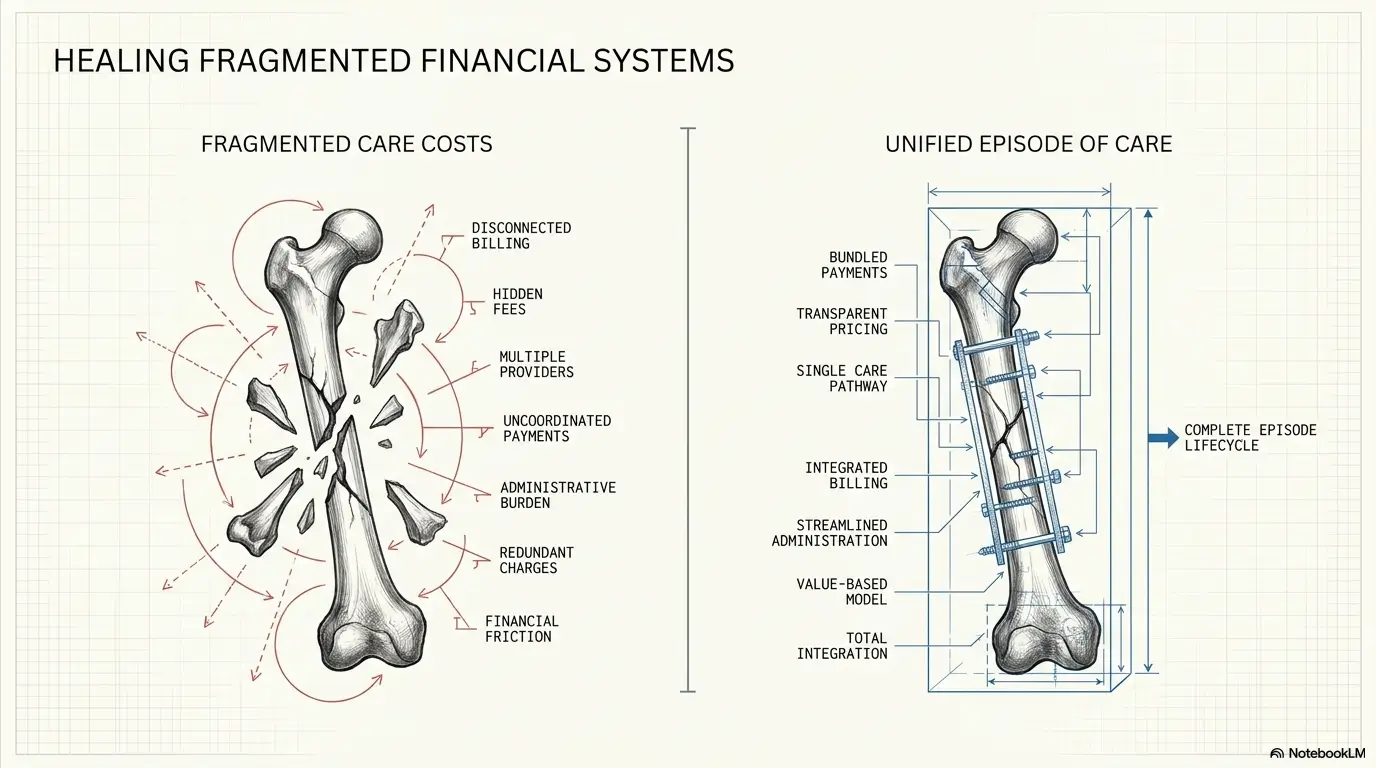
One Orthopedic Procedure Can Produce Several Estimates
The surgeon’s estimate may cover only professional fees
A surgeon’s office may estimate the physician’s work without including the operating room, nursing, recovery area, implant, pharmacy, or hospital charges. That number can be accurate and still represent only one slice of the financial pie.
CMS currently explains that a Good Faith Estimate may list expected charges for only one provider or facility. For surgery, patients may need one estimate from the surgeon and another from the hospital, plus estimates from other participating organizations. CMS guidance
For a deeper explanation of why statements arrive separately, see this guide to an orthopedic bill involving multiple providers.
Anesthesia, imaging, and equipment may have different billers
An orthopedic episode may include an anesthesiology group, radiology practice, imaging facility, brace supplier, crutch supplier, laboratory, pathology service, or implant charge. Some of these organizations may not share a billing system with the surgeon.
Ask the office for the legal billing name and contact information of each expected organization. “Anesthesia is included” should be followed by, “Included in which estimate, and billed by whom?” The distinction matters, as explained in this guide to a separate anesthesia bill.
Rehabilitation can be a separate financial episode
Postoperative rehabilitation is often scheduled after the main procedure and may not appear on the surgeon’s or facility’s estimate. Ask separately about the physical therapy evaluation, per-session rate, expected visit range, home exercise equipment, and cancellation policy.
The cheapest per-visit rate is not automatically the lowest total cost. A clinic recommending twelve visits at one price may cost more than a clinic recommending six at a higher rate. The treatment plan still belongs to the clinician, but the patient can ask how the expected visit range was determined.
When comparing rehabilitation settings, review the practical questions in this guide to choosing rehabilitation after surgery.
Build a “who might bill me?” list
| Possible Biller | What to Ask For | Orthopedic Example |
|---|---|---|
| Orthopedic clinician or surgeon | Professional fee estimate | Consultation, injection, surgical work, follow-up |
| Hospital or surgery center | Facility estimate | Operating room, nursing, recovery room |
| Anesthesia group | Anesthesia professional estimate | Regional block, monitored anesthesia, general anesthesia |
| Imaging facility | Technical imaging charge | MRI scanner and facility use |
| Radiologist | Interpretation charge | Reading the MRI or X-ray |
| Equipment supplier | Itemized equipment estimate | Brace, sling, crutches, walker, cold-therapy device |
| Laboratory or pathology service | Testing estimate | Preoperative laboratory work or tissue analysis |
| Rehabilitation provider | Evaluation and session estimate | Physical or occupational therapy |
The five-step estimate trail
What a Useful Orthopedic Estimate Should Show
Look for an itemized list, not only a total
A polished single total can feel reassuring, but it is difficult to audit. An itemized estimate should identify the expected items or services and their anticipated charges.
For an orthopedic injection, for example, look for the office or facility charge, clinician procedure fee, imaging guidance when expected, medication, supplies, and follow-up. Readers comparing an injection can also review the typical billing categories in this guide to joint injection consultation costs.
Match the estimate to the clinical plan
Check the patient name, body part, side, procedure, setting, date or expected time frame, and provider. A left-knee estimate is not a safe substitute for a right-knee procedure, even when the numbers happen to look similar.
- Correct joint, limb, or spinal region
- Correct left or right side
- Correct office, hospital, or surgery center
- Correct procedure and expected imaging
- Correct medication, implant category, or equipment type when known
- Correct number of anticipated therapy visits or follow-ups
Find the assumptions under the total
The estimate may assume a particular procedure duration, one injection, a standard implant, no overnight stay, no complications, or a limited number of postoperative visits. Ask the billing team to identify those assumptions in writing.
Also ask what would trigger a revised estimate. A change from an office procedure to a hospital procedure, from local anesthesia to deeper sedation, or from one implant category to another can materially alter the expected charges.
Identify exclusions before they become invoices
A Good Faith Estimate may not include separately scheduled services, care delivered by another provider or facility, or treatment that was not reasonably anticipated. CMS specifically notes that pre-surgery appointments, later physical therapy, care from another organization, and unanticipated services may fall outside one estimate. CMS guidance
Key takeaway: The most useful question is not merely “What is included?” Ask, “What expected part of this care is not included, and who should I contact for that estimate?”
Show me the nerdy details
An estimate is easier to compare when services are described consistently. Ask whether the billing office can provide procedure or service descriptions, anticipated quantities, and available billing codes. A code is not a promise that the final claim or bill will use the same code, but it can help reveal whether two estimates are pricing the same service.
Place of service matters. The same broad procedure description may carry different facility-related charges in a physician office, hospital outpatient department, or ambulatory surgery center.
Keep clinical necessity and financial comparison separate. A lower price does not establish that a setting or procedure is medically suitable. Confirm the care plan with the treating clinician, then compare financially equivalent options.
Timing Rules That Strengthen Your Request
Care scheduled 3 to 9 business days ahead
When qualifying care is scheduled 3 to 9 business days in advance, CMS says the estimate should generally be provided within one business day after scheduling. CMS guidance
Do not spend that entire period waiting silently. If nothing arrives, send a short follow-up referencing the original request date, appointment date, and intended self-pay status.
Care scheduled 10 or more business days ahead
For care scheduled at least 10 business days ahead, the estimate should generally be provided within three business days after scheduling. A patient requesting an estimate before scheduling should also generally receive it within three business days. CMS guidance
This longer planning window is especially useful for elective surgery because it leaves time to identify missing billers, compare facilities, ask about financial assistance, and request revised figures.
Care scheduled 0 to 2 business days ahead
The federal advance-estimate entitlement generally does not apply when care is scheduled only 0 to 2 business days ahead. You can still ask for a cash quote, itemized estimate, or financial counseling, but the same timing protection may not apply. CMS guidance
Business days are not calendar days
Weekends and holidays can shrink the real preparation window. A Monday procedure booked late Thursday may not create the same estimate opportunity as a procedure booked two weeks earlier.
| Scheduling Window | General CMS Timing | Practical Patient Move |
|---|---|---|
| Before scheduling | Estimate generally due within 3 business days after request | Compare the care plan and likely billers before choosing a date |
| 3 to 9 business days ahead | Estimate generally due within 1 business day after scheduling | Follow up quickly if the estimate is missing |
| 10 or more business days ahead | Estimate generally due within 3 business days after scheduling | Use the extra time to collect separate estimates |
| 0 to 2 business days ahead | Federal advance-estimate entitlement generally does not apply | Ask for any available written pricing without delaying necessary care |
Compare Price Options Without Losing the Care Plan
Compare equivalent services
A $600 MRI estimate and a $950 MRI estimate are not necessarily equivalent. One may include both the technical scan and radiologist interpretation, while the other covers only the imaging facility. One may include contrast material, while another assumes no contrast.
Create one row for each expected service and one column for each provider or facility. Mark missing information as “unknown,” not zero. An empty line on an estimate is not a free service.
Ask about cash discounts, deposits, and refunds
A provider may offer a self-pay discount, prompt-pay reduction, package rate, payment plan, or financial-assistance screening. Ask whether the quoted price requires payment before service, whether deposits are refundable, and what happens if the procedure changes or is canceled.
Compare the full payment terms, not only the headline amount. A slightly higher estimate with a manageable installment plan may be more workable than a lower figure requiring a large non-refundable deposit. This guide to an orthopedic payment plan explains useful questions to ask before agreeing to installments.
Know when a simple quote is enough
A straightforward office consultation may require only one written estimate, particularly when no imaging, supplies, or procedure is scheduled. A complex surgery deserves a broader episode-of-care worksheet.
| Care Type | Reasonable Starting Approach | Consider More Help When |
|---|---|---|
| Office consultation | One written estimate from the practice | Imaging or procedures may occur during the visit |
| MRI or CT | Facility estimate plus interpretation estimate | Contrast, sedation, or multiple body regions are expected |
| Joint injection | Procedure, medication, imaging guidance, and facility charges | The injection occurs in a hospital setting or uses a separately billed medication |
| Elective surgery | Multi-provider estimate worksheet | There are several facilities, implants, or uncertain postoperative needs |
| Rehabilitation | Evaluation fee, per-session price, and expected visit range | Transportation, home care, or equipment adds substantial cost |
Real-world example: A knee procedure with four prices
A self-pay patient asks, “How much is the knee surgery?” The surgeon’s office replies with a written professional-fee estimate. The patient assumes that number represents the procedure total.
A second call reveals a separate surgery-center charge. A third identifies an anesthesiology group. A fourth uncovers a brace that will be supplied after the procedure. Physical therapy has not yet been scheduled and is absent from every estimate.
Nothing in the first estimate was necessarily false. It was simply incomplete as a picture of the entire episode.
The practical lesson is to compare each estimate with the provider that issued it, while maintaining a separate master worksheet for the total care journey. One document answers a legal and billing question. The worksheet answers the household-budget question.
Key takeaway: Never label a partial estimate “total surgery cost” unless every expected biller confirms inclusion in writing.
Mistakes That Turn a Good Estimate Into a Weak One
Asking only, “How much is the surgery?”
A broad question often produces a broad answer. Ask for the itemized expected charges, included providers, excluded services, facility name, anesthesia arrangement, implant assumptions, equipment, and follow-up care.
Accepting a verbal number as the only record
A telephone quote may help with early planning, but request the estimate in writing. CMS states that a written Good Faith Estimate is needed for the federal patient-provider dispute process. CMS guidance
After a call, send a portal message summarizing what was discussed: “Thank you for speaking with me today. Please confirm the estimate, included services, and excluded billers in writing.”
Failing to request a revision when the plan changes
A revised procedure, different facility, added imaging study, new implant plan, or changed rehabilitation schedule can make the original estimate obsolete. Request a new version and retain the earlier one.
Do not overwrite the old file. Label documents by date, such as “2026-07-13 surgeon estimate” and “2026-07-20 revised surgeon estimate.” Billing disputes are rarely improved by a folder full of files named “final-final-2.pdf.”
Forgetting to save the supporting record
- Your written request and proof of the date sent
- The office’s acknowledgment or response
- Every estimate and revision
- The treatment plan or procedure description
- A list of expected providers and facilities
- Staff names, telephone numbers, and call dates
- Itemized bills and account statements
- Receipts, deposit records, and payment-plan documents
- Any complaint, negotiation, or dispute correspondence
Mistake to avoid: Do not assume that a service missing from the estimate has a price of zero. Treat missing information as unresolved and ask who will bill for it.
When the Final Orthopedic Bill Does Not Match
Compare each bill with the matching estimate
Do not compare a combined household worksheet with one provider’s Good Faith Estimate. Match the surgeon’s bill with the surgeon’s estimate, the facility bill with the facility estimate, and the anesthesia bill with the anesthesia estimate.
This provider-by-provider method matters because the federal dispute threshold applies to the charge from a particular provider or facility compared with that provider’s or facility’s estimate.
Request an itemized bill before negotiating
Begin with basic identity and coding checks. Confirm the patient, service date, provider, facility, body part, procedure description, duplicate charges, credits, deposits, and self-pay discounts.
Ask the billing office to explain each material difference. Some differences may result from a changed service or unanticipated care. Others may be duplicate lines, missed discounts, incorrect payment status, or services that belong to another account.
Understand the federal $400 threshold and 120-day window
A patient may qualify for the federal patient-provider dispute resolution process when one provider or facility charges at least $400 more than the Good Faith Estimate issued by that provider or facility. CMS also states that the dispute generally must be started within 120 calendar days of the date on the initial bill, using the deadline shown in the current CMS eligibility instructions. CMS guidance
Do not wait until collection notices begin to organize the file. Record the date printed on the initial bill and the date it was received and review eligibility promptly.
Know the filing cost and required documents
CMS currently lists a $25 non-refundable administrative fee for the federal dispute process. The patient needs a copy of the Good Faith Estimate, the bill, and provider contact information. CMS notes that the dispute process does not begin until the fee is paid. CMS guidance
| Bill Problem | First Action | Possible Next Step |
|---|---|---|
| Duplicate or incorrect line item | Request an itemized bill and correction | Escalate to a billing supervisor |
| Missing self-pay discount | Provide the estimate and payment agreement | Request an adjusted statement |
| Service changed from the original plan | Ask for the clinical and billing explanation | Review whether the added service was anticipated |
| Bill is at least $400 above that biller’s estimate | Check federal dispute eligibility and deadline | Consider patient-provider dispute resolution |
| No written estimate was provided | Preserve the written request and responses | Consider submitting a federal complaint |
| Bill is below the federal threshold | Request billing review or negotiate | Explore financial assistance or a payment plan |
When to Get Help Instead of Handling It Alone
Start with the provider for correctable errors
Many billing problems are administrative rather than adversarial. Contact the billing office when you see a wrong procedure description, duplicate charge, missing payment, incorrect patient, omitted discount, or insurance claim submitted despite a documented self-pay arrangement.
State the specific correction requested and ask when a revised statement will be issued. Follow the call with a written message.
Contact the No Surprises Help Desk for guidance
Federal assistance may be useful when a qualifying patient did not receive a requested estimate, needs help understanding dispute eligibility, or believes the provider did not follow applicable requirements. CMS also directs patients to submit a complaint when an estimate was not provided. CMS guidance
Consider a patient advocate for complex surgical bills
Professional assistance may be worth considering when several providers are involved, the bill is large, records are inconsistent, or the patient is recovering and cannot manage repeated calls. Before paying for help, ask about fees, credentials, scope of work, privacy practices, and whether compensation depends on claimed savings.
A free first step may include the provider’s financial counselor, hospital patient relations department, state consumer-assistance resources, a trusted caregiver, or a nonprofit patient-support organization. Paid help is not automatically better, but complexity can make organized expertise valuable.
Separate billing help from medical decision-making
A billing advocate can help organize charges, but should not decide whether surgery, imaging, medication, or therapy is medically appropriate. Likewise, a clinician can explain the care plan but may not know every payment policy used by an independent facility or supplier.
Key takeaway: Use the right helper for the right question: clinician for care, billing office for account corrections, insurer for insured benefits, and federal resources for Good Faith Estimate rights.
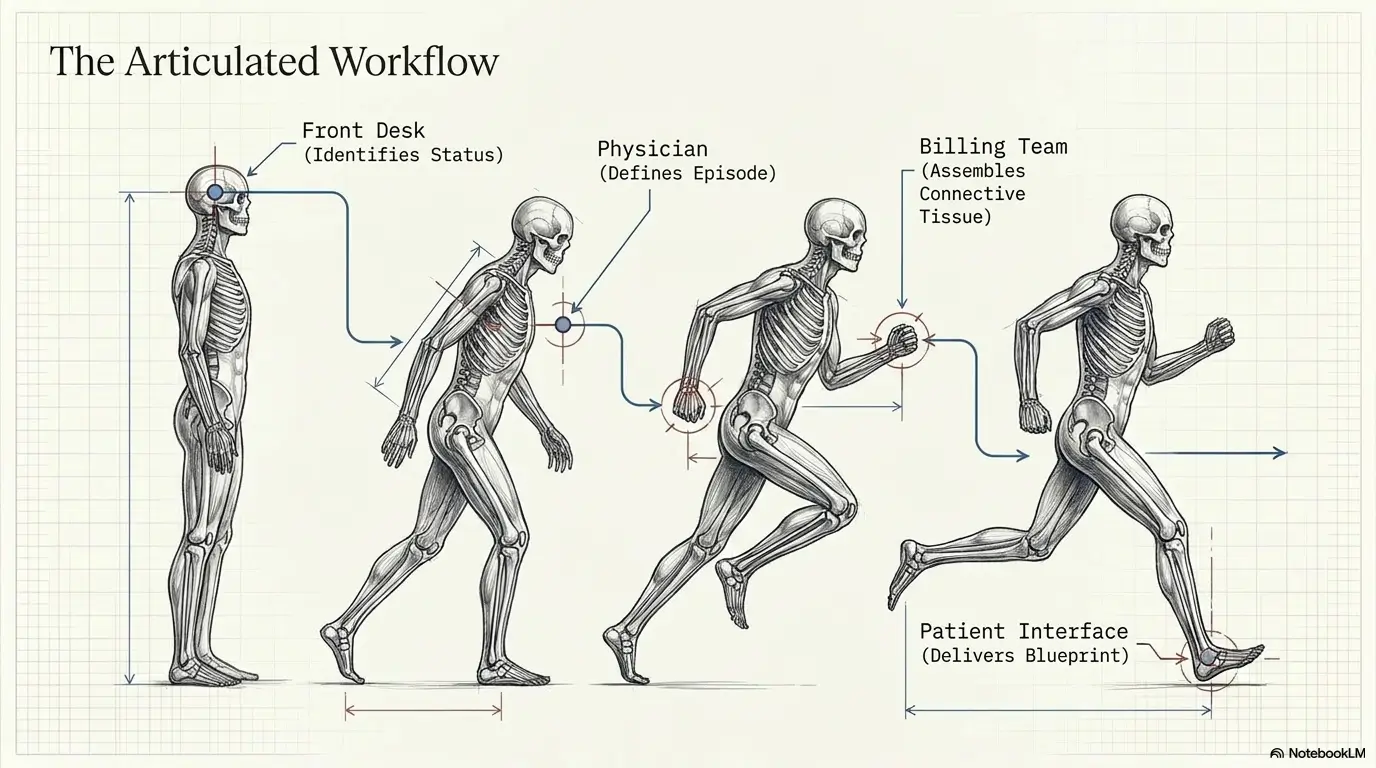
Good Faith Estimate FAQ for Orthopedic Patients
Can I request an estimate before choosing an orthopedic surgeon?
Yes. A self-pay patient can request an estimate before scheduling. The office may need a proposed service, body part, diagnosis, imaging plan, or consultation type to prepare a meaningful figure. A vague request may produce only a broad range.
Does the estimate include an MRI or X-ray?
Not automatically. Imaging performed in the orthopedic office may be included in that practice’s estimate, but outside imaging can involve a facility charge and a separate radiologist interpretation charge. Ask for written confirmation of both.
Can I get an estimate if I have insurance but want to pay cash?
Generally, a patient choosing not to use insurance for the service may request a Good Faith Estimate. Tell the provider before care that insurance will not be used and confirm how that choice affects billing, discounts, claim submission, and any later attempt to seek reimbursement.
Is a Good Faith Estimate a binding quote?
No. It is an estimate of reasonably expected charges, not an absolute price guarantee. Treatment changes, unanticipated services, complications, separate providers, and services scheduled later may affect the final cost.
Should I request separate estimates from the surgeon and hospital?
For many surgical arrangements, yes. Also ask whether anesthesia, radiology, implants, equipment, laboratory work, and rehabilitation require separate requests.
What happens if the treatment plan changes?
Ask for a revised written estimate as soon as the procedure, facility, anesthesia plan, imaging, implant, or follow-up schedule changes. Save the original estimate and document why the revision occurred.
Can I dispute a bill less than $400 above the estimate?
The federal patient-provider dispute process uses an “at least $400 more” threshold for a provider or facility’s bill compared with that biller’s estimate. A smaller difference may still be reviewed with the billing office, negotiated, corrected, submitted for financial assistance, or addressed through other complaint options.
What if the office never gives me an estimate?
Follow up in writing, preserve the original request, and ask for the billing or financial-services supervisor. A patient may also use federal complaint resources. The federal dispute process generally requires a written estimate, so keeping evidence of the missing request and response is important.
Should I compare a Good Faith Estimate with a cash price?
Yes, but confirm whether the cash price is itemized, whether it includes the same services, and whether it is intended to function as the written Good Faith Estimate. A package price can be useful, but only when its inclusions, exclusions, deposit rules, and refund terms are clear. This guide to a self-pay cash price range can help frame that comparison.
Send One Written Request in the Next 15 Minutes
Open the patient portal or a blank email. State that insurance will not be used. Name the orthopedic service, body part, side, proposed location, and appointment date. Ask for an itemized written Good Faith Estimate and the names of every organization that may bill separately.
Then create one folder called “Orthopedic Cost Records.” Save the request, estimate, provider list, treatment plan, revised versions, bills, and receipts there. The folder is humble infrastructure, but it is often what turns a stressful billing conversation into a factual one.
Your 15-minute action list
- Write the exact service, body part, and side.
- State that you will not use insurance for the service.
- Request a written, itemized Good Faith Estimate.
- Ask which providers, facilities, and suppliers may bill separately.
- Save the message and calendar a follow-up date.
A Good Faith Estimate cannot remove every financial surprise. It can, however, replace assumptions with names, documents, dates, and questions. For orthopedic care, that is the difference between hearing one attractive number and understanding the cost of the whole journey.
Last updated: October 14, 2026
Targeted editorial update: October 21, 2026. Added a topic-specific follow-up record and recheck triggers, revised the title and search description, and removed unverified first-person claims or clarified selected wording where found. The existing body was retained. This update is not a complete legal, coverage or clinical review; confirm current rules and individual decisions with the relevant official source or service.