

A calm emergency guide for long-distance caregivers
Red Flags During Phone Calls
With an Older Parent in Pain
A parent says the pain is “pretty bad,” then pauses longer than usual. You cannot see their face, count their breaths reliably, or notice the pill bottle tipped beside the chair. Across a phone line, ordinary uncertainty can suddenly feel enormous.
The safest response is not to diagnose the pain from a distance. It is to recognize combinations that change the urgency: pain with breathing trouble, pain with new confusion, pain after a fall, or pain followed by unusual sleepiness after medication.
This guide gives US caregivers a brief emergency handoff script, questions for professional advice, and a private call-card checklist that can turn a frightening conversation into a clear handoff. The goal is not perfect certainty. The goal is to avoid losing critical minutes while everyone is still saying, “Maybe it will pass.”
HEAR THE CHANGE
Use speech, breathing, alertness, and pauses as practical clues.
SEEK PROFESSIONAL GUIDANCE
Do not use a symptom list to rule out an emergency or clear home monitoring.
BUILD THE HANDOFF
Prepare the address, medication list, entry plan, and nearby contact.
When pain arrives with a sudden change in breathing, speech, alertness, or movement, the change matters more than the pain score. ☎️
Snapshot
Who it is for: adult children, family caregivers, and anyone checking remotely on an older adult in pain. What it solves: uncertainty about when a phone call has crossed into emergency territory. What you can do next: identify immediate red flags, make a safer handoff, and build a reusable pain-call plan before the next difficult evening.
Table of Contents
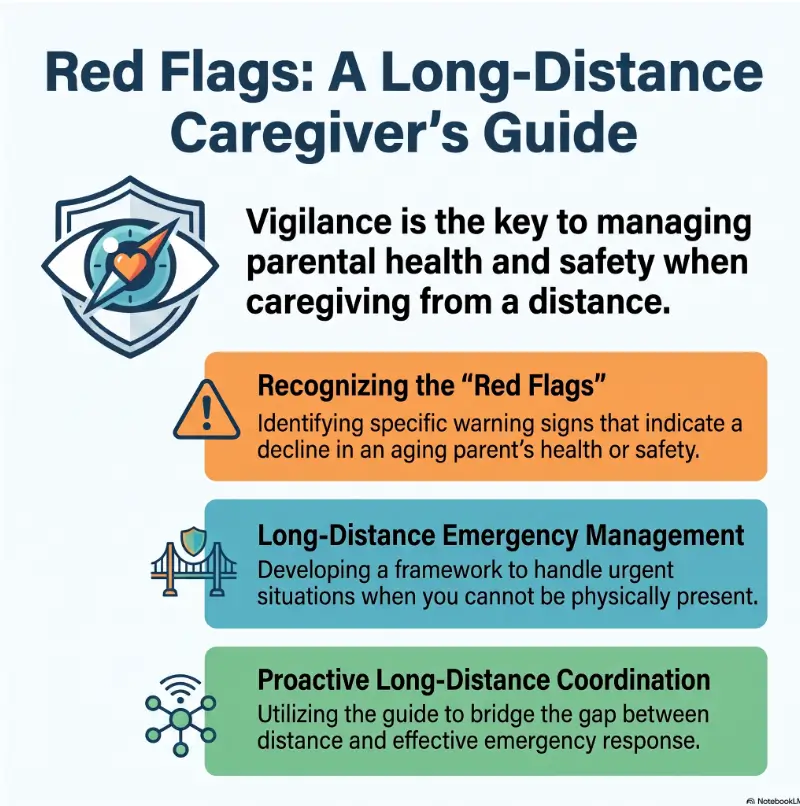
Safety First: What a Phone Call Can and Cannot Tell You
Before You Act
This article helps caregivers recognize warning signs and organize an emergency response. It cannot diagnose the cause of pain, determine decision-making capacity, or replace advice from emergency dispatchers, clinicians, pharmacists, hospice teams, or other qualified professionals. Call 911 for severe, sudden, rapidly worsening, or life-threatening symptoms. Outside the United States, use the appropriate local emergency number.
FAST ANSWER
Call 911 when an older parent in pain also has chest pressure, severe breathing difficulty, fainting, sudden confusion, slurred speech, one-sided weakness, a sudden severe headache, uncontrolled bleeding, inability to wake, or severe sudden pain. Keep them on the phone when possible, confirm the exact location, and arrange immediate in-person access.
A phone call cannot rule out an emergency
Medical emergencies do not always announce themselves with a cinematic collapse. An older adult may describe chest pressure as indigestion, call severe weakness “tiredness,” or say, “I just feel strange.”
Recognized emergency warning signs include breathing problems, sudden mental-status changes, chest discomfort, fainting, uncontrolled bleeding, severe abdominal pain, serious head injury, and severe pain anywhere in the body. Difficulty waking is also an emergency warning sign.
Your job on the call is therefore narrower and more useful than diagnosing. You are deciding whether the situation is unsafe to manage without immediate in-person assessment.
Key takeaway
Do not wait for a neat symptom description. A sudden change from your parent’s normal voice, thinking, breathing, or movement can be enough to escalate the call.
Hospice and palliative-care plans require a different first call
A parent enrolled in hospice may have a written plan that prioritizes comfort at home and directs the family to an after-hours hospice number instead of automatically requesting hospital transport. Keep that number beside the medication list and in every caregiver’s contacts.
Follow the individualized plan when it is available and the situation fits the plan. When symptoms fall outside it, the team cannot be reached, or immediate safety is uncertain, explain the hospice status to emergency dispatchers and follow their instructions.
At the Start of the Call: Locate, Listen, Escalate
Find the person before chasing the diagnosis
Before asking ten questions about the pain, confirm where your parent is. Emergencies become harder to manage when a caregiver knows the street address but not the apartment number, building entrance, gate code, room, or callback number.
- Ask for the exact address and where they are inside the home.
- Confirm whether they are alone.
- Tell the dispatcher about entry barriers. Do not ask an injured, confused, breathless, or unsteady person to walk to unlock a door; follow dispatcher instructions.
- Identify a neighbor, relative, building manager, or nearby caregiver who can reach them.
- Keep the phone connected when possible.
- If the call drops during a suspected emergency, call 911 and the nearby contact rather than repeatedly dialing your parent.
When you are calling from another city or state, your 911 call may reach the center serving your own location. Do not assume it can transfer to your parent’s jurisdiction. The National 911 Program recommends the published 10-digit law-enforcement number for the community where help is needed. Save that number in advance and verify the local procedure. In an immediate emergency without it, call 911, state the incident location immediately, and follow the dispatcher’s guidance. A nearby helper can call 911 from the incident location.
Listen before turning the call into an interview
The opening question “How bad is the pain?” often produces a number without much meaning. A more revealing start is: “Tell me what happened from the moment you first felt different.”
While they answer, listen for gasping, slurred words, long pauses, repeated sentences, confusion about familiar details, or an inability to complete a comfortable sentence. Notice whether they sound markedly sleepier, weaker, or more frightened than usual.
Silence is data. A dropped object, an unfinished sentence, a phone sliding to the floor, or a response that stops making sense may tell you more than a pain rating.
The remote-caregiver emergency flow
1. LOCATE
Address, room, entry instructions, callback number.
2. LISTEN
Breathing, speech, alertness, pauses, background sounds.
3. ESCALATE
911, same-day evaluation, or clinician-guided monitoring.
4. HAND OFF
Symptoms, onset time, medications, fall details, baseline.
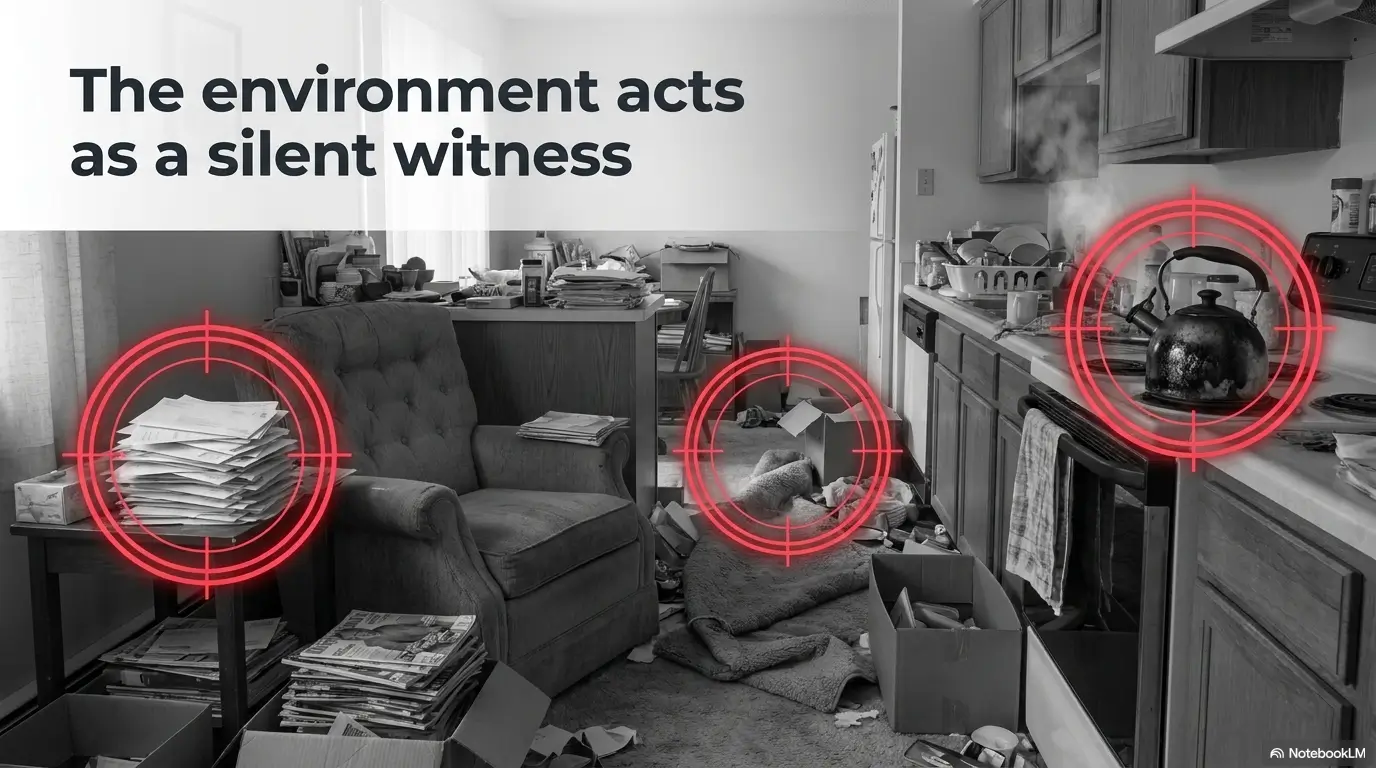
Pain Plus Breathing Trouble: The Combination That Changes the Call
Chest pressure may not be described as chest pain
Call 911 when pain is accompanied by chest pressure, squeezing, fullness, serious shortness of breath, faintness, cold sweating, nausea, or discomfort extending into the arm, jaw, shoulder, back, neck, or stomach.
Heart-attack symptoms can include indigestion-like discomfort and mental-status changes, particularly in older adults. Symptoms may come and go rather than remaining dramatic and constant.
Do not try to settle the question by asking whether it feels “exactly like a heart attack.” Most people do not have a reliable internal comparison, and familiar indigestion does not rule out a new emergency.
The complete-sentence clue
If your parent cannot speak a complete sentence comfortably because they are gasping, breathless, or repeatedly stopping for air, treat the breathing problem as urgent. Do not ask them to walk around, search several rooms for a device, or perform a home exercise to “see if it clears.”
A pulse oximeter reading may add information, but it should not overrule obvious distress. Cold fingers, poor circulation, movement, nail products, and device limitations can affect readings. Severe breathing difficulty deserves emergency action even when a consumer device displays a number that looks reassuring.
Key takeaway
Pain plus breathlessness, chest pressure, faintness, sweating, or unusual weakness is not a “wait until morning” combination.
A 30-SECOND EMERGENCY SCRIPT
“My parent is at [full address and apartment]. They are [age] and have sudden pain with [breathing trouble, chest pressure, fainting, or other red flag]. The symptoms began at approximately [time]. They are [alone/not alone], and the entry instructions are [details]. I am calling from another location and can stay on the line.”
Pain Plus Brain Changes: Listen for What Suddenly Sounds Different
Sudden confusion, speech trouble, or one-sided weakness means 911
Call 911 for sudden confusion, trouble speaking, difficulty understanding ordinary questions, facial drooping, or weakness or numbness affecting one side of the body. Sudden vision trouble, loss of balance, difficulty walking, or a severe unexplained headache also requires immediate action.
These are recognized stroke warning signs, and the CDC advises calling 911 right away.
Do not spend several minutes administering an elaborate home stroke test. If the speech is suddenly wrong or one side appears weak, make the emergency call and tell the dispatcher the last time your parent was known to be speaking and moving normally.
Use simple questions, not a quiz show
Ask for their name, location, what happened, and whether they can understand you. The purpose is to notice a sudden departure from baseline, not to prove that their memory is perfect.
A parent with dementia may routinely miss the date yet still speak in familiar patterns. The red flag is a marked new change: language that is more garbled, behavior that is unusually agitated or sleepy, inability to follow a familiar instruction, or confusion that appeared abruptly.
Write down the time you first noticed the change. A vague phrase such as “sometime this evening” is less useful than “she was speaking normally at 7:15 p.m., and her words were slurred at 7:32 p.m.”
Pain After a Fall: The Missing Detail That Rewrites the Story
Ask directly about falling, fainting, and head impact
An older parent may mention hip or back pain without volunteering that they slipped earlier. They may feel embarrassed, fear losing independence, or believe a minor fall is not worth discussing.
- “Did you fall, slide, trip, or end up on the floor today?”
- “Did you hit your head, face, neck, or back?”
- “Did you faint or feel faint before the fall?”
- “Have you vomited or developed a worsening headache?”
- “Are you more sleepy, confused, unsteady, or forgetful than usual?”
- “Do you take a blood thinner or medication that affects bleeding?”
Confusion, unusual tiredness, unconsciousness, severe bleeding, breathing changes, or signs of serious head or neck injury after a fall warrant emergency help. A head injury while taking a blood thinner needs prompt medical assessment even if the parent initially sounds well; do not wait for symptoms to develop.
Do not make them prove they can walk
If your parent reports severe hip, leg, back, or neck pain after a fall, do not tell them to stand up for a test. An attempt to walk can cause another fall or worsen an injury.
Ask about new numbness or weakness, but do not ask them to test movement or reposition after a possible serious injury. Follow emergency dispatchers’ instructions and keep them warm and connected while help is arranged.
For prevention planning after the immediate episode, use a structured fall-risk review for older adults rather than relying on the promise to “be more careful.” Falls often grow from several small hazards working together.
Post-fall information to hand responders
- Approximate fall time and when the parent was last known to be well.
- Whether the fall was witnessed.
- Possible head, neck, back, hip, or limb impact.
- Loss of consciousness, faintness, vomiting, confusion, or worsening headache.
- Current medication list, especially anticoagulants and sedating medicines.
- Usual mobility level and whether current movement is different.
Medication Clues: Double Doses, Sedation, and Opioids
Ask what they took, how much, and when
Pain calls often become medication calls without anyone noticing. A parent may take an extra dose because the first dose “did nothing,” confuse morning and evening pills, combine two products containing the same ingredient, or forget that a patch is still in place.
- Ask for the medication name exactly as printed on the label.
- Ask how many tablets, capsules, spoonfuls, sprays, or patches were used.
- Record the time of each dose.
- Ask about alcohol, sleep medicines, anti-anxiety medication, antihistamines, or other sedating drugs.
- Do not recommend an additional dose unless a qualified clinician or pharmacist confirms it is appropriate.
- Do not suggest using another person’s prescription.
When medication confusion has been recurring rather than sudden, a simple medication-confusion monitoring plan can reveal missed doses, duplicate doses, and the times of day when errors are most likely.
Hard to wake plus slow breathing may be an opioid overdose
Possible opioid-overdose signs include inability to wake, very slow or stopped breathing, choking or gurgling sounds, limpness, and lips or nails that look discolored. When you are unsure whether severe sedation is an overdose, treat it as an emergency rather than waiting for certainty.
Call 911. If naloxone is available and another person is physically present, have that person use it according to its instructions while following the dispatcher’s guidance. Naloxone can reverse an opioid overdose temporarily, but it does not replace emergency evaluation because symptoms can return.
Key takeaway
Naloxone changes what a nearby person can do while help is coming. It does not change the need to call 911.
Use Poison Control for medication mistakes without immediate life-threatening signs
For a possible double dose, wrong pill, accidental exposure, or medication mix-up when the person is awake, breathing normally, and not showing an immediate emergency sign, US Poison Control provides free, confidential guidance at 1-800-222-1222.
If the person collapses, has a seizure, has trouble breathing, or cannot be awakened, call 911 immediately instead.
Show me the nerdy details
A remote pain assessment becomes safer when you separate symptom intensity from physiologic and functional change. Pain intensity is subjective and can be influenced by fear, memory, chronic pain experience, and communication style.
Breathing, speech coherence, alertness, ability to follow a simple instruction, new one-sided weakness, recent medication exposure, and change from baseline often provide more useful triage information.
This still does not create a diagnosis. It creates a cleaner escalation signal and a more informative handoff to emergency dispatchers or clinicians.
Contacting Emergency Services or the Care Team
Caregivers often lose time because every option feels either too dramatic or too casual. The examples below are not a complete triage protocol. Missing a listed warning sign does not establish that waiting is safe. If you are unsure about urgency, contact an appropriate medical service rather than selecting a monitoring category yourself.
| Service to contact | Examples | What to do |
|---|---|---|
| 911 now | Severe breathing trouble, chest pressure, stroke signs, fainting, inability to wake, suspected overdose, uncontrolled bleeding, sudden severe pain, serious fall or head-injury signs | Confirm location, call 911, keep the line open, and arrange entry. |
| Urgent same-day evaluation | New or worsening pain, new inability to perform usual activities, possible infection signs, repeated vomiting, medication side effects, or concerning pain without an immediate emergency sign | Contact the clinician, urgent care service, or appropriate same-day provider. Ask whether emergency evaluation is safer if symptoms change. |
| Clinician-guided monitoring | Familiar pain pattern, no new red flags, stable breathing and thinking, and an existing treatment or hospice plan | Follow the documented plan, record changes, and establish clear thresholds for escalation. |
The “usual pain” trap
Pain occurring in a familiar location does not guarantee a familiar cause. A parent with chronic shoulder pain can still develop chest symptoms. A person with longstanding back pain can still fall, become infected, or experience a medication problem.
Ask what is different today: the onset, intensity, associated symptoms, ability to move, medication response, or overall behavior. A structured set of questions for checking a parent’s pain can help when no immediate emergency sign is present.
When a parent refuses help during a dangerous episode
Avoid spending twenty minutes trying to win an argument. State what you hear and what you are doing: “Your speech is suddenly slurred, and that can be an emergency. I am calling 911 so someone can assess you in person.”
Tell the dispatcher if your parent is confused, unusually drowsy, threatening to disconnect, unable to open the door, or refusing assistance. Do not promise that responders will or will not transport them. The professionals on scene will assess the situation and explain the available choices.
Let’s be honest: pain scores are messy
One parent’s six is another parent’s nine. Some older adults minimize pain because they do not want to worry the family; others use the highest number because they are frightened and need help now.
Pair the number with function: Can they speak normally? Are they fully awake? Has their usual limb use or bathroom access already changed? Do not ask them to stand, walk, or demonstrate a task to answer. Is this pain preventing an activity they could perform yesterday?
For non-emergency appointments, a functional pain assessment often gives a clinician more usable information than a number standing alone.
Mistakes That Quietly Waste Critical Minutes
Do not conduct a twenty-minute medical interview before calling
Once a major red flag appears, the goal changes. You no longer need a complete family medical history before contacting emergency services.
- Do not ask a breathless parent to repeatedly describe the pain.
- Do not delay for a blood-pressure cuff, smartwatch, thermometer, or pulse oximeter.
- Do not wait for a sibling to agree before calling 911.
- Do not drive across town first when responders can arrive sooner.
- Do not ask a dizzy, weak, confused, or sedated parent to drive.
- Do not send them into the shower to “see whether the muscles loosen up.”
Do not improvise medication advice
A suggestion that sounds harmless, such as “take one more,” can create a duplicate dose, interaction, bleeding risk, or dangerous sedation. Confirm medication decisions with a pharmacist, prescribing clinician, Poison Control, or emergency professional as appropriate.
Do not end the call before a real handoff
A promise to call back in five minutes is not a handoff. Stay connected until emergency help, a trusted neighbor, another caregiver, or a clinician has taken over whenever it is safe and practical.
If symptoms improve while help is being arranged, do not cancel the response on your own. Tell the dispatcher or responding clinician that the symptoms changed and follow their direction. Temporary improvement does not explain what caused the episode.
Key takeaway
The safest phone call ends with a named person or professional physically taking over, not with “Call me if it gets worse.”
Build a One-Page Pain Call Card Before You Need It
Record the details stress likes to erase
During an emergency, even familiar facts can vanish from memory. A printed call card and a phone-based copy give every caregiver the same starting point.
- Full legal name, date of birth, home address, apartment or unit number
- Gate code, entry instructions, lockbox location, and pet information
- Primary phone number and a backup way to reach the parent
- Nearby contact who has agreed to provide in-person help
- Current medications, doses, allergies, and pharmacy
- Major diagnoses, recent procedures, and relevant implanted devices
- Primary clinician, specialists, hospice team, after-hours numbers, and the verified 10-digit law-enforcement contact for the parent’s community
- Usual speech, memory, mobility, and pain pattern
- Advance-directive location and emergency care preferences, when documented
A concise caregiver medical-summary template can also reduce repetition when several siblings are rotating calls and appointments.
Good, better, and higher-support preparedness
You do not need an expensive system to become safer. Start with the free layer, then add tools or services only when they solve a real access, communication, or supervision problem.
| Setup | What it includes | Best fit | What to verify |
|---|---|---|---|
| Good: free DIY | Printed call card, shared digital medication list, emergency contacts, regular check-in routine | Independent parent with reliable phone use and nearby support | Information stays updated and every caregiver knows where it is |
| Better: low-cost access support | Secure entry plan, labeled medications, nearby key holder, charger beside favorite chair, naloxone when clinically appropriate | Parent living alone or using sedating medication | Consent, lockbox security, medication instructions, and replacement dates |
| Higher support: paid service | Medical-alert service, monitored wearable, medication-dispensing support, home-care check-ins, or professional care coordination | Frequent falls, repeated confusion, limited nearby family, or difficulty initiating calls | Cellular coverage, response process, backup power, cancellation terms, false-alarm policy, and whether the parent will consistently use it |
Questions to ask before paying for a caregiver tool or service
- Does it work outside the home as well as inside?
- Does it require Wi-Fi, cellular service, a landline, or a smartphone?
- Who answers an alert, and what information do they receive?
- Can several family caregivers be notified?
- How is location information handled?
- What happens during a power outage?
- Is fall detection automatic, optional, or unavailable?
- Are equipment, activation, monitoring, and cancellation charges separate?
- Can the parent comfortably wear, charge, hear, and operate the device?
The most feature-heavy option can still waste money when it remains in a drawer. A modest tool worn every day is usually more useful than a premium device your parent dislikes, forgets to charge, or removes at bedtime.
Key takeaway
Buy access, reliability, and a usable response process. Do not pay for a glittering feature list that your parent cannot or will not use.
If prescription opioids are kept in the home, ask the prescriber or pharmacist whether naloxone should be available, where to store it, and who should learn to use it.
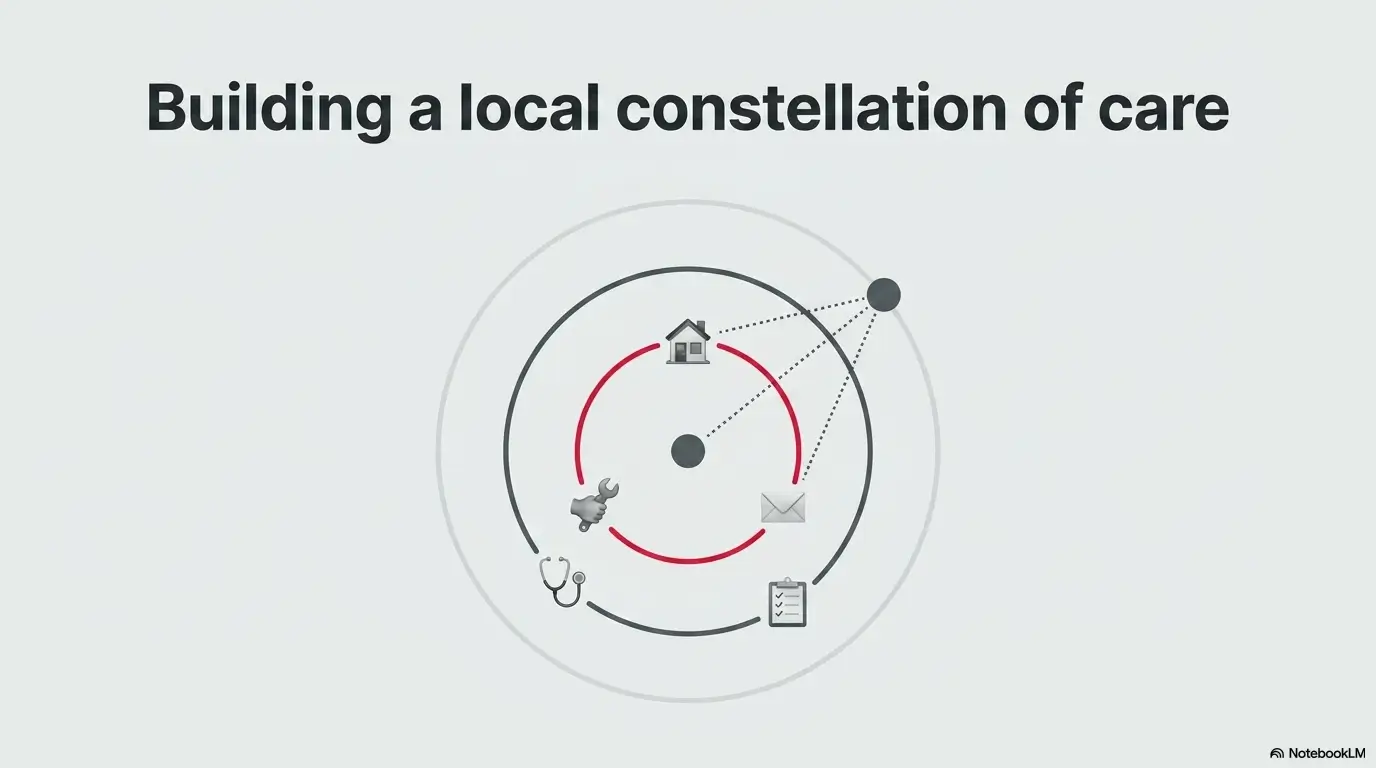
Frequently Asked Questions
What should I do when my parent refuses an ambulance despite obvious warning signs?
Call 911 and describe the warning signs, the refusal, and any new confusion or unusual behavior. Do not hide the refusal from dispatchers, and do not spend critical minutes negotiating alone.
Use concrete language: “His speech became slurred five minutes ago,” rather than “He seems a little off.” Responders can assess the situation in person and explain the available options.
How do I call for help from another city or state?
A 911 call from your location may not reach or transfer to your parent’s community. Use the local 10-digit law-enforcement contact saved in the call card and explicitly request emergency help at the complete incident address. If that number is unavailable during an immediate emergency, call 911, explain the remote location at once, and follow instructions; ask an available nearby helper to call from the incident location.
Contact the agreed nearby helper after emergency services have been activated. Do not rely solely on a neighbor when the situation includes life-threatening warning signs.
What if the pain improves while emergency help is coming?
Tell the dispatcher or responding team that the symptoms improved and when the change occurred. Do not cancel emergency help without professional direction when the original symptoms included chest pressure, severe breathlessness, stroke signs, fainting, overdose signs, or another major red flag.
What if dementia makes the symptom description unreliable?
Compare the call with the parent’s normal baseline. Listen for a sudden change in word choice, alertness, behavior, breathing, balance, or ability to follow familiar instructions.
Tell dispatchers or clinicians what is normal for the parent and exactly what is different now. “She usually knows my voice and follows one-step instructions, but today she cannot” is more useful than simply saying she has dementia.
Should I ask for blood pressure, pulse-oximeter, or smartwatch readings?
Readings can be useful when the device is already beside the parent and obtaining the number is safe. They should not delay 911 or override serious symptoms.
Do not ask a confused, faint, breathless, or unsteady parent to search the house for a device. Give responders the symptoms first and device readings second.
What should I do about new pain overnight or during a holiday?
Emergency warning signs remain emergencies outside office hours. For concerning but non-life-threatening symptoms, use the clinician’s after-hours line, health-system triage service, urgent care option, or hospice number as appropriate.
Do not let the inconvenience of the hour become part of the medical decision. Midnight has no special power to make chest pressure safer.
Does every household with prescription opioids need naloxone?
Risk varies with the opioid, dose, other medications, health conditions, and household circumstances. Ask the prescriber or pharmacist whether naloxone is appropriate and who should be trained to use it.
Even when naloxone is present, suspected overdose still requires 911 because its effect can be temporary and further medical care may be necessary.
Should a hospice patient’s family always call 911?
Not automatically. Hospice patients should have an individualized plan explaining whom to call for pain crises, breathing changes, falls, medication problems, and expected end-of-life symptoms.
Keep the after-hours hospice number easy to find. When the situation is not covered by the plan, the team cannot be reached, or immediate safety is uncertain, explain the hospice status when requesting emergency guidance.
Take 15 Minutes Today: Create the Handoff That Buys Time
Open a note on your phone and title it “Parent Emergency Call Card.” Add the full address, unit number, entry instructions, nearby helper, medication-list location, allergies, major diagnoses, and after-hours clinical contacts.
Then call the nearby helper and confirm one plain fact: Are they genuinely willing and able to enter the home during an urgent situation? An emergency contact who has moved, lost the key, or never agreed to the role is a paper umbrella in heavy rain.
Finally, save this sentence in every caregiver’s phone: “Location first, sudden changes second, medication and fall details third.” That small order keeps a frightening call from becoming a scavenger hunt.
The promise of preparation is not that every call will feel easy. It is that the family will know what to listen for, when to escalate, and how to place help at the correct door while the line is still open.
Your one action now
Create the call card, send it to one other caregiver, and verify one nearby person who can physically reach your parent. Fifteen quiet minutes today may protect the loudest minutes of a future emergency.
Last updated: October 14, 2026
Keep the emergency call card private
The real call card may contain an address, medicines and entry details. Keep it in a secure place agreed with your parent and share it only with people who need it. Do not place door codes, medication lists or identifying health details in public comments, this site’s contact form, or a shared public link. The visit preparation tool is for planned appointments after urgent concerns are addressed, not for dispatching help.
Targeted editorial correction: October 21, 2026. Checked MedlinePlus emergency guidance, CDC stroke guidance and the National 911 Program FAQ. Retained the official remote-location calling advice. Removed an unverified named story, unverified video and completion-based worksheet; clarified entry safety, existing observations and privacy. Other clinical sections retain their earlier review scope. Written by a family caregiver; no independent medical review is claimed.