
This family-caregiver guide helps organize questions and practical arrangements. The site operator is not a medical professional. It does not diagnose a condition or give individual treatment, procedure or activity clearance.
The report is part of the assessment
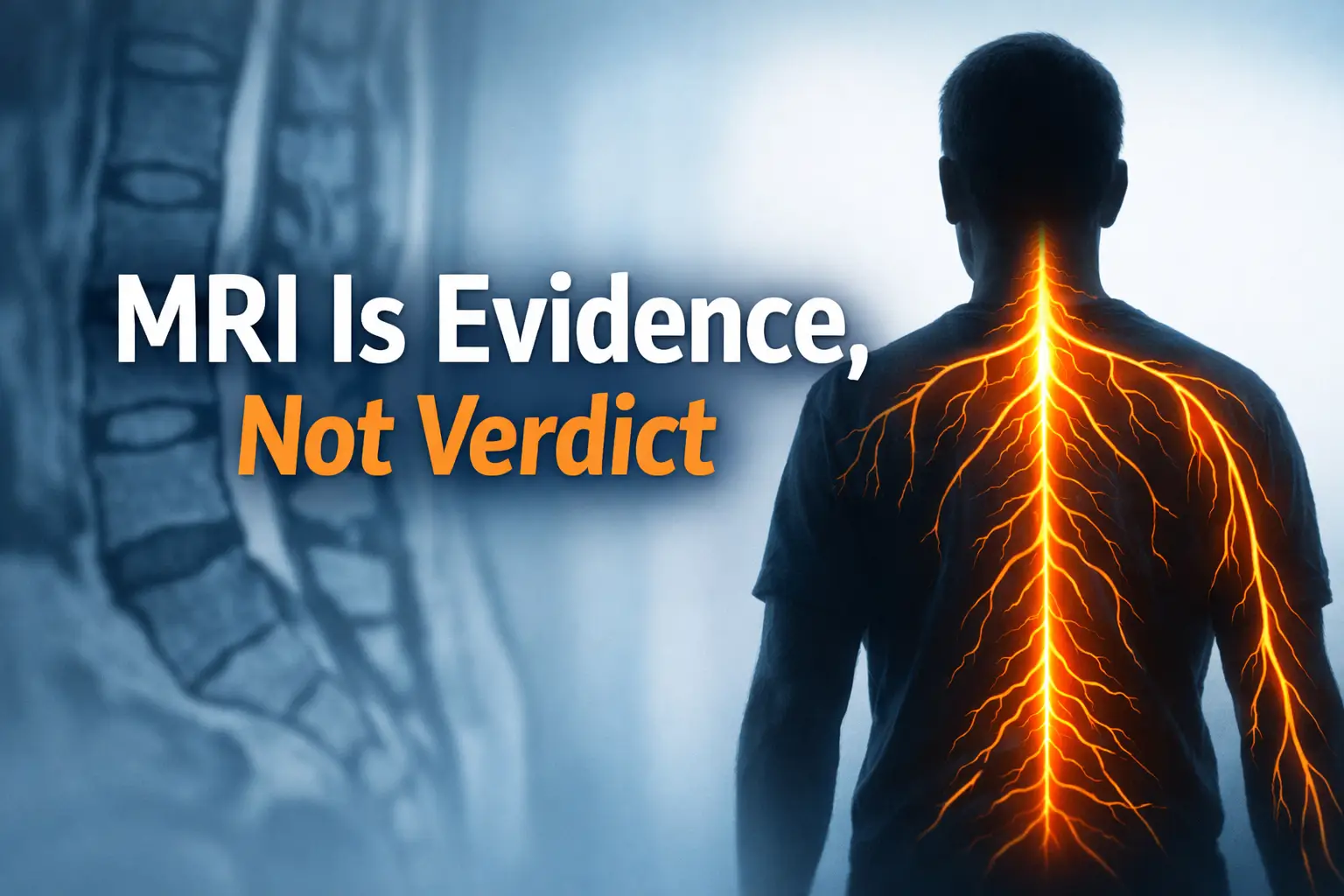
An MRI describes anatomical findings. The treating clinician must consider whether those findings fit the history and examination. An abnormal-sounding word does not by itself establish the cause or severity of pain, and an unhelpful scan does not make the person’s pain unreal.
Ask for an explanation in ordinary language
Bring the exact report and describe the side, distribution and effect of symptoms. Ask which findings are relevant, which remain uncertain and whether another assessment is appropriate. Avoid converting an imaging label into a prediction that recovery is impossible.
Make room for reassessment
If symptoms have changed since the scan, say so. Do not assume an older report explains a new weakness or other new problem. Agree who follows up and what should prompt earlier contact rather than repeating scans solely for reassurance.
Ask for clinical correlation in plain language
Use these prompts to prepare a conversation. They do not diagnose a condition, rank urgency or clear an activity.
- What to record
- The actual report, side and distribution of symptoms, onset and the question that remains unresolved.
- What to ask
- Which findings fit the examination, which may not explain symptoms and what assessment comes next?
- Next action and owner
- Ask the clinician to reconcile the report with your symptoms; neither a scan nor a normal examination makes pain unreal. Record who will act and when to follow up.
Keep personal notes private. You can also use the visit preparation organizer; do not post identifying health information in comments.
Primary information to discuss with your team
NICE NG59: low back pain and sciatica
Editorial rewrite: October 21, 2026. Replaced the previous body with a focused preparation guide and removed unsupported personal or clinical experience claims. This is an editorial update, not a medical-professional review.