
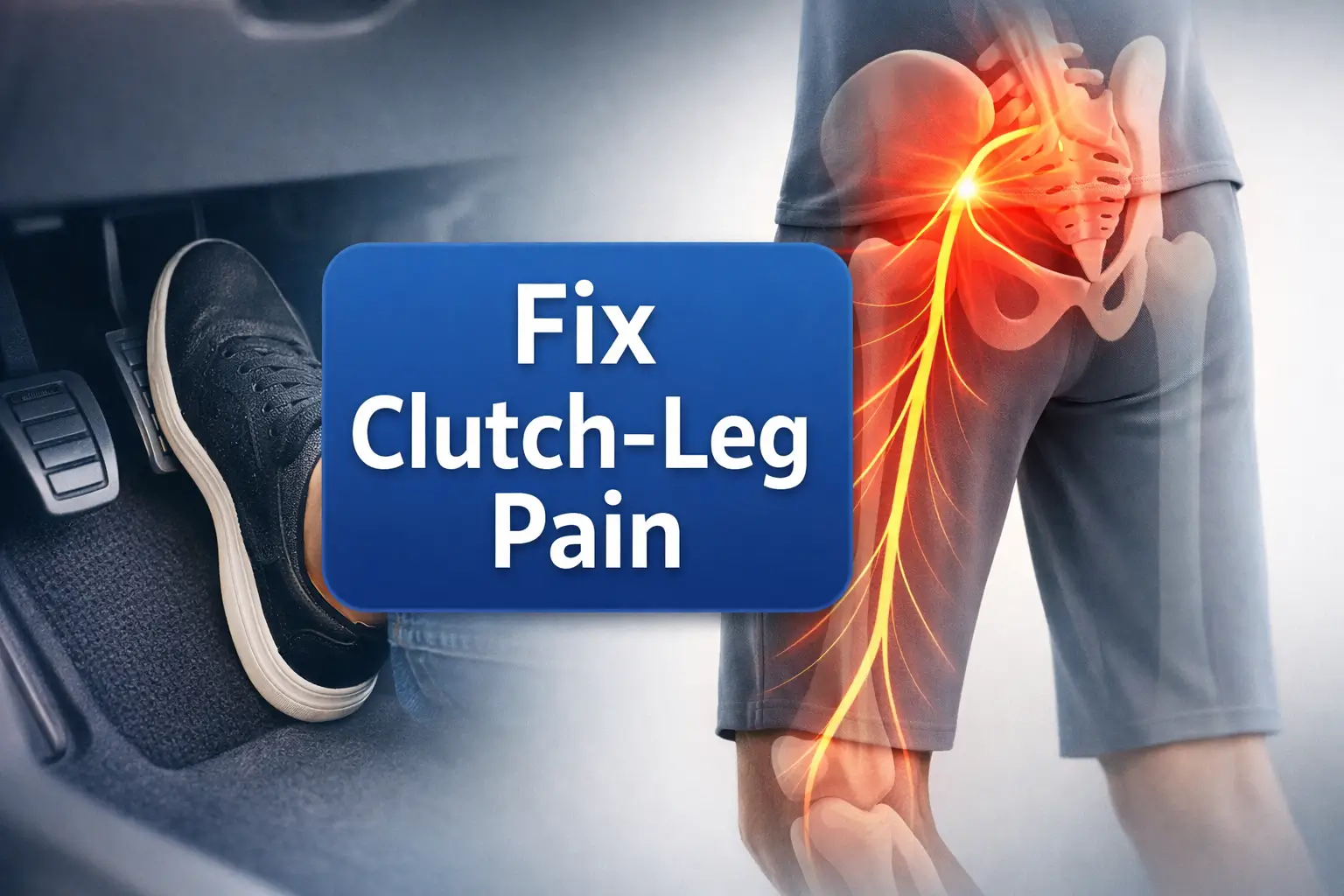
This guide is written from a family-caregiver perspective. The site operator is not a medical professional. It organizes practical information and questions; it does not provide an individual diagnosis, treatment plan or activity clearance.
Pain and comfort are not the only driving questions
Safe driving requires reliable control of the whole vehicle. Leg symptoms, weakness, restricted movement or medicine effects may interfere even when a seat feels comfortable. A manual car adds repeated clutch use, but adjusting seat distance cannot diagnose or guarantee resolution of the problem.
Make changes only while safely parked
Follow the vehicle’s seating and restraint instructions and preserve access to pedals, steering and the required visibility. Do not add a footrest, cushion or accessory that obstructs controls or alters safe restraint use. Do not test a painful clutch leg in traffic.
Separate clinical advice from vehicle adjustment
If symptoms or medicines impair control, do not drive. Ask the treating team about the health concern and whether a driving assessment is appropriate; check any applicable licensing and insurer requirements. A passenger trip and fitness to drive are separate decisions.
Seat comfort must preserve vehicle control
Preparation prompts only: these do not diagnose a condition, rank urgency or clear an activity.
- What to record
- Ability to use all controls, pedal reach, current symptoms, medicine effects and vehicle restraint instructions.
- What to ask
- Can I operate this vehicle safely, or do symptoms or restrictions mean I should not drive?
- Next action and owner
- Do not drive with impaired control; make seat adjustments only while safely parked and obtain appropriate clinical or driving-assessment advice. Write down who will act and when to follow up.
Keep personal records private. The visit preparation organizer can help arrange questions; do not post identifying health information in comments.
Further information
Editorial rewrite: October 21, 2026. Replaced the previous body, removed unsupported experience or outcome claims, and separated practical planning from individual clinical decisions. This is an editorial update, not a medical-professional review.