
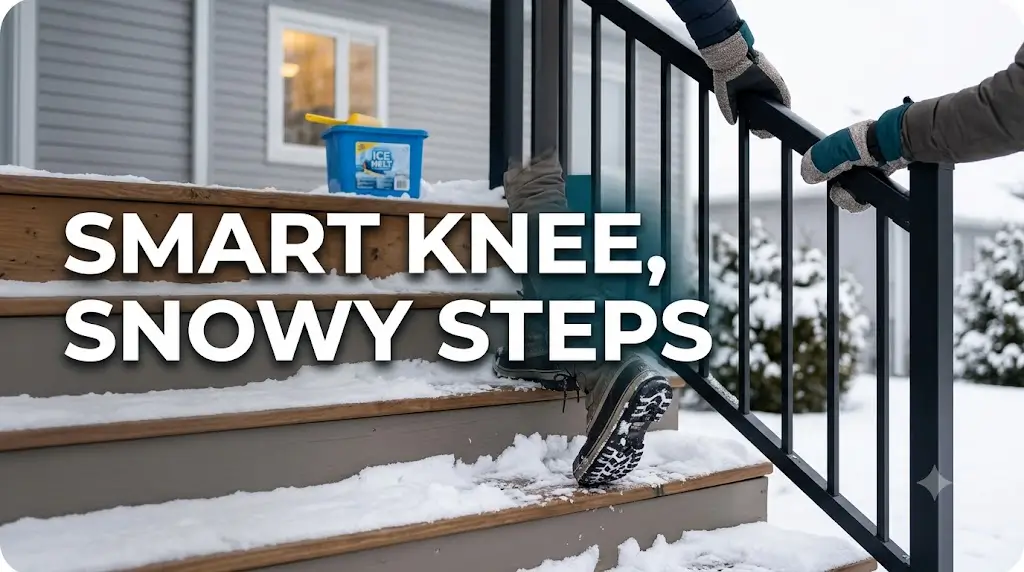
Knee pain and snowy steps are a reason to plan access and alternatives, not to test a new stair technique on ice. This guide does not teach walking on icy stairs.
Written from a family caregiver perspective. The operator cares for an older mother with rheumatic, spinal and knee problems and is not a medical professional. This is planning information, not individual clinical assessment or clearance.
Describe the access problem
Ask a helper or property manager to review conditions without the person taking a trial step. Identify clearing, drainage, lighting, handrail maintenance and an alternative entrance. A familiar staircase can become unsuitable when surfaces change.
Solve the errand before improvising the movement
Contact the clinic, workplace or service about accessible access, a different appointment time, a remote option or delivery. Explain the actual barrier and prescribed walking support. Check who handles the journey from the door rather than assuming transport alone solves it.
Treat equipment as a separate question
Ask the therapy team about the appropriate walking aid and assistance for winter travel. Follow product instructions. Traction footwear or an attachment does not establish that an icy route is suitable, and carrying bags can conflict with required support.
Agree on a fallback
Name the person arranging clearing or another route, when it will be checked and what happens if weather worsens. Do not use a timed scan or a confidence rating as clearance. After a fall with possible head, back, neck or hip injury, or inability to get up, seek emergency help and do not lift the person yourself.
Source and correction scope
NHS: falls and getting help supports the distinction between general information and individual care planning.
Editorial rewrite: October 21, 2026. Replaced the previous self-test or universal task instructions and narrative examples with individual assessment questions, practical arrangements and a backup plan. No independent medical review is claimed.
Plan an alternative to uncertain snowy steps
Use these prompts for a private note or your next care-team conversation. Record what is known and mark unanswered questions; completing this table does not establish safety, independence or treatment eligibility.
| Record or clarify | Question and next action |
|---|---|
| Access and weather conditions | Can a helper arrange clearing and maintenance without asking the person to test the steps? |
| Essential appointment or delivery | Can the provider offer another time, remote visit, accessible entrance or transport arrangement? |
| No suitable access | Who will arrange the alternative? Better traction equipment does not establish that icy stairs are appropriate. |
Keep the person’s own report separate from a helper’s observation. Share only with consent and only with people who need the information. Do not put identifying health details in public comments. The visit preparation tool can organize questions; it cannot assess symptoms or approve a task.
Background resource: NHS: falls and getting help. This resource supports general care planning; it does not validate every instruction elsewhere in this article.