
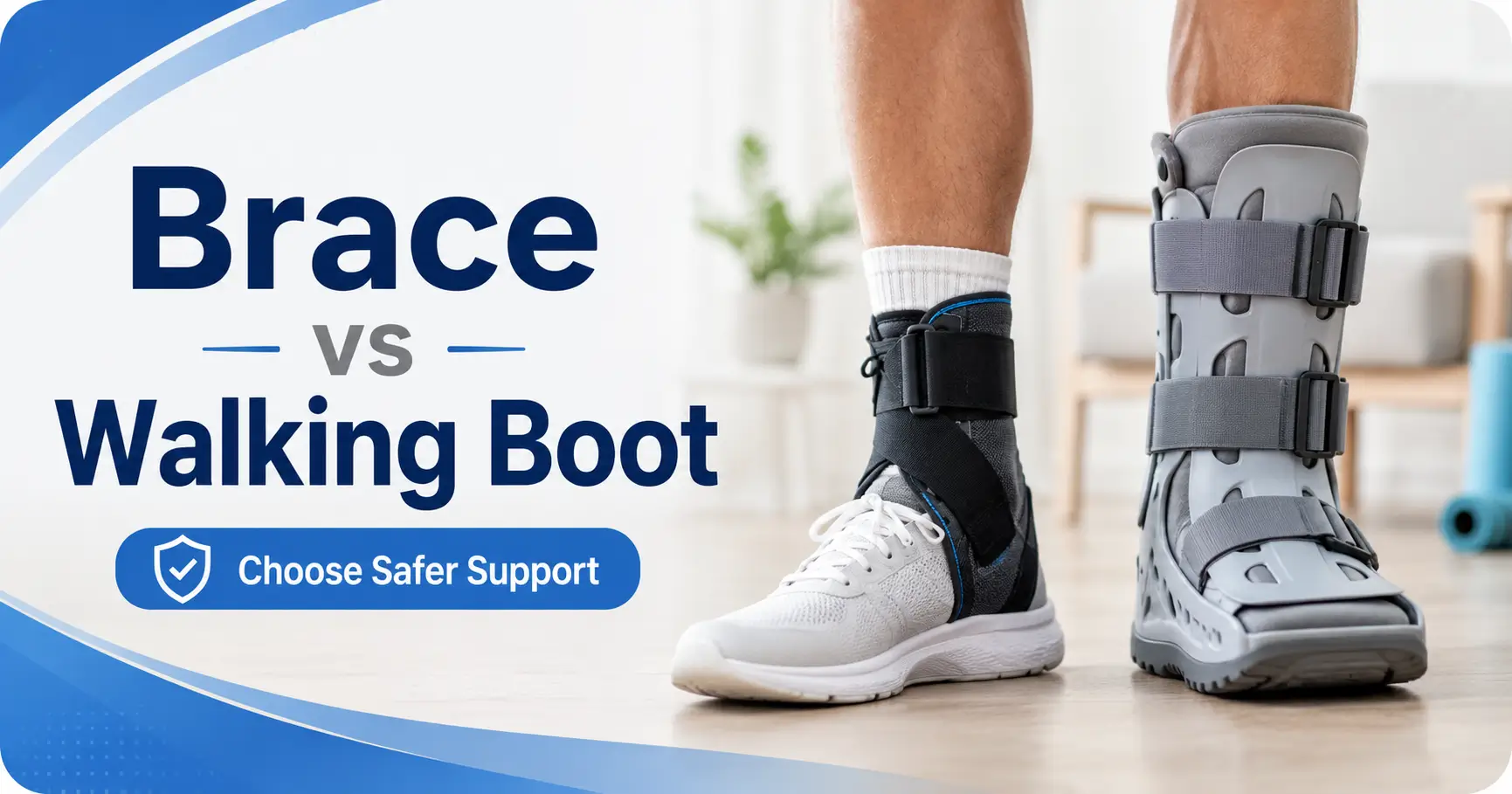
An ankle brace and a walking boot should not be chosen through a thirty-second symptom checklist. Ask the diagnosing clinician which support, if any, is appropriate and what activities are permitted.
Written from a family caregiver perspective. The operator cares for an older mother with rheumatic, spinal and knee problems and is not a medical professional. This is planning information, not individual clinical assessment or clearance.
Clarify the prescription before comparing convenience
Record the diagnosis or unresolved question, exact device, weight-bearing instructions, wearing schedule and review plan. Ask about washing, sleep, footwear and skin checks for the prescribed product. Do not switch devices or remove support for a task because another option looks easier online.
Describe daily tasks that do not fit the plan
List stairs, bathing, work, transport, shopping and getting to the toilet. Explain the aid and help available for each. A device that changes discomfort does not establish that the injury is protected or an outing is suitable.
Ask about fit and a problem response
Find out who should check a poor fit, pressure area or change in symptoms, and how to get advice outside office hours. Follow the product and clinical instructions; do not cut, modify or substitute components yourself. New severe symptoms or a suspected serious injury need prompt clinical assessment rather than another device trial.
Plan transport separately
Ask specifically about driving; walking in a device and driving are separate questions. Discuss vehicle controls, medicines and restrictions with the treating team. Arrange another driver or transport if the intended journey cannot be completed within the plan.
Source and correction scope
NHS: moving and handling support supports the distinction between general information and individual care planning.
Editorial rewrite: October 21, 2026. Replaced the previous self-test or universal task instructions and narrative examples with individual assessment questions, practical arrangements and a backup plan. No independent medical review is claimed.
Questions about prescribed ankle support
Use these prompts for a private note or your next care-team conversation. Record what is known and mark unanswered questions; completing this table does not establish safety, independence or treatment eligibility.
| Record or clarify | Question and next action |
|---|---|
| Diagnosis, device and instructions | What has the clinician prescribed, including weight-bearing, wear and review? |
| A daily task that is difficult | What alternative method, help or equipment does the team recommend for this task? |
| Fit, symptoms or changed circumstances | Who checks the device and gives timely advice? Do not switch brace and boot based on a symptom score. |
Keep the person’s own report separate from a helper’s observation. Share only with consent and only with people who need the information. Do not put identifying health details in public comments. The visit preparation tool can organize questions; it cannot assess symptoms or approve a task.
Background resource: NHS: moving and handling support. This resource supports general care planning; it does not validate every instruction elsewhere in this article.