
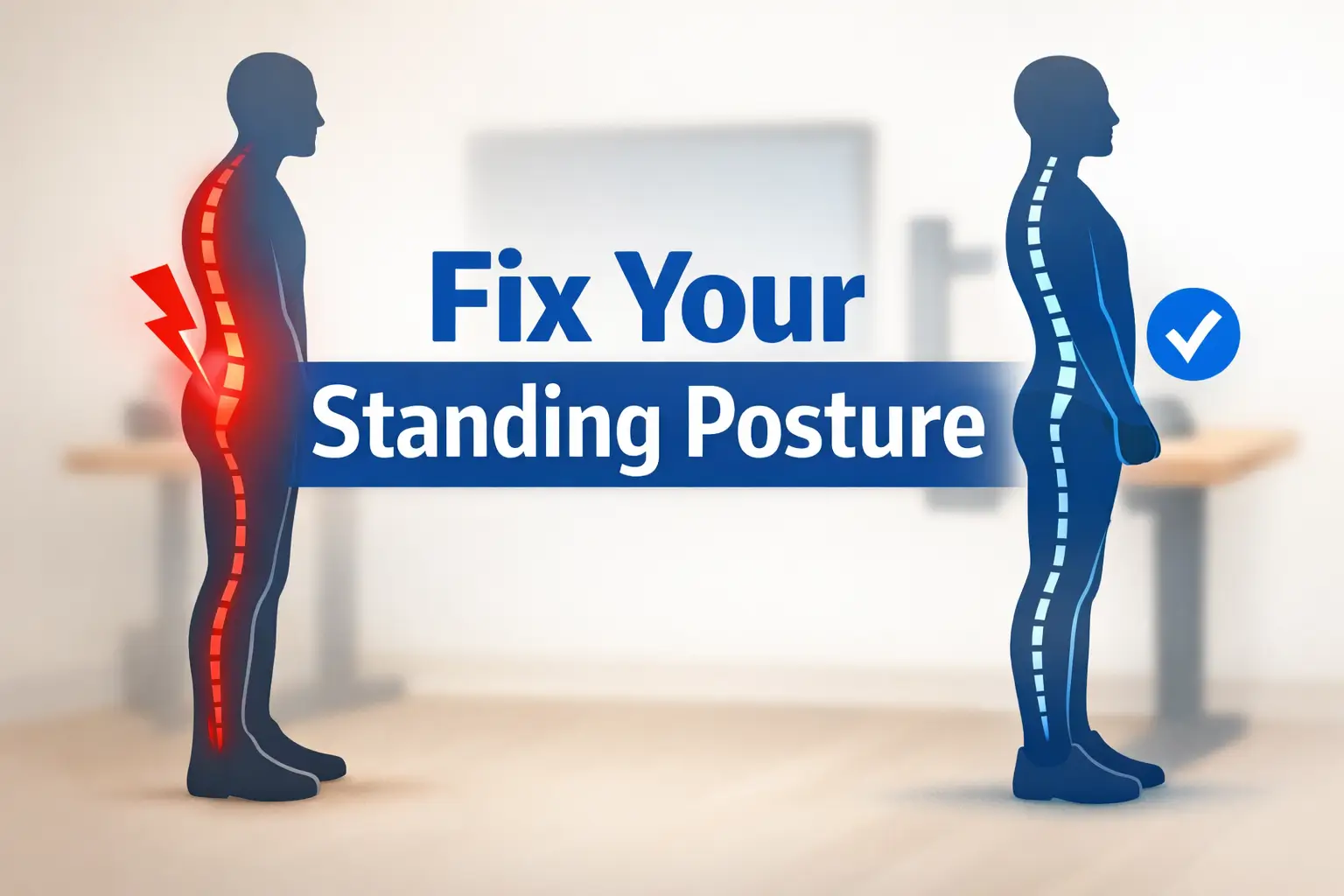
This guide is written from a family-caregiver perspective. The site operator is not a medical professional. It organizes practical information and questions; it does not provide an individual diagnosis, treatment plan or activity clearance.
Knee position cannot diagnose desk-related leg pain
Locked knees, a weight shift or a change in discomfort may be worth describing, but they do not establish the cause of sciatica. Twelve minutes of standing is not a diagnostic signature. A sixty-second reset cannot guarantee symptom relief.
Review the actual workstation and job
Consider desk and screen position, input-device reach, seating, footwear, tasks and the position options available. Ask occupational health or the relevant workplace contact about adjustments. If symptoms are unresolved, ask a clinician what assessment is needed instead of treating posture as the full explanation.
Agree a workable change and review
A plan should fit the person and job rather than prescribe a fixed weight split, percentage knee bend or symptom-onset multiplier. A reminder can organize a break without becoming a medical dose. Stop an unsafe activity and report new neurological or balance concerns.
A posture clue is not a diagnosis
Preparation prompts only: these do not diagnose a condition, rank urgency or clear an activity.
- What to record
- Workstation height, task demands, position options, symptoms and any balance concerns.
- What to ask
- Which adjustments and work accommodations fit my assessment, and what needs clinical review?
- Next action and owner
- Ask for workstation or clinical advice for ongoing problems; changing knee position does not prove the cause of leg pain. Write down who will act and when to follow up.
Keep personal records private. The visit preparation organizer can help arrange questions; do not post identifying health information in comments.
Further information
Editorial rewrite: October 21, 2026. Replaced the previous body, removed unsupported experience or outcome claims, and separated practical planning from individual clinical decisions. This is an editorial update, not a medical-professional review.