
This guide is written from a family-caregiver perspective. The site operator is not a medical professional. It organizes practical information and questions; it does not provide an individual diagnosis, treatment plan or activity clearance.
What are the three exercises?
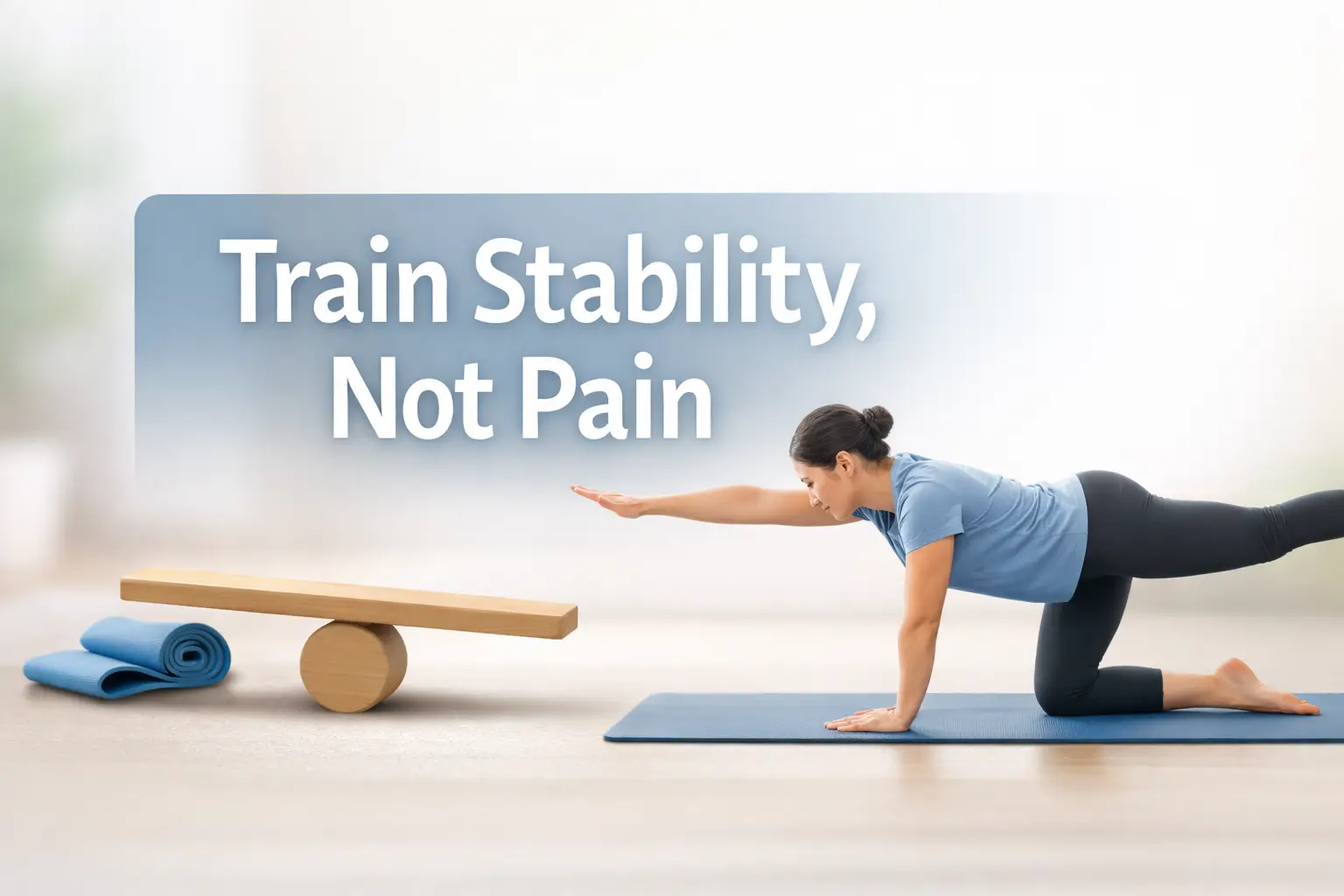
The McGill Big 3 refers to the modified curl-up, side bridge (side plank), and bird dog. They are commonly discussed as exercises for trunk endurance and control. The Medical University of South Carolina describes these three movements and individual adaptations. That educational description is not evidence that the same routine will treat every cause of back pain.
| Exercise | Basic movement concept | Question for your physiotherapist |
|---|---|---|
| Modified curl-up | A small lift of the shoulders while lying on the back; it is not a full sit-up. | What position and range suit my current symptoms? |
| Side bridge / side plank | Supporting the body sideways on the forearm; bent-knee and straight-leg versions differ in difficulty. | Can I support my weight comfortably, or do I need an alternative? |
| Bird dog | Controlling the trunk from hands and knees while moving an arm or leg. | Should I start with one limb, and how do I avoid losing control? |
This is an identification guide, not step-by-step technique instruction. Holding time, repetitions and progression should match the person and purpose; the words “in ten minutes” in an old link do not establish a safe or effective dose.
A named routine does not replace an assessment
The McGill Big 3 is often presented as a set of core exercises. That does not mean every person with back pain should begin all three, perform them for ten minutes or progress on the same schedule. Similar symptoms can arise in different clinical situations.
Ask what the program is intended to achieve
A physiotherapist can discuss whether a specific exercise fits the assessment, goals and current restrictions. Clarify the starting position, instructions and how to get to and from the floor. A caregiver should not improvise assisted lifting to make an exercise possible.
Use a review plan rather than a compliance test
Record questions about the program and report changes in symptoms. Completing a routine does not certify spinal stability or tissue recovery. If an exercise provokes symptoms or cannot be managed, ask about adaptation or an alternative rather than assuming that more effort is the answer.
A named exercise program is not one-size-fits-all
Preparation prompts only: these do not diagnose a condition, rank urgency or clear an activity.
- What to record
- The exact exercises advised, personal goals, symptoms and the instructions still unclear.
- What to ask
- Is this program appropriate for my assessment and how should it be adapted or replaced?
- Next action and owner
- Ask a physiotherapist to review the plan; do not use a ten-minute routine as a mandatory starting dose. Write down who will act and when to follow up.
Keep personal records private. The visit preparation organizer can help arrange questions; do not post identifying health information in comments.
Further information
Editorial rewrite: October 21, 2026. Replaced the previous body, removed unsupported experience or outcome claims, and separated practical planning from individual clinical decisions. This is an editorial update, not a medical-professional review.
When an exercise page is not the next step
The NHS back-pain guide advises stopping an exercise if pain worsens and seeking advice. Back pain with symptoms in both legs, loss of feeling around the genitals or anus, or new bladder or bowel changes needs emergency assessment. Use your local emergency service; do not try a routine to test these symptoms.
Editorial update: October 23, 2026. Added the names and basic concepts of the three exercises, with MUSC and NHS source links. No individual exercise prescription or independent medical review is claimed.