
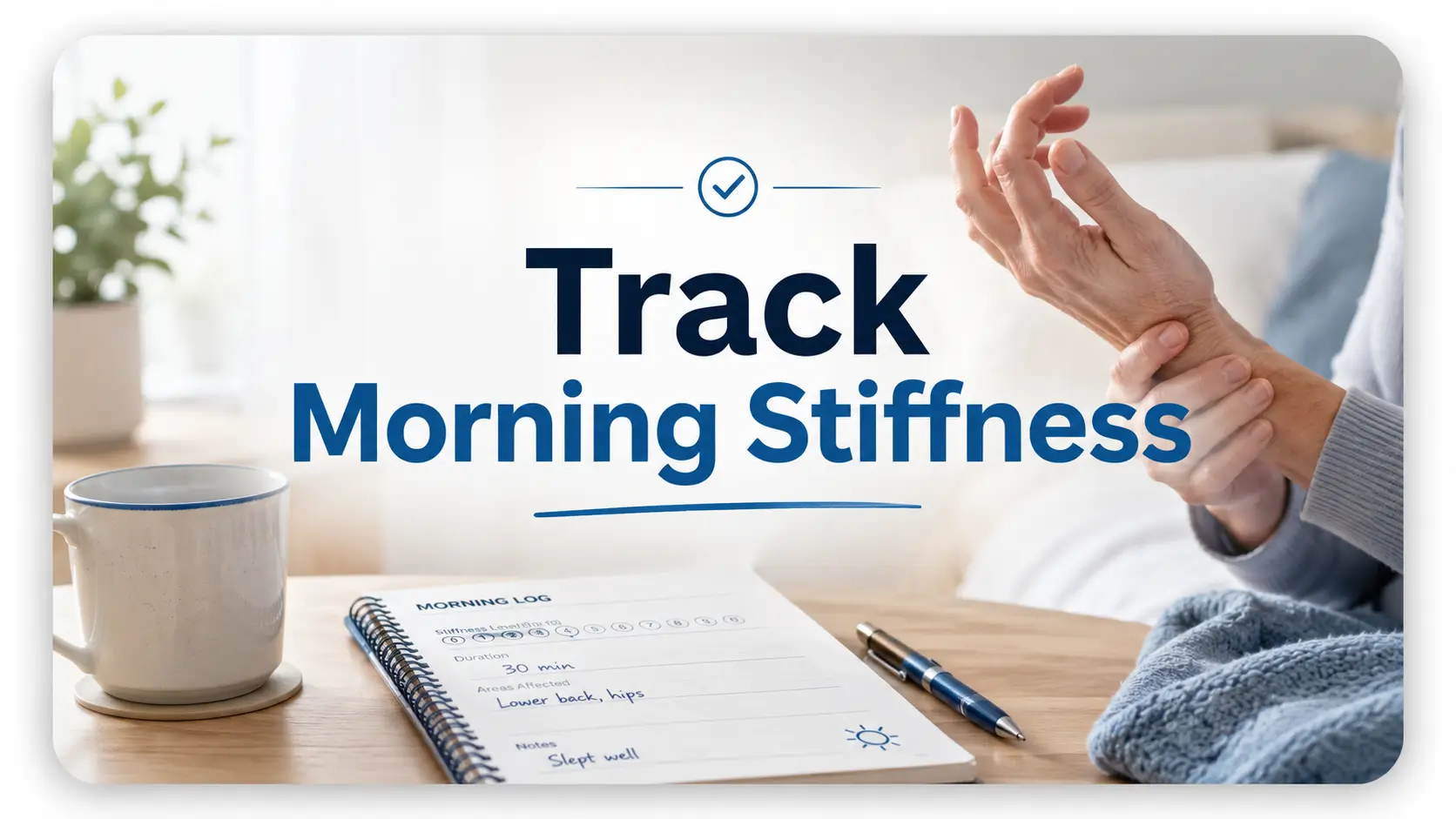
Morning stiffness notes can help describe a pattern, but a homemade score cannot diagnose arthritis or determine whether symptoms are harmless.
Written from a family caregiver perspective. The operator cares for an older mother with rheumatic, spinal and knee problems and is not a medical professional. This is planning information, not individual clinical assessment or clearance.
Record what is already happening
Use the person’s words for the affected areas, approximate duration and what daily activity was interrupted. Record pain and stiffness separately when they differ. Uncertain timing or a broad location is acceptable; a precise number is not required.
Keep the context
Note instructions, ordinary permitted activity, help used and any change in the routine. Do not add stretches, repeat movements or delay prescribed medicines to test a response. An activity not performed may be restricted or unavailable rather than physically impossible.
A short private note
Write the date, areas affected, approximate duration, daily effect, associated changes and one question for the appointment. Keep the person’s report separate from a caregiver’s observation. Do not average days into a diagnosis or compare one person’s score with another’s.
Use the record for a conversation
Ask the clinician how they want ongoing symptoms recorded and what new changes require earlier contact. Do not wait to complete a week of notes if symptoms are new, severe or concerning. A diary is supporting information, not an assessment or an all-clear result.
Source and correction scope
NHS: assessment and diagnosis of rheumatoid arthritis supports the distinction between general information and individual care planning.
Editorial rewrite: October 21, 2026. Replaced the previous self-test or universal task instructions and narrative examples with individual assessment questions, practical arrangements and a backup plan. No independent medical review is claimed.
Keep stiffness notes descriptive
Use these prompts for a private note or your next care-team conversation. Record what is known and mark unanswered questions; completing this table does not establish safety, independence or treatment eligibility.
| Record or clarify | Question and next action |
|---|---|
| When stiffness was already noticed | Which areas were involved and approximately how long did it affect the usual routine? |
| Activity and symptom context | What occurred during permitted activity? Do not add stretches or repetitions to test a response. |
| What needs clinical advice | What is new or changing and who will review it? A diary score cannot diagnose arthritis or rule out a problem. |
Keep the person’s own report separate from a helper’s observation. Share only with consent and only with people who need the information. Do not put identifying health details in public comments. The visit preparation tool can organize questions; it cannot assess symptoms or approve a task.
Background resource: NHS: falls and getting help. This resource supports general care planning; it does not validate every instruction elsewhere in this article.